Penang HomePhysio
ACL Tear Physiotherapy at Home in Penang
Home physiotherapy can support recovery from an ACL tear through instability assessment, strengthening and activity guidance, with orthopaedic review arranged where instability or surgery is a concern.
Suitability, therapist availability and any medical clearance are checked before an appointment. Rehabilitation is selected after assessment.
Understanding this condition
An ACL tear is an injury to the ligament that keeps the knee from sliding forward and twisting too far. Some people manage without surgery, while others, especially those with giving way or high-demand activities, need reconstruction. This page covers the tear itself, distinct from recovery after ACL reconstruction.
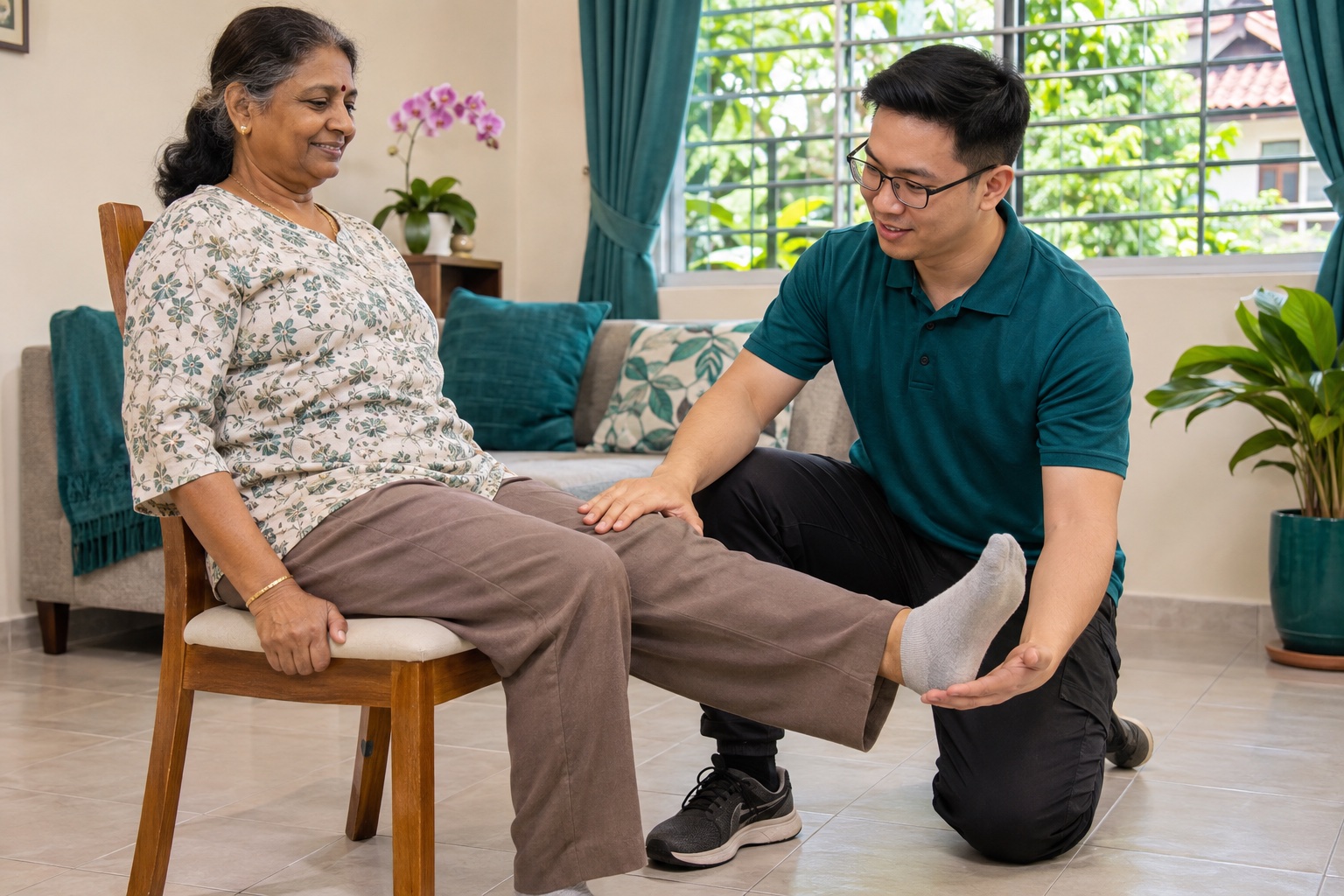
A physiotherapist can assess your knee at home and guide a plan that rebuilds strength, balance and control. Whether a nonsurgical path suits you is confirmed after assessment, with orthopaedic review advised if the knee gives way or instability persists.
Symptoms and everyday difficulties
- A pop or sudden giving way at the time of injury
- Knee instability or lack of confidence during pivoting or changing direction
- Swelling and difficulty bearing weight in the early days
Who may benefit from a home assessment
Physiotherapy suits some ACL tears, particularly when activity demands are lower and the knee is stable. Whether a nonsurgical path suits you is confirmed after assessment, with orthopaedic review advised for giving way or high-demand activities.
A condition-specific assessment
- Review of how the injury happened, any giving way and your activity goals
- Movement and stability tests to understand the looseness and screen for other injuries
- Strength and balance checks to see how the knee controls daily movement
Treatment options and how they are chosen
Strengthening for knee control
- What it involves
- Strengthening for the thigh, hip and calf muscles that support the knee.
- Why it may be chosen
- Stronger muscles help compensate for the torn ligament and steady the knee.
- The everyday goal
- Builds steadier, more confident movement for walking and stairs.
- Adapting it at home
- Exercises use body weight and simple positions suited to your home setup.
- Reviewing progress
- Load and control advance as strength and symptoms allow.
Balance and movement control
- What it involves
- Balance and control work for standing, stepping and changing direction.
- Why it may be chosen
- Good control helps the knee react and reduces giving-way episodes.
- The everyday goal
- Supports safer walking, stairs and turns in your home.
- Adapting it at home
- Practice is set up around your own floors, steps and doorways.
- Reviewing progress
- Balance challenges increase as control improves.
Activity and return-to-movement guidance
- What it involves
- Guidance on pacing walking, stairs and pivoting activities.
- Why it may be chosen
- A paced return reduces stress on the knee while you rebuild activity.
- The everyday goal
- Helps you stay active without aggravating the knee.
- Adapting it at home
- Advice reflects your home setup and any sport or work you do.
- Reviewing progress
- Activity is reintroduced step by step as control improves.
Individual rehabilitation goals
- Reduce giving way and rebuild confidence in the knee
- Rebuild strength and balance for steadier knee control
- Return to daily activity through a gradual, reviewed plan
How a home visit is arranged
- Send a brief enquiry with the rehabilitation need, area and whether you are the patient or caregiver.
- The team checks relevant information, service scope, therapist availability and suitability. Share medical documents through the arrangement agreed with the team.
- If suitable, confirm the appointment, full session fee and separate travel charge before the home assessment.
- The physiotherapist assesses the person and discusses an individual plan, consent and practical goals.
- Appropriate treatment, home practice and caregiver guidance are provided, then progress and the need for further visits are reviewed.
Preparing for the visit
Wear loose clothing that allows the knee to move. Keep any imaging report or orthopaedic advice notes available for review. Note which activities cause giving way so you can discuss them with the physiotherapist.
Home visits and clinic rehabilitation
Home sessions let the physiotherapist see how you manage your own stairs and surfaces. Later-stage return to pivoting sport may suit a clinic or gym setting, and that is discussed when it becomes relevant to your goals.
When medical assessment is needed
An ACL tear with giving way, especially in pivoting or high-demand activities, often needs orthopaedic review and sometimes reconstruction. A physiotherapist screens for these concerns and advises on the right next step. A knee that gives way during daily walking needs medical assessment.
For a genuine medical emergency in Malaysia, call 999. A routine physiotherapy enquiry is not an emergency response. Malaysia emergency service information
Patient and caregiver questions
What is an ACL tear?
An ACL tear is an injury to the ligament that keeps the knee from sliding forward and twisting too far. Some people manage without surgery, while others with giving way or high-demand activities need reconstruction.
Can an ACL tear recover without surgery?
Some tears improve with rehabilitation, particularly when activity demands are lower and the knee is stable. Whether a nonsurgical path suits you is confirmed after assessment, with orthopaedic review advised if the knee gives way.
How is this different from recovery after ACL reconstruction?
This page covers the tear itself and nonsurgical management. Recovery after ACL reconstruction follows a staged plan and the surgeon's restrictions on weight bearing, range and pivoting, which the physiotherapist respects.
Is walking in a straight line enough to clear me for football?
No. Cutting and pivoting require different control and usually a supervised return-to-sport assessment.
When should I seek medical review for an ACL tear?
If the knee gives way, especially during pivoting or high-demand activities, orthopaedic review is often needed and sometimes reconstruction is considered. The physiotherapist screens for these concerns and advises on the right next step.
The treating physiotherapist
Penang HomePhysio confirms that a clinician is available for this service. Ask the team to confirm the treating physiotherapist's name, qualifications, registration, relevant experience and availability. Tell us your preferred spoken language so the team can check. Website language options do not establish any individual clinician's language abilities.
About the serviceHome visits around Penang
Home visits in Penang are arranged by area and therapist availability. Areas listed on this site include George Town, Bayan Lepas, Butterworth, Bukit Mertajam. Share your postcode and access needs so the team can confirm coverage and travel charges.
See coverage areasPricing and suitability enquiries
See this site's pricing guide. Tell the team your area and care needs to confirm the full fee, including any travel charge, before booking.
Clinical information sources
These sources support the general information. They are not endorsements of this provider or a claim that a clinician has reviewed this page.