Penang HomePhysio
Foot and Ankle Stiffness Rehabilitation at Home in Penang
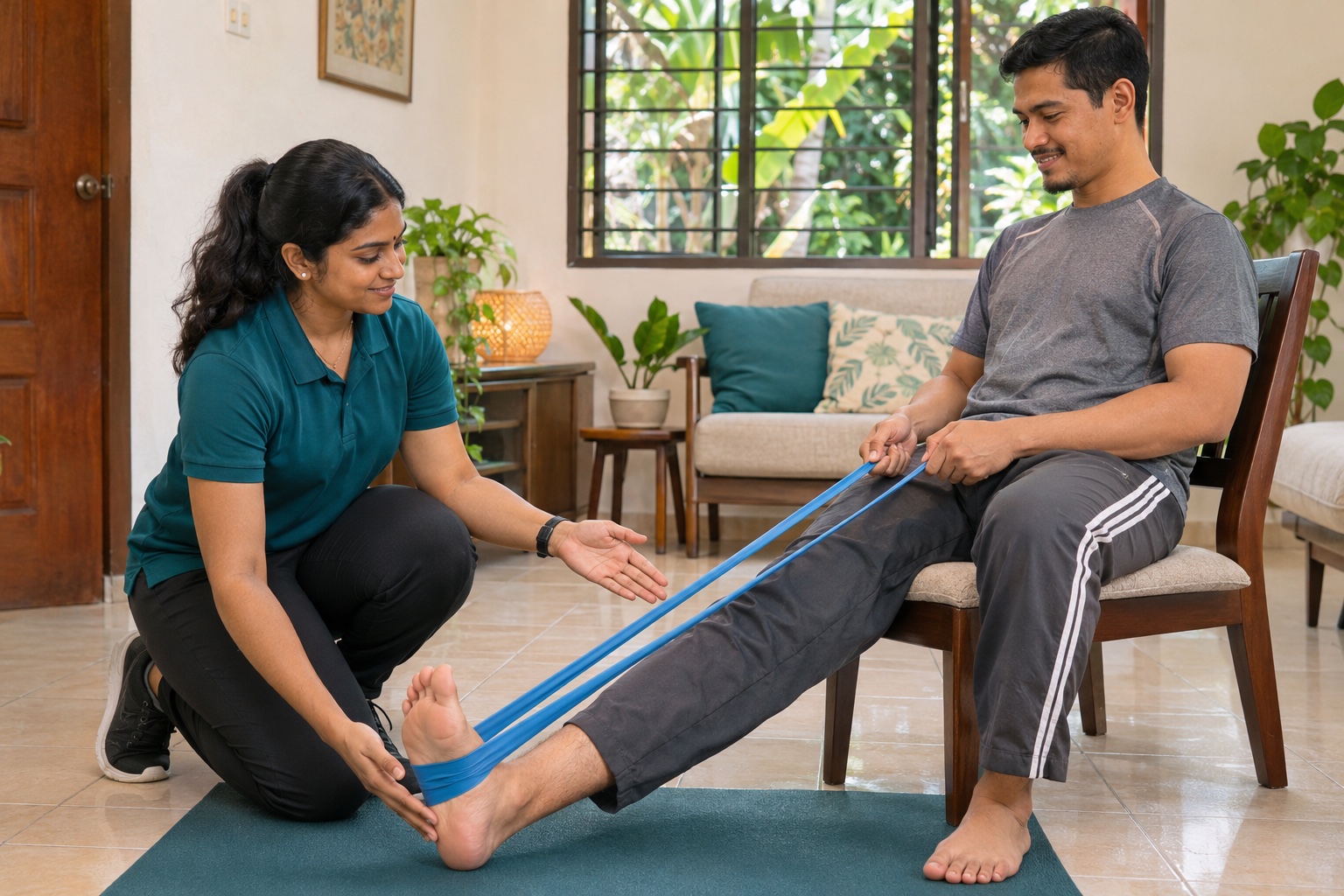
After a period in a cast or boot, the foot and ankle may feel stiff, weak or unfamiliar when moving again. Rehabilitation should match the original injury and the permissions given by the treating team.
Suitability, therapist availability and any medical clearance are checked before an appointment. Rehabilitation is selected after assessment.
Understanding this condition
Immobilisation can reduce joint movement and muscle capacity. Swelling, sensitive skin and a changed walking pattern may add to the difficulty of returning to ordinary activity.
Cast removal does not automatically mean unlimited movement or full weight bearing. A fracture, tendon repair and ligament injury can each require different restrictions, and those instructions take priority over a general exercise leaflet.
Symptoms and everyday difficulties
- Difficulty bending the ankle during a step.
- Weak push-off or a limp when permitted to walk.
- Swelling or fatigue after standing, making household tasks harder.
Who may benefit from a home assessment
Home treatment may suit a medically stable person cleared for the relevant stage of rehabilitation, particularly when stairs or clinic travel are difficult. Unknown restrictions must be clarified before loading the limb.
A condition-specific assessment
- Review the diagnosis, immobilisation period, imaging or follow-up instructions and any operation performed.
- Check permitted ankle and toe movement, swelling, skin condition and muscle function without stressing protected tissue.
- Assess transfers, walking aids and home access against the current weight-bearing status.
Treatment options and how they are chosen
Permitted movement practice
- What it involves
- Practise active ankle and toe movements allowed by the treating team.
- Why it may be chosen
- Gradual use may help regain movement lost during protection.
- The everyday goal
- Target stiffness that limits stepping, footwear and positioning the foot.
- Adapting it at home
- Use comfortable seated positions and clear written instructions without forcing the ankle.
- Reviewing progress
- Review movement quality and the swelling or pain response, and clarify unexpected restrictions with the medical team.
Restoring muscle capacity
- What it involves
- Introduce strength work only when the tissue-healing plan permits it.
- Why it may be chosen
- Muscles may have become weaker during immobilisation.
- The everyday goal
- Address push-off, standing control and later step tasks.
- Adapting it at home
- Start with appropriate low-demand positions and use support where needed.
- Reviewing progress
- Check task control, fatigue and delayed symptoms before changing resistance or position.
Gait and aid retraining
- What it involves
- Practise transfers and walking while respecting prescribed loading.
- Why it may be chosen
- A limp or unsafe aid use may persist after protection is reduced.
- The everyday goal
- Improve bathroom access and movement around the home.
- Adapting it at home
- Assess aid height, clear routes and stair technique for the person's actual restrictions.
- Reviewing progress
- Reduce assistance only when safety, control and medical instructions support the change.
Individual rehabilitation goals
- Regain permitted useful ankle movement.
- Move safely around the home with the required aid.
- Gradually resume agreed standing and walking tasks.
How a home visit is arranged
- Send a brief enquiry with the rehabilitation need, area and whether you are the patient or caregiver.
- The team checks relevant information, service scope, therapist availability and suitability. Share medical documents through the arrangement agreed with the team.
- If suitable, confirm the appointment, full session fee and separate travel charge before the home assessment.
- The physiotherapist assesses the person and discusses an individual plan, consent and practical goals.
- Appropriate treatment, home practice and caregiver guidance are provided, then progress and the need for further visits are reviewed.
Preparing for the visit
Have discharge papers, boot or cast instructions and current aids available. Tell the clinician about steps, wounds and help needed for transfers. Do not remove a boot or change weight bearing without clarification.
Home visits and clinic rehabilitation
Home visits are useful for practical transfers and walking. Persistent severe stiffness, suspected healing problems, complex surgery or a need for later high-level activity assessment may require clinic and orthopaedic input.
When medical assessment is needed
Seek urgent assessment for new calf swelling with pain, chest pain or severe breathlessness, or a cold, numb or discoloured foot. Increasing wound redness, discharge, fever or pain out of proportion also needs prompt medical review.
For a genuine medical emergency in Malaysia, call 999. A routine physiotherapy enquiry is not an emergency response. Malaysia emergency service information
Patient and caregiver questions
Does cast removal mean the injury is fully healed?
Not necessarily. The team may still limit loading or movement. Follow the individual instructions and clarify anything missing.
Should I force the ankle to recover motion?
No. Exercises should respect tissue healing and current restrictions. Increasing force does not guarantee faster recovery.
Can I stop using crutches once the cast is off?
Only when the prescribed loading, balance and walking control make this appropriate. Aid reduction is assessed individually.
Is some swelling expected?
Swelling can occur after immobilisation, but new, severe or worsening swelling needs assessment. It should not automatically be dismissed as normal.
How is progress measured?
Compare permitted movement, transfer ability, walking quality and activity tolerance. The plan changes with healing information and the response to practice.
The treating physiotherapist
Penang HomePhysio confirms that a clinician is available for this service. Ask the team to confirm the treating physiotherapist's name, qualifications, registration, relevant experience and availability. Tell us your preferred spoken language so the team can check. Website language options do not establish any individual clinician's language abilities.
About the serviceHome visits around Penang
Home visits in Penang are arranged by area and therapist availability. Areas listed on this site include George Town, Bayan Lepas, Butterworth, Bukit Mertajam. Share your postcode and access needs so the team can confirm coverage and travel charges.
See coverage areasPricing and suitability enquiries
See this site's pricing guide. Tell the team your area and care needs to confirm the full fee, including any travel charge, before booking.
Clinical information sources
These sources support the general information. They are not endorsements of this provider or a claim that a clinician has reviewed this page.