Penang HomePhysio
Post-Intensive Care Rehabilitation at Home in Penang
Recovery after intensive care may involve physical weakness together with difficulties in thinking, sleep or emotional wellbeing. Home physiotherapy can address movement needs when medically appropriate, while other symptoms receive the right professional support.
Suitability, therapist availability and any medical clearance are checked before an appointment. Rehabilitation is selected after assessment.
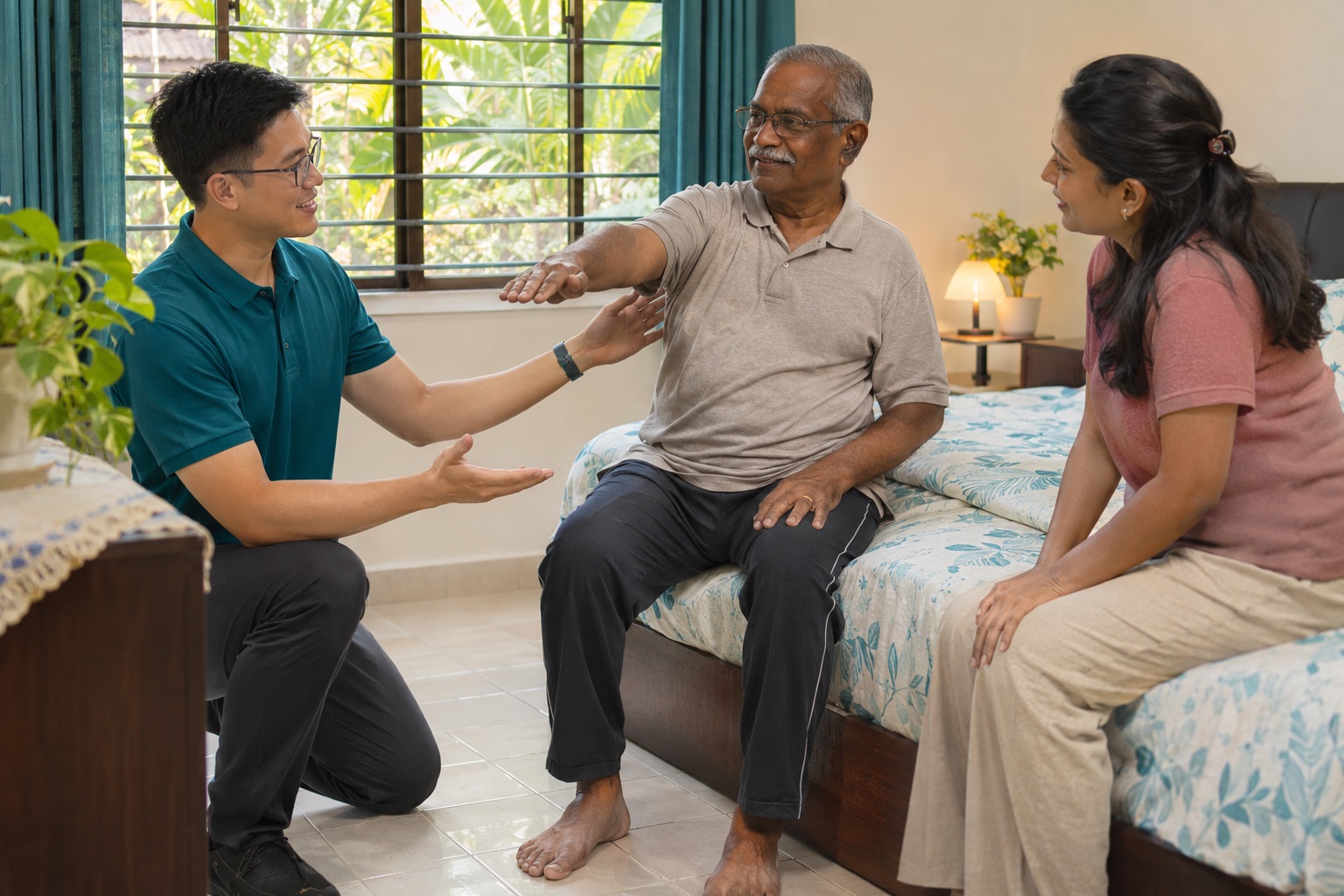
Understanding this condition
Post-intensive care syndrome describes new or worsened physical, cognitive or mental-health difficulties after critical illness. Prolonged immobility, severe illness and the overall treatment experience can affect recovery in different ways.
It is broader than ordinary muscle deconditioning. Physiotherapy does not treat every aspect, and recovery may need medical, occupational, psychological, nutritional or speech-and-swallowing input according to the person's problems.
Symptoms and everyday difficulties
- Marked weakness affecting sitting, standing or carrying light objects.
- Low activity tolerance with fatigue during basic self-care.
- Difficulty following a home programme because of concentration problems, poor sleep or distress.
Who may benefit from a home assessment
Home input may help a medically stable survivor of intensive care who cannot readily attend rehabilitation. The discharge team should clarify ongoing medical, respiratory and equipment needs before an activity plan is started.
A condition-specific assessment
- Review the critical illness, ventilation or other treatments, discharge recommendations and complications affecting safe activity.
- Assess strength, transfers and tolerance of a manageable functional task, with monitoring appropriate to the medical plan.
- Explore fatigue patterns, concentration, sleep and caregiver concerns to adapt communication and arrange wider referrals rather than attributing everything to weakness.
Treatment options and how they are chosen
Rebuilding basic mobility
- What it involves
- Practise selected bed, chair and standing tasks in manageable parts.
- Why it may be chosen
- Critical illness may interrupt previously automatic movements.
- The everyday goal
- Support safe transfers for washing or meals.
- Adapting it at home
- Use the actual bed and appropriate assistance, allowing longer recovery when needed.
- Reviewing progress
- Review assistance, control and symptom response during and after practice.
Individual strength and endurance work
- What it involves
- Select low-demand movements or short walks matched to current medical tolerance.
- Why it may be chosen
- Weakness and reduced endurance may limit useful activity.
- The everyday goal
- Build capacity for essential daily tasks.
- Adapting it at home
- Arrange safe supports and planned rests, without a universal exercise schedule.
- Reviewing progress
- Progress according to recovery and the coordinated clinical plan.
Manageable home practice and team coordination
- What it involves
- Provide clear small tasks and identify symptoms requiring another professional.
- Why it may be chosen
- Concentration, distress or sleep problems can interfere with rehabilitation.
- The everyday goal
- Make a daily routine easier to follow.
- Adapting it at home
- Use simple written or demonstrated instructions and agreed caregiver support.
- Reviewing progress
- Review understanding, participation and unmet needs, not just exercise completion.
Individual rehabilitation goals
- Regain selected self-care and mobility tasks.
- Develop an activity pattern compatible with medical recovery.
- Coordinate physical rehabilitation with wider recovery needs.
How a home visit is arranged
- Send a brief enquiry with the rehabilitation need, area and whether you are the patient or caregiver.
- The team checks relevant information, service scope, therapist availability and suitability. Share medical documents through the arrangement agreed with the team.
- If suitable, confirm the appointment, full session fee and separate travel charge before the home assessment.
- The physiotherapist assesses the person and discusses an individual plan, consent and practical goals.
- Appropriate treatment, home practice and caregiver guidance are provided, then progress and the need for further visits are reviewed.
Preparing for the visit
Provide the ICU and hospital discharge information where available, current equipment instructions and named follow-up contacts. Tell the service about oxygen, feeding tubes or major cognitive difficulties before arranging a visit.
Home visits and clinic rehabilitation
Home rehabilitation can reduce travel burden and address real daily tasks. A specialist post-ICU or multidisciplinary service is preferable when monitoring, complex equipment, swallowing, psychological or cognitive needs exceed a home clinician's scope.
When medical assessment is needed
New severe breathlessness, chest pain, reduced consciousness, fever with deterioration or sudden neurological symptoms need urgent assessment. Do not simply reduce exercises and wait if the medical condition is worsening.
For a genuine medical emergency in Malaysia, call 999. A routine physiotherapy enquiry is not an emergency response. Malaysia emergency service information
Patient and caregiver questions
Is this the same as general post-hospital weakness?
It may include weakness, but post-ICU difficulties can also affect cognition and mental wellbeing, requiring broader support.
Can physiotherapy treat frightening ICU memories?
A therapist can adapt the session and help identify support needs, but psychological treatment needs an appropriately trained professional.
Can I follow a standard fitness programme?
Not without checking current recovery needs. Medical complications and activity tolerance may require a substantially different starting point.
Should a caregiver attend?
Their observations can help, with consent, especially if memory or concentration is affected. Their own support needs also matter.
How long will recovery take?
It varies considerably. Review meaningful tasks and symptoms over time rather than promising recovery by a particular date.
The treating physiotherapist
Penang HomePhysio confirms that a clinician is available for this service. Ask the team to confirm the treating physiotherapist's name, qualifications, registration, relevant experience and availability. Tell us your preferred spoken language so the team can check. Website language options do not establish any individual clinician's language abilities.
About the serviceHome visits around Penang
Home visits in Penang are arranged by area and therapist availability. Areas listed on this site include George Town, Bayan Lepas, Butterworth, Bukit Mertajam. Share your postcode and access needs so the team can confirm coverage and travel charges.
See coverage areasPricing and suitability enquiries
See this site's pricing guide. Tell the team your area and care needs to confirm the full fee, including any travel charge, before booking.
Clinical information sources
These sources support the general information. They are not endorsements of this provider or a claim that a clinician has reviewed this page.