Penang HomePhysio
Sciatica Physiotherapy at Home in Penang
Explore sciatica assessment and home rehabilitation in Penang, including leg symptoms, comfortable movement, walking goals and important warning signs.
Suitability, therapist availability and any medical clearance are checked before an appointment. Rehabilitation is selected after assessment.
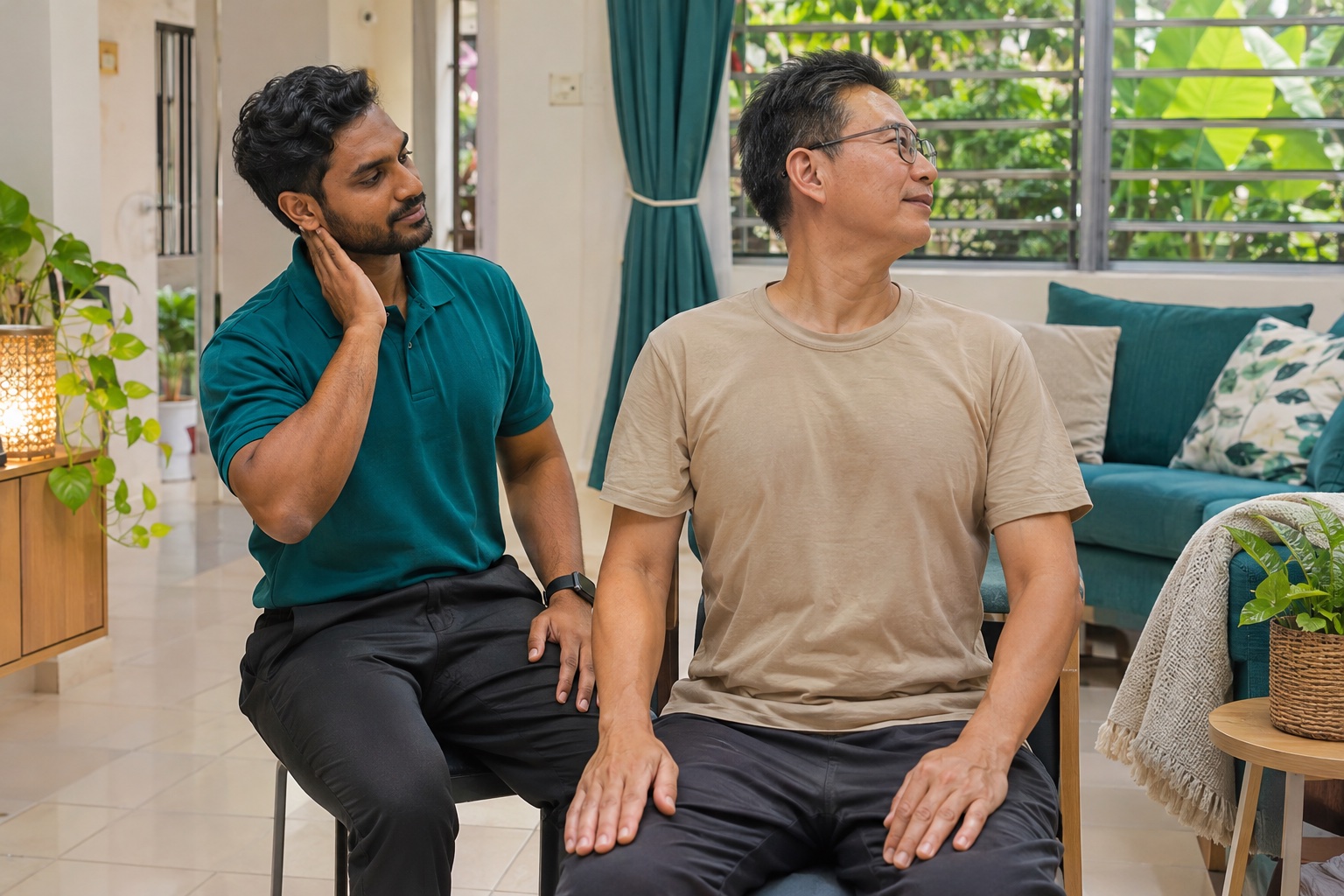
Understanding this condition
Sciatica describes pain travelling along a sciatic-nerve distribution, commonly from the buttock into one leg. Tingling or numbness may occur. The term describes a symptom pattern rather than proving which structure is responsible.
A herniated disc or spinal narrowing can irritate a nerve root, but other causes of leg pain exist. Radiculopathy specifically involves impaired nerve-root function, such as measurable weakness or sensory change. Assessment helps distinguish these issues and decide whether medical investigation is needed.
Symptoms and everyday difficulties
- Shooting or burning leg pain may interrupt sitting or sleep.
- Tingling or numbness can affect confidence when placing the foot.
- Walking, bending or getting into a car may aggravate symptoms.
Who may benefit from a home assessment
A home assessment may help someone whose leg symptoms make journeys difficult. Suitability depends on symptom stability and neurological findings; new or worsening weakness should not simply be managed as a routine pain flare.
A condition-specific assessment
- Map where symptoms travel, how they started and whether coughing, sitting or walking changes them. Ask about bladder, bowel and groin sensation changes.
- Compare leg strength, sensation and relevant reflexes where appropriate, alongside walking and functional movement. Symptoms alone do not establish a diagnosis.
- Identify useful starting activities and positions, noting walking distance, sleep disruption and the help needed around the home.
Treatment options and how they are chosen
Symptom-guided movement
- What it involves
- Trial selected movements and comfortable positions rather than forcing a standard back routine.
- Why it may be chosen
- Different nerve-related symptom patterns respond differently to loading.
- The everyday goal
- The aim is to make sitting, dressing and transfers more manageable.
- Adapting it at home
- Practise using the patient’s chair or bed and adjust movement range.
- Reviewing progress
- Track whether leg symptoms settle, spread or intensify during and after practice.
Strength and movement control
- What it involves
- Use graded leg and trunk exercises within the assessed level of tolerance.
- Why it may be chosen
- Pain and reduced activity may limit useful strength and confidence.
- The everyday goal
- Tasks may focus on rising, stepping and carrying light household items.
- Adapting it at home
- A stable support and low starting resistance can reduce unnecessary strain.
- Reviewing progress
- Recheck task quality and leg strength; increasing weakness prompts medical review.
Walking and pacing
- What it involves
- Plan tolerable walking bouts with appropriate rest and, if indicated, aid assessment.
- Why it may be chosen
- Maintaining manageable activity can reduce avoidable loss of mobility.
- The everyday goal
- Work towards moving between rooms or completing a necessary short journey.
- Adapting it at home
- Choose a clear indoor route and assess turns and thresholds.
- Reviewing progress
- Review distance, steadiness and symptom recovery before adjusting the plan.
Individual rehabilitation goals
- Sit or transfer with less interruption from leg pain.
- Walk useful distances with appropriate support.
- Recognise changes that need medical review.
How a home visit is arranged
- Send a brief enquiry with the rehabilitation need, area and whether you are the patient or caregiver.
- The team checks relevant information, service scope, therapist availability and suitability. Share medical documents through the arrangement agreed with the team.
- If suitable, confirm the appointment, full session fee and separate travel charge before the home assessment.
- The physiotherapist assesses the person and discusses an individual plan, consent and practical goals.
- Appropriate treatment, home practice and caregiver guidance are provided, then progress and the need for further visits are reviewed.
Preparing for the visit
Bring any scan or consultation reports, describe new weakness accurately and show difficult sitting or walking tasks. A family member may help explain changes, with the patient’s consent.
Home visits and clinic rehabilitation
Home visits can address real seating and walking barriers. Progressive neurological changes, uncertain diagnosis or symptoms that do not respond as expected may need specialist assessment, imaging or other medical treatment.
When medical assessment is needed
New difficulty passing urine, loss of bladder or bowel control, numbness around the genitals or bottom, or severe or worsening weakness in both legs needs emergency assessment. Rapidly increasing weakness in one leg also requires urgent medical review.
For a genuine medical emergency in Malaysia, call 999. A routine physiotherapy enquiry is not an emergency response. Malaysia emergency service information
Patient and caregiver questions
Does sciatica always mean a slipped disc?
No. Disc herniation is one possible cause, while spinal narrowing and other problems may produce similar symptoms.
Should I stretch the painful leg strongly?
No. Aggressive stretching can irritate sensitive symptoms. Movement choice and range should follow an assessment.
Is numbness the same as pain?
No. Sensation changes are assessed separately, especially if they are new, spreading or accompanied by weakness.
Can I keep walking?
Suitable amounts may be useful if medically appropriate. The therapist checks your response and adjusts distance, support and rest.
Will every session include nerve exercises?
No. Nerve-related techniques are considered only when appropriate; education, movement, strength or walking practice may be more relevant.
The treating physiotherapist
Penang HomePhysio confirms that a clinician is available for this service. Ask the team to confirm the treating physiotherapist's name, qualifications, registration, relevant experience and availability. Tell us your preferred spoken language so the team can check. Website language options do not establish any individual clinician's language abilities.
About the serviceHome visits around Penang
Home visits in Penang are arranged by area and therapist availability. Areas listed on this site include George Town, Bayan Lepas, Butterworth, Bukit Mertajam. Share your postcode and access needs so the team can confirm coverage and travel charges.
See coverage areasPricing and suitability enquiries
See this site's pricing guide. Tell the team your area and care needs to confirm the full fee, including any travel charge, before booking.
Clinical information sources
These sources support the general information. They are not endorsements of this provider or a claim that a clinician has reviewed this page.