Penang HomePhysio
Spondylolisthesis Rehabilitation at Home in Penang
Explore individual home rehabilitation for spondylolisthesis in Penang, with attention to spinal diagnosis, movement tolerance and practical daily goals.
Suitability, therapist availability and any medical clearance are checked before an appointment. Rehabilitation is selected after assessment.
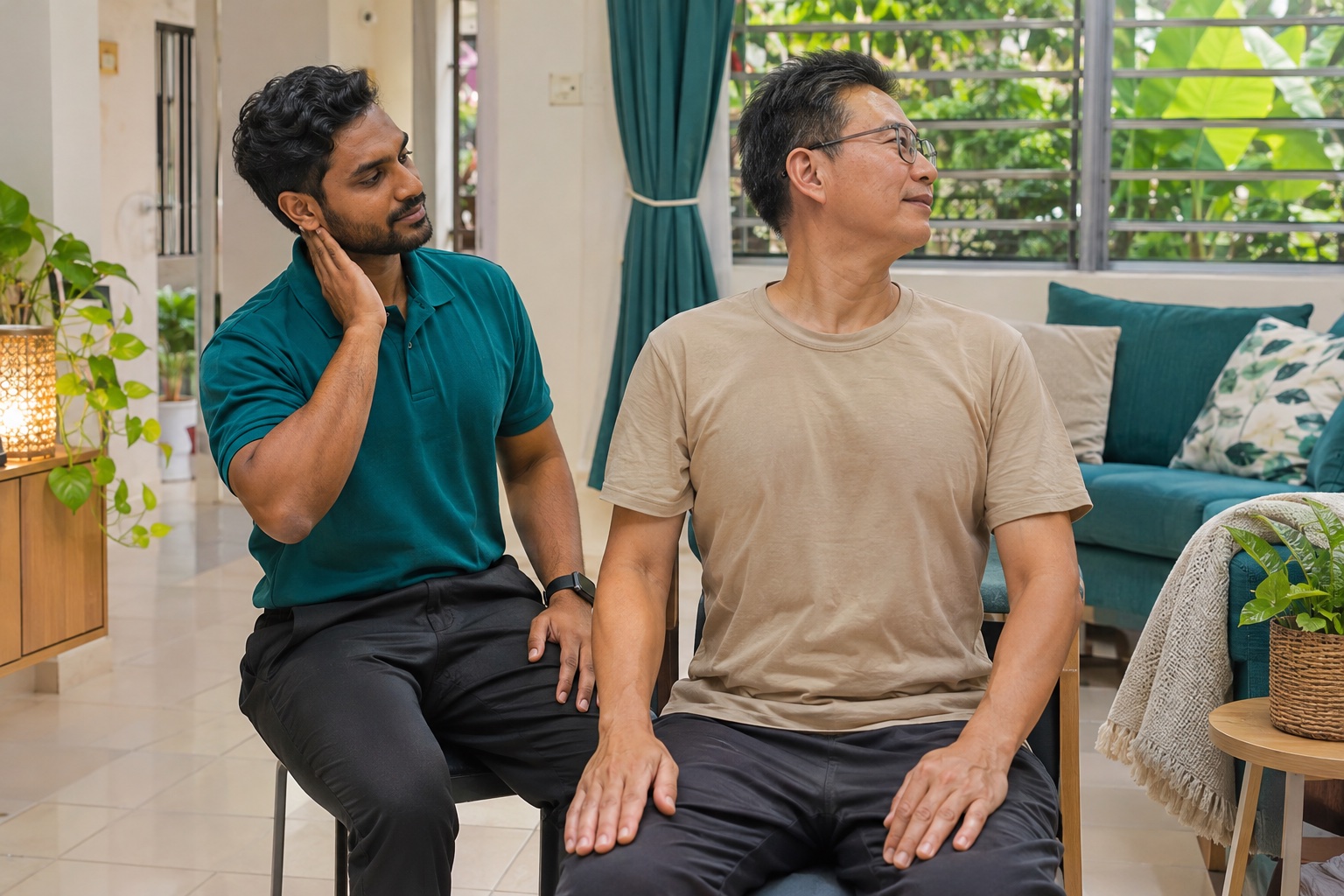
Understanding this condition
Spondylolisthesis means one vertebra has moved forwards relative to another. It differs from a slipped disc, which involves disc material. Some people have few symptoms; others develop back pain or nerve-related leg symptoms. The type and clinical significance require medical assessment.
Degenerative changes and a defect in part of the vertebral arch are among the possible causes. Rehabilitation is adapted to the diagnosis, symptom pattern and any restrictions. It aims to improve function, not manually reposition the vertebra or guarantee a change on imaging.
Symptoms and everyday difficulties
- Standing or walking may bring on lower-back or buttock discomfort.
- Reaching overhead or repeated back extension may be uncomfortable in some people.
- Associated leg symptoms or tightness may affect walking and household work.
Who may benefit from a home assessment
Home assessment may suit adults with a diagnosed, medically stable presentation who need help managing everyday movement. An undiagnosed recent injury, progressive nerve symptoms or specific stability concerns require medical review first.
A condition-specific assessment
- Review the diagnosed type, relevant imaging, previous surgery and any restrictions, rather than inferring stability from symptoms alone.
- Assess trunk and hip movement, relevant strength and nerve findings, noting the response to loading and changes of position.
- Observe standing, carrying and walking tasks, and discuss the balance between necessary activities, rest and confidence.
Treatment options and how they are chosen
Trunk and hip conditioning
- What it involves
- Select controlled strengthening exercises in an individually tolerated range.
- Why it may be chosen
- Improved muscular capacity can support everyday activity despite structural changes.
- The everyday goal
- The focus is steadier transfers, standing and carrying.
- Adapting it at home
- Use supported positions and manageable household equipment when appropriate.
- Reviewing progress
- Review control, fatigue and symptoms before changing resistance or movement range.
Task modification and movement practice
- What it involves
- Rehearse ways to reach, lift and change position that fit current restrictions.
- Why it may be chosen
- Some tasks repeatedly aggravate symptoms and can be adapted.
- The everyday goal
- This may improve kitchen work, dressing and handling light objects.
- Adapting it at home
- Adjust object height and use the patient’s actual work surfaces.
- Reviewing progress
- Compare comfort and task completion, avoiding rigid rules that are not clinically needed.
Tolerable walking and endurance
- What it involves
- Plan walking and other suitable low-impact activity with rest as needed.
- Why it may be chosen
- Maintaining conditioning helps limit secondary deconditioning.
- The everyday goal
- Work towards useful indoor routes and appropriate outings.
- Adapting it at home
- Choose a clear route and assess support if leg symptoms affect balance.
- Reviewing progress
- Review distance and symptom recovery; neurological deterioration triggers referral.
Individual rehabilitation goals
- Manage necessary standing tasks with appropriate breaks.
- Improve strength and confidence for daily transfers.
- Maintain an agreed level of walking without ignoring warning symptoms.
How a home visit is arranged
- Send a brief enquiry with the rehabilitation need, area and whether you are the patient or caregiver.
- The team checks relevant information, service scope, therapist availability and suitability. Share medical documents through the arrangement agreed with the team.
- If suitable, confirm the appointment, full session fee and separate travel charge before the home assessment.
- The physiotherapist assesses the person and discusses an individual plan, consent and practical goals.
- Appropriate treatment, home practice and caregiver guidance are provided, then progress and the need for further visits are reviewed.
Preparing for the visit
Have specialist reports and restrictions available. Show tasks involving prolonged standing or overhead reaching, and mention any recent change in leg strength or sensation.
Home visits and clinic rehabilitation
Home visits can tailor tasks to the actual environment. Specialist assessment is preferable when stability is uncertain, symptoms progress or a surgical opinion is needed. Physiotherapy does not replace evaluation of the underlying spinal condition.
When medical assessment is needed
New bladder or bowel changes, groin numbness or severe progressive leg weakness needs emergency assessment. New pain after a significant injury or worsening neurological symptoms also requires prompt medical review.
For a genuine medical emergency in Malaysia, call 999. A routine physiotherapy enquiry is not an emergency response. Malaysia emergency service information
Patient and caregiver questions
Is this the same as a slipped disc?
No. Spondylolisthesis concerns vertebral position; disc herniation concerns disc material. They can coexist but are not interchangeable diagnoses.
Can exercise move the bone back?
That is not the treatment claim. Exercise addresses capacity and function while medical assessment guides management of the structural condition.
Must I avoid all bending?
Not automatically. Movement advice depends on the diagnosed type, restrictions and your response; unnecessary lifelong avoidance is not the goal.
Will I need a brace?
Only if the medical team recommends one for your situation. A brace should not be bought simply because the diagnosis appears on a scan.
Can I return to exercise?
An individual progression may be possible. Activities with high loads or repeated end-range spinal movement need specific assessment rather than generic clearance.
The treating physiotherapist
Penang HomePhysio confirms that a clinician is available for this service. Ask the team to confirm the treating physiotherapist's name, qualifications, registration, relevant experience and availability. Tell us your preferred spoken language so the team can check. Website language options do not establish any individual clinician's language abilities.
About the serviceHome visits around Penang
Home visits in Penang are arranged by area and therapist availability. Areas listed on this site include George Town, Bayan Lepas, Butterworth, Bukit Mertajam. Share your postcode and access needs so the team can confirm coverage and travel charges.
See coverage areasPricing and suitability enquiries
See this site's pricing guide. Tell the team your area and care needs to confirm the full fee, including any travel charge, before booking.
Clinical information sources
These sources support the general information. They are not endorsements of this provider or a claim that a clinician has reviewed this page.