Penang HomePhysio
Carpal Tunnel Syndrome Rehabilitation at Home in Penang
Tingling that wakes you at night or makes buttons hard to manage may warrant a median nerve assessment. Home support depends on symptom severity and hand strength.
Suitability, therapist availability and any medical clearance are checked before an appointment. Rehabilitation is selected after assessment.
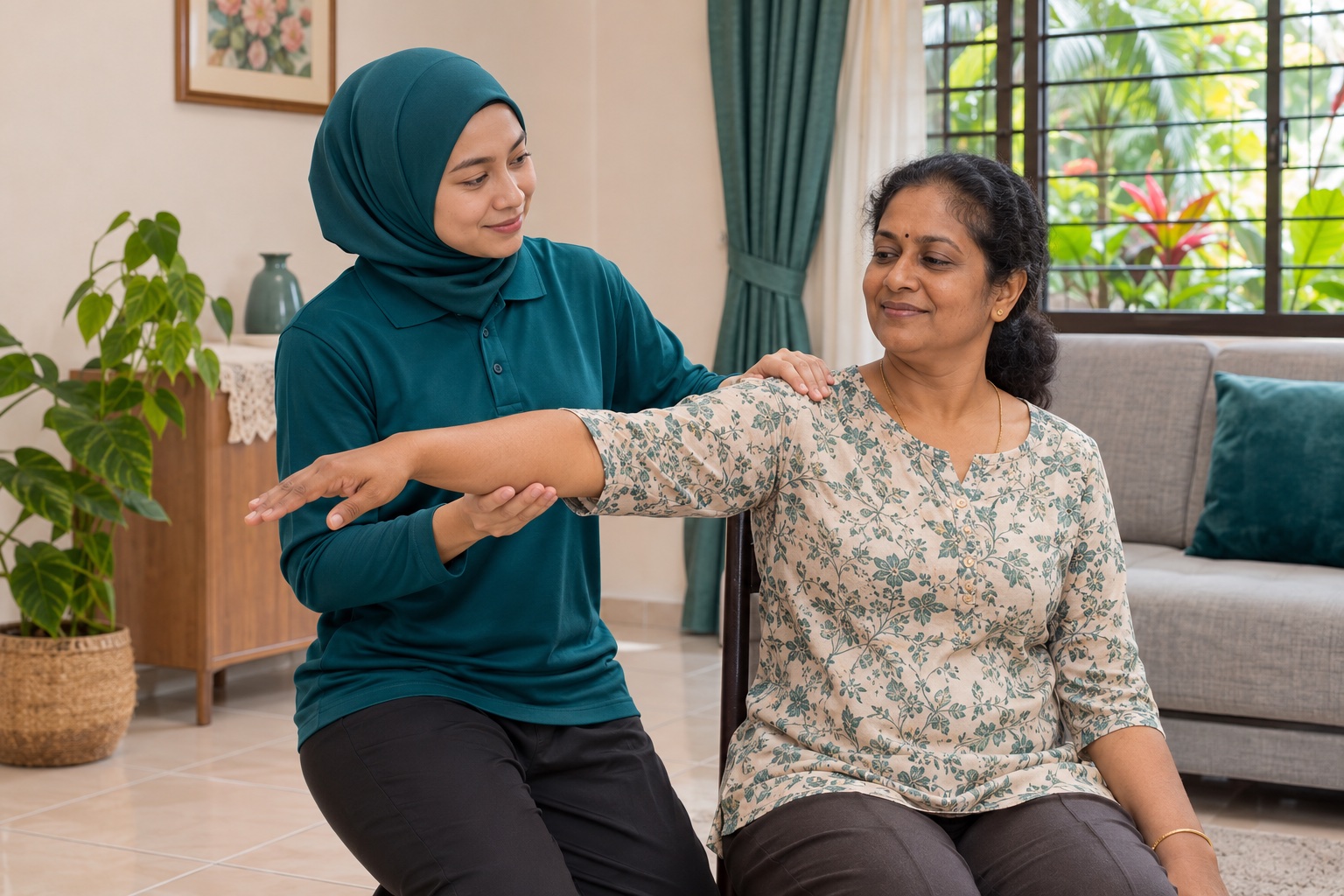
Understanding this condition
Carpal tunnel syndrome occurs when the median nerve is compressed within the wrist. It can affect sensation in the thumb, index, middle and part of the ring finger, and weaken muscles that position the thumb. Symptoms may come and go initially.
Numbness mainly in the little finger, symptoms from the neck or numbness in both feet suggest other explanations may need assessment. Home rehabilitation can support appropriate conservative care, but does not replace decompression when significant nerve damage is suspected.
Symptoms and everyday difficulties
- Night waking with pins and needles in specific fingers.
- Difficulty handling coins, buttons or a pen.
- Dropping an item because sensation or thumb control is reduced.
Who may benefit from a home assessment
Mild or intermittent symptoms may suit a medically appropriate trial of conservative support. Constant numbness, increasing weakness or visible muscle loss at the thumb base should prompt medical or hand-specialist review rather than prolonged home exercises.
A condition-specific assessment
- Review the finger distribution, sleep disturbance, progression and medical factors such as diabetes or pregnancy.
- Assess sensation, thumb movement and strength and consider neck or other nerve involvement.
- Examine sleep position and task demands; medical assessment may include nerve testing when needed.
Treatment options and how they are chosen
Night wrist positioning
- What it involves
- A suitably trained clinician may assess a splint that keeps the wrist relatively straight at night.
- Why it may be chosen
- Avoiding prolonged wrist bending may reduce symptom-provoking pressure.
- The everyday goal
- Target waking with tingling rather than immobilising the fingers.
- Adapting it at home
- Check fit, skin and finger movement, especially where sensation is reduced.
- Reviewing progress
- Review nights disturbed and any change in numbness or weakness.
Work and grip adaptation
- What it involves
- Review prolonged wrist bend, forceful grip and sustained tool use.
- Why it may be chosen
- Changing a provoking task may help control symptoms while medical decisions are made.
- The everyday goal
- Focus on writing, phone use or household tools.
- Adapting it at home
- Adjust support, handle position and breaks using the person’s actual setup.
- Reviewing progress
- Compare task duration and symptom persistence rather than relying on discomfort alone.
Protecting hand function
- What it involves
- Plan safer handling where numbness affects feedback from the fingers.
- Why it may be chosen
- Reduced sensation or thumb weakness can make sharp or hot items hazardous.
- The everyday goal
- Maintain self-care and meal preparation with reliable control.
- Adapting it at home
- Trial light non-breakable objects, two-hand support or help for risky tasks.
- Reviewing progress
- Monitor dropping incidents and thumb function; deterioration needs review.
Individual rehabilitation goals
- Sleep with fewer hand symptoms if conservative care helps.
- Handle a selected small object safely.
- Recognise persistent sensory loss or weakness early.
How a home visit is arranged
- Send a brief enquiry with the rehabilitation need, area and whether you are the patient or caregiver.
- The team checks relevant information, service scope, therapist availability and suitability. Share medical documents through the arrangement agreed with the team.
- If suitable, confirm the appointment, full session fee and separate travel charge before the home assessment.
- The physiotherapist assesses the person and discusses an individual plan, consent and practical goals.
- Appropriate treatment, home practice and caregiver guidance are provided, then progress and the need for further visits are reviewed.
Preparing for the visit
Bring any prescribed splint or nerve test report. Note exactly which fingers become numb, whether symptoms now persist by day, and any objects recently dropped.
Home visits and clinic rehabilitation
Home review can assess night support and real tasks. Persistent deficit, suspected nerve damage, injections or surgical decisions need medical or hand-specialist services.
When medical assessment is needed
Promptly seek medical review for constant numbness, worsening thumb weakness or wasting. Rapid symptoms after a wrist fracture or major injury need urgent assessment. Sudden weakness with facial or speech changes is an emergency.
For a genuine medical emergency in Malaysia, call 999. A routine physiotherapy enquiry is not an emergency response. Malaysia emergency service information
Patient and caregiver questions
Why does a night splint not cure everyone?
Position is only one factor. Severity and duration of nerve compression vary, and some people require medical treatment.
Should I stretch until tingling increases?
No. Forcing nerve stretches is not appropriate. Any movement advice should avoid prolonged or worsening nerve symptoms.
Is little-finger numbness typical?
It is not the usual median nerve distribution. Tell the clinician, as another nerve or neck condition may need assessment.
Does less pain mean the nerve is recovering?
Not necessarily. Check sensation, thumb strength and dexterity as well as pain, particularly if numbness is becoming constant.
What about after carpal tunnel release?
Postoperative wound care and activity instructions come from the surgical team. Rehabilitation should follow those instructions and the actual function remaining.
The treating physiotherapist
Penang HomePhysio confirms that a clinician is available for this service. Ask the team to confirm the treating physiotherapist's name, qualifications, registration, relevant experience and availability. Tell us your preferred spoken language so the team can check. Website language options do not establish any individual clinician's language abilities.
About the serviceHome visits around Penang
Home visits in Penang are arranged by area and therapist availability. Areas listed on this site include George Town, Bayan Lepas, Butterworth, Bukit Mertajam. Share your postcode and access needs so the team can confirm coverage and travel charges.
See coverage areasPricing and suitability enquiries
See this site's pricing guide. Tell the team your area and care needs to confirm the full fee, including any travel charge, before booking.
Clinical information sources
These sources support the general information. They are not endorsements of this provider or a claim that a clinician has reviewed this page.