Penang HomePhysio
Peripheral Neuropathy Physiotherapy in Penang
When numb feet or weakness change how you walk, a home assessment can explore safer movement in familiar rooms while your doctor investigates the cause.
Suitability, therapist availability and any medical clearance are checked before an appointment. Rehabilitation is selected after assessment.
Understanding this condition
Peripheral nerves carry signals between the brain or spinal cord and the rest of the body. Damage may affect sensation, movement or automatic functions in different patterns.
This term covers several causes. Diabetes, certain medicines and other medical conditions need different treatment; balance practice cannot establish or remove the cause.
Symptoms and everyday difficulties
- Difficulty feeling where feet land
- Stumbling when crossing thresholds
- Weak grip or difficulty fastening buttons when hands are involved
Who may benefit from a home assessment
A person with a medically assessed, stable pattern may benefit when dim corridors, stairs or unsteady transfers are the main barriers. New or spreading symptoms need medical assessment first.
A condition-specific assessment
- Discuss onset, distribution, medication and previous investigations.
- Examine sensation, foot clearance and strength without exposing numb skin to harm.
- Observe walking in footwear and identify near-falls with the patient.
Treatment options and how they are chosen
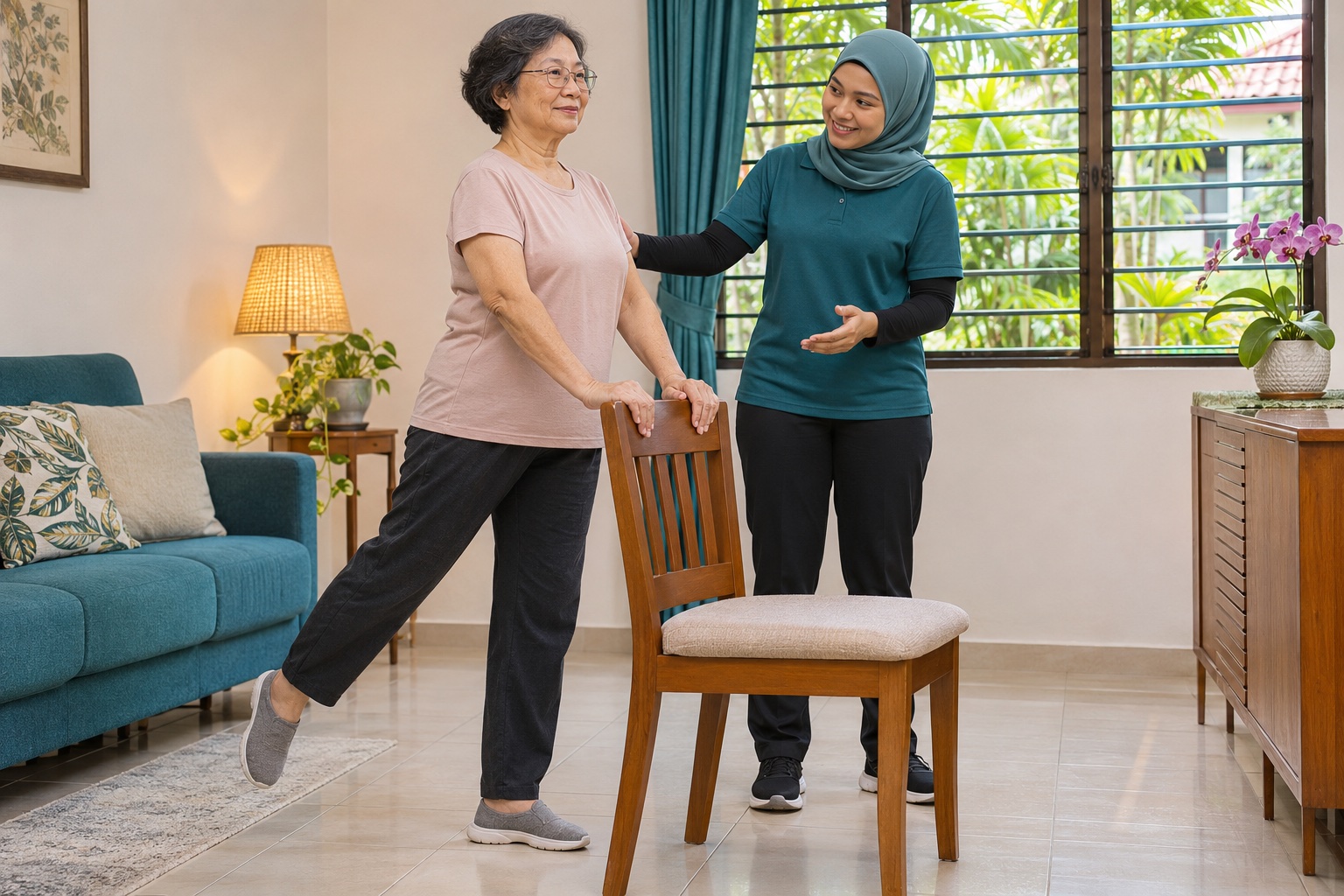
Supported balance practice
- What it involves
- Practise shifting weight with secure hand support.
- Why it may be chosen
- Reduced sensation can make small changes of surface hard to detect.
- The everyday goal
- Target turning at the basin without grabbing a loose towel rail.
- Adapting it at home
- Use good lighting and a stable surface chosen after assessment.
- Reviewing progress
- Review sway, hand support and confidence on the same turn.
Walking aid assessment
- What it involves
- Compare walking with the current aid and a suitable alternative if needed.
- Why it may be chosen
- Extra contact with the floor may improve stability.
- The everyday goal
- Address catching the toes or reaching for furniture.
- Adapting it at home
- Check the aid fits through the bedroom door and is within reach.
- Reviewing progress
- Compare assistance and near-stumbles on that route.
Functional strength practice
- What it involves
- Select a controlled chair rise or ankle movement that the person can feel or see.
- Why it may be chosen
- Weakness can add to sensory balance problems.
- The everyday goal
- Aim to stand to dress with appropriate support.
- Adapting it at home
- Use a firm chair and inspect footwear for rubbing after practice.
- Reviewing progress
- Recheck ease of rising, fatigue and skin response.
Individual rehabilitation goals
- Walk to the toilet more safely.
- Notice hazards before the foot catches.
- Agree on when to ask for assistance.
How a home visit is arranged
- Send a brief enquiry with the rehabilitation need, area and whether you are the patient or caregiver.
- The team checks relevant information, service scope, therapist availability and suitability. Share medical documents through the arrangement agreed with the team.
- If suitable, confirm the appointment, full session fee and separate travel charge before the home assessment.
- The physiotherapist assesses the person and discusses an individual plan, consent and practical goals.
- Appropriate treatment, home practice and caregiver guidance are provided, then progress and the need for further visits are reviewed.
Preparing for the visit
Have your usual shoes, walking aid and investigation or medication list available. Show where the last near-fall occurred.
Home visits and clinic rehabilitation
A home visit shows actual obstacles. Nerve conduction tests, diagnosis of the cause, foot wounds and specialist orthotic fitting require the appropriate service.
When medical assessment is needed
Rapidly spreading weakness, trouble swallowing or breathing, or sudden one-sided weakness requires emergency care. Seek prompt medical advice for a new foot wound or progressive numbness.
For a genuine medical emergency in Malaysia, call 999. A routine physiotherapy enquiry is not an emergency response. Malaysia emergency service information
Patient and caregiver questions
Does numbness mean diabetes?
No. The distribution and medical history guide the doctor's investigation; several causes can look similar.
Can exercise restore all sensation?
There is no such guarantee. Mobility may become safer even if numbness persists.
Should I practise in the dark?
No. Good lighting and safe support are particularly useful when sensation is reduced.
Should I buy a stick first?
Wait for assessment of grip, height and walking pattern. An unsuitable aid can catch on obstacles.
What should I tell the doctor?
Note when symptoms began, which limbs are affected, recent medicines and any falls or wounds.
The treating physiotherapist
Penang HomePhysio confirms that a clinician is available for this service. Ask the team to confirm the treating physiotherapist's name, qualifications, registration, relevant experience and availability. Tell us your preferred spoken language so the team can check. Website language options do not establish any individual clinician's language abilities.
About the serviceHome visits around Penang
Home visits in Penang are arranged by area and therapist availability. Areas listed on this site include George Town, Bayan Lepas, Butterworth, Bukit Mertajam. Share your postcode and access needs so the team can confirm coverage and travel charges.
See coverage areasPricing and suitability enquiries
See this site's pricing guide. Tell the team your area and care needs to confirm the full fee, including any travel charge, before booking.
Clinical information sources
These sources support the general information. They are not endorsements of this provider or a claim that a clinician has reviewed this page.