Penang HomePhysio
Foot Drop Rehabilitation at Home in Penang
Catching the toes on a doorstep can be the first sign that lifting the front of the foot is difficult. The cause guides rehabilitation.
Suitability, therapist availability and any medical clearance are checked before an appointment. Rehabilitation is selected after assessment.
Understanding this condition
Foot drop describes difficulty lifting the front of the foot. It is a sign, not a diagnosis.
A peripheral nerve injury, a problem arising in the spine, stroke or a muscle condition can cause a similar walking difficulty. An aid may improve clearance without treating the cause.
Symptoms and everyday difficulties
- Toes scrape the floor
- The foot slaps down during walking
- Lifting the knee unusually high to clear a step
Who may benefit from a home assessment
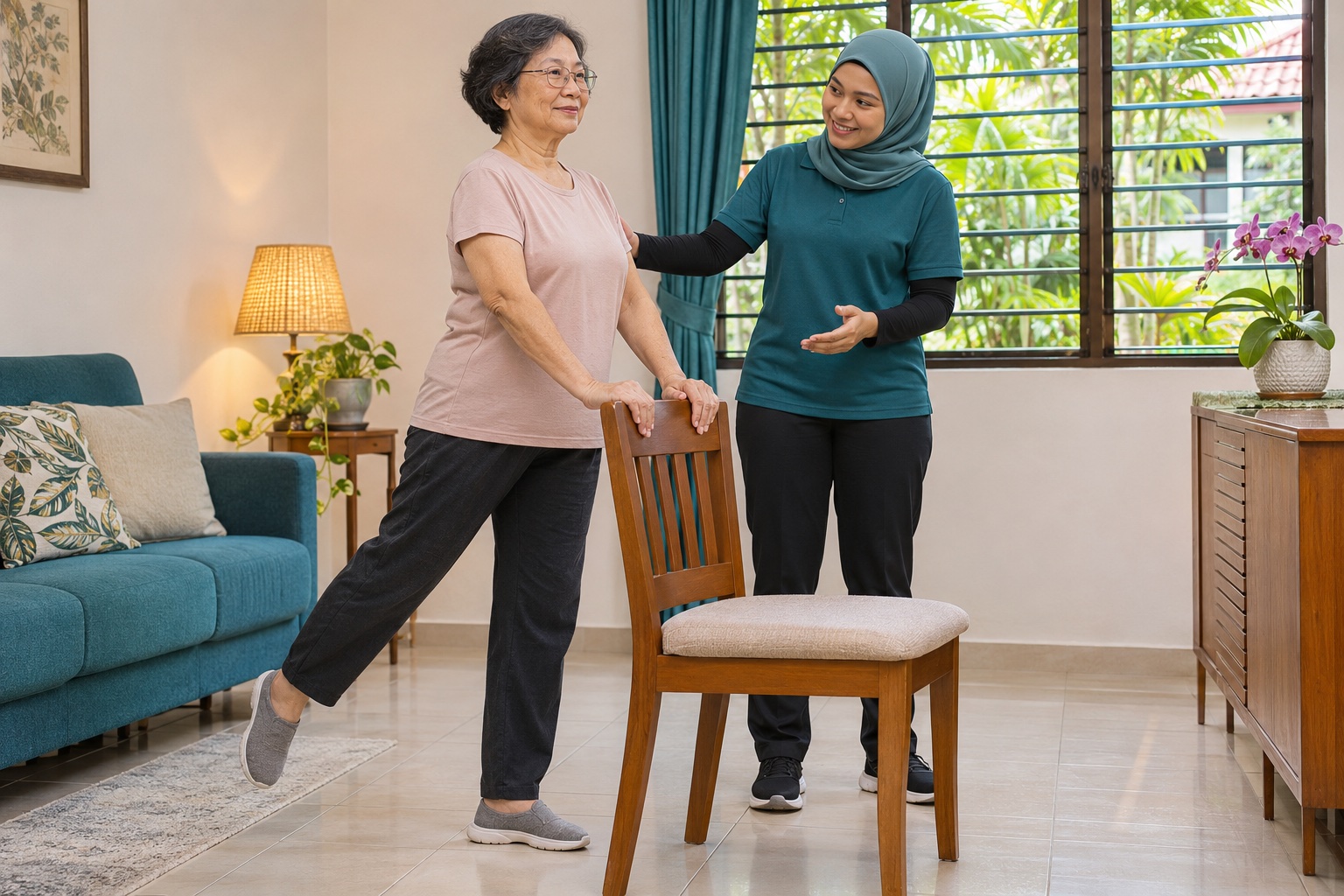
After medical assessment, a home visit may help someone who regularly catches a toe on thresholds or feels unsafe walking to the bathroom.
A condition-specific assessment
- Establish onset, diagnosis and any new sensory or back symptoms.
- Compare available ankle movement, muscle activation and skin sensation.
- Observe toe clearance with usual shoes, support and any prescribed brace.
Treatment options and how they are chosen
Walking practice
- What it involves
- Work on foot placement during a familiar route.
- Why it may be chosen
- Toe drag raises the risk of a trip.
- The everyday goal
- Target entry into the bathroom or bedroom.
- Adapting it at home
- Use an assessed aid, good lighting and sufficient clearance.
- Reviewing progress
- Count catches and note assistance needed on the same route.
Ankle movement training
- What it involves
- Practise available movement appropriate to the diagnosis.
- Why it may be chosen
- Some people retain useful activation; others need mechanical support.
- The everyday goal
- Maintain comfortable foot position for standing or dressing.
- Adapting it at home
- Choose a supported position without forcing a stiff or numb ankle.
- Reviewing progress
- Review active movement and whether it carries over to foot clearance.
Orthotic and shoe review
- What it involves
- Check an existing ankle-foot orthosis and refer for fitting if indicated.
- Why it may be chosen
- A brace may hold the foot in a position that clears the ground.
- The everyday goal
- Reduce catching the toes during ordinary walking.
- Adapting it at home
- Use the prescribed footwear and inspect skin after wear.
- Reviewing progress
- Review rubbing, comfort and walking safety with the orthotist.
Individual rehabilitation goals
- Clear a familiar threshold safely.
- Reduce reliance on furniture.
- Recognise pressure marks from footwear or a brace.
How a home visit is arranged
- Send a brief enquiry with the rehabilitation need, area and whether you are the patient or caregiver.
- The team checks relevant information, service scope, therapist availability and suitability. Share medical documents through the arrangement agreed with the team.
- If suitable, confirm the appointment, full session fee and separate travel charge before the home assessment.
- The physiotherapist assesses the person and discusses an individual plan, consent and practical goals.
- Appropriate treatment, home practice and caregiver guidance are provided, then progress and the need for further visits are reviewed.
Preparing for the visit
Show us the real threshold and the shoes or brace you use. Mention any recent operation, injury or change in back symptoms.
Home visits and clinic rehabilitation
Home reveals trip hazards. Nerve tests, assessment of a spinal cause, custom orthotic fitting and decisions about stimulation require specialist services.
When medical assessment is needed
New foot drop needs prompt medical assessment. Sudden weakness with facial or speech changes, or leg weakness with new bladder, bowel or saddle sensation changes, is an emergency.
For a genuine medical emergency in Malaysia, call 999. A routine physiotherapy enquiry is not an emergency response. Malaysia emergency service information
Patient and caregiver questions
Is foot drop always permanent?
The outlook depends on the cause and degree of injury; a gait examination alone cannot predict recovery.
Should I buy a brace online?
Fit, ankle position, skin sensation and footwear matter. Seek professional assessment first.
Will lifting my knee higher solve it?
That may clear the toes but costs effort and does not address the underlying cause.
Is electrical stimulation for everyone?
No. Suitability depends on the nervous system problem and specialist assessment; availability is not assumed.
Why assess my doorway?
Small thresholds or mats can catch a dragging toe even on a short indoor walk.
The treating physiotherapist
Penang HomePhysio confirms that a clinician is available for this service. Ask the team to confirm the treating physiotherapist's name, qualifications, registration, relevant experience and availability. Tell us your preferred spoken language so the team can check. Website language options do not establish any individual clinician's language abilities.
About the serviceHome visits around Penang
Home visits in Penang are arranged by area and therapist availability. Areas listed on this site include George Town, Bayan Lepas, Butterworth, Bukit Mertajam. Share your postcode and access needs so the team can confirm coverage and travel charges.
See coverage areasPricing and suitability enquiries
See this site's pricing guide. Tell the team your area and care needs to confirm the full fee, including any travel charge, before booking.
Clinical information sources
These sources support the general information. They are not endorsements of this provider or a claim that a clinician has reviewed this page.