Penang HomePhysio
Dementia Mobility Rehabilitation at Home in Penang
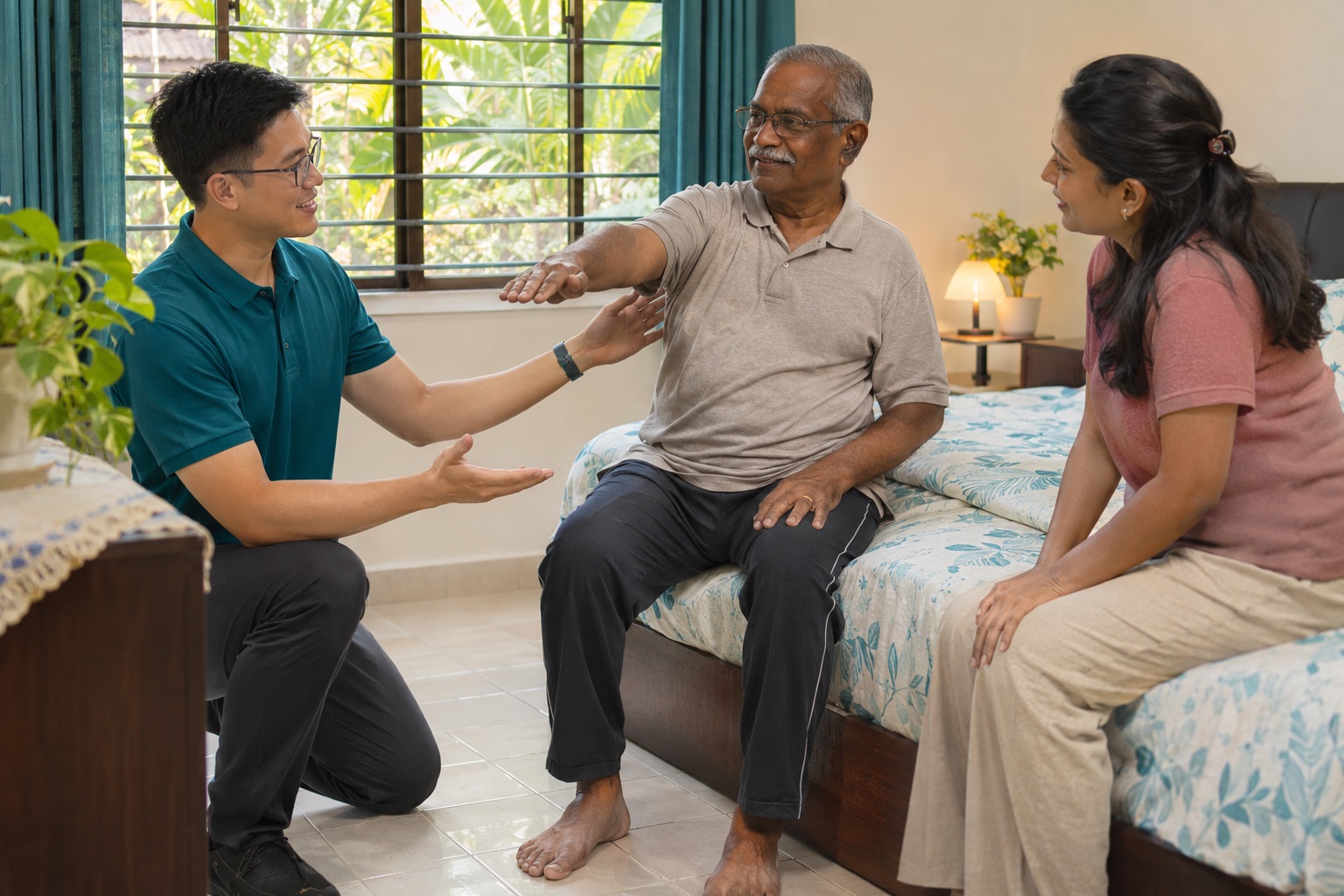
A person with dementia may find familiar movements harder to start, follow or perform safely. Home rehabilitation can focus on meaningful movement in a familiar setting, with communication and assistance adapted to the individual.
Suitability, therapist availability and any medical clearance are checked before an appointment. Rehabilitation is selected after assessment.
Understanding this condition
Dementia is an umbrella term for conditions affecting thinking and everyday function. Memory, attention, judgement or perception can influence mobility even when muscle strength is relatively preserved. Different dementia types have different movement patterns.
Physiotherapy aims to support function, participation and comfort, not cure dementia or restore memory. Sudden mobility or behavioural change may reflect pain, infection or another acute problem and should not automatically be attributed to progression.
Symptoms and everyday difficulties
- Difficulty sequencing the steps of standing or transferring.
- Unsteadiness, altered walking or difficulty judging obstacles.
- Distress or withdrawal when instructions are unfamiliar or complex.
Who may benefit from a home assessment
A person with mobility difficulties may benefit when the session can be made acceptable and safe. Their preferences, consent or appropriate decision-making support, communication needs and caregiver involvement must guide the plan.
A condition-specific assessment
- Ask about dementia type, usual routines, pain behaviours, recent changes and what helps the person feel comfortable.
- Observe familiar tasks rather than relying only on verbal instructions; assess walking, transfers and balance with suitable supervision.
- Review lighting, visual clutter, seating and caregiver assistance, looking for modifications the household can sustain.
Treatment options and how they are chosen
Familiar task practice
- What it involves
- Rehearse a meaningful movement using demonstration and simple cues.
- Why it may be chosen
- Familiar context can make participation easier.
- The everyday goal
- Support standing for dressing or walking to a favourite chair.
- Adapting it at home
- Use consistent objects and a quiet area where possible.
- Reviewing progress
- Review engagement, safety and assistance rather than demanding perfect recall.
Adapted strength and balance activity
- What it involves
- Choose tolerable movement embedded in enjoyable or useful activities.
- Why it may be chosen
- Physical inactivity can add avoidable weakness to cognitive difficulties.
- The everyday goal
- Help maintain chair rising and supported walking.
- Adapting it at home
- Keep tasks short, supported and matched to attention.
- Reviewing progress
- Review comfort and daily function, changing the approach if distress occurs.
Caregiver communication and assistance
- What it involves
- Agree consistent prompts and safe help for specific tasks.
- Why it may be chosen
- Conflicting instructions or pulling can increase distress and risk.
- The everyday goal
- Make routine transfers and care more manageable.
- Adapting it at home
- Practise with the actual furniture and the person's usual caregiver when agreed.
- Reviewing progress
- Review caregiver confidence, patient response and changing support needs.
Individual rehabilitation goals
- Maintain useful mobility where possible.
- Support participation without unnecessary distress.
- Make agreed daily care tasks safer and more comfortable.
How a home visit is arranged
- Send a brief enquiry with the rehabilitation need, area and whether you are the patient or caregiver.
- The team checks relevant information, service scope, therapist availability and suitability. Share medical documents through the arrangement agreed with the team.
- If suitable, confirm the appointment, full session fee and separate travel charge before the home assessment.
- The physiotherapist assesses the person and discusses an individual plan, consent and practical goals.
- Appropriate treatment, home practice and caregiver guidance are provided, then progress and the need for further visits are reviewed.
Preparing for the visit
Arrange a familiar caregiver if the person agrees. Share preferred communication, hearing or vision needs, routines and recent changes; choose a time when they are usually most comfortable.
Home visits and clinic rehabilitation
A familiar home may reduce travel-related distress and reveal real mobility barriers. Medical, memory-clinic, occupational or behavioural support may be needed when symptoms exceed a mobility-focused visit.
When medical assessment is needed
Sudden confusion, a marked new decline, fever, new severe pain or neurological symptoms require medical assessment. Do not assume an abrupt change is simply dementia becoming worse.
For a genuine medical emergency in Malaysia, call 999. A routine physiotherapy enquiry is not an emergency response. Malaysia emergency service information
Patient and caregiver questions
Can physiotherapy cure dementia?
No. The aims are movement, comfort and participation alongside wider dementia care.
What if instructions are not understood?
The therapist may use demonstration, familiar tasks and shorter cues, adjusting to the person's response rather than repeatedly insisting.
Should practice continue if the person becomes distressed?
Pause and explore discomfort, fatigue or an unsuitable approach. Consent and comfort remain central.
Is a caregiver always required?
It depends on communication, safety and assistance needs. Discuss this before the visit, respecting the person's preferences.
How is progress judged?
Useful participation, safer transfers, comfort or maintaining an ability can all matter; improvement is not limited to walking faster.
The treating physiotherapist
Penang HomePhysio confirms that a clinician is available for this service. Ask the team to confirm the treating physiotherapist's name, qualifications, registration, relevant experience and availability. Tell us your preferred spoken language so the team can check. Website language options do not establish any individual clinician's language abilities.
About the serviceHome visits around Penang
Home visits in Penang are arranged by area and therapist availability. Areas listed on this site include George Town, Bayan Lepas, Butterworth, Bukit Mertajam. Share your postcode and access needs so the team can confirm coverage and travel charges.
See coverage areasPricing and suitability enquiries
See this site's pricing guide. Tell the team your area and care needs to confirm the full fee, including any travel charge, before booking.
Clinical information sources
These sources support the general information. They are not endorsements of this provider or a claim that a clinician has reviewed this page.