Penang HomePhysio
Hamstring Strain Rehabilitation at Home in Penang
Pain behind the thigh can affect walking, bending and sitting. Rehabilitation should distinguish a suitable muscle strain from a major tendon injury or pain referred from another area.
Suitability, therapist availability and any medical clearance are checked before an appointment. Rehabilitation is selected after assessment.
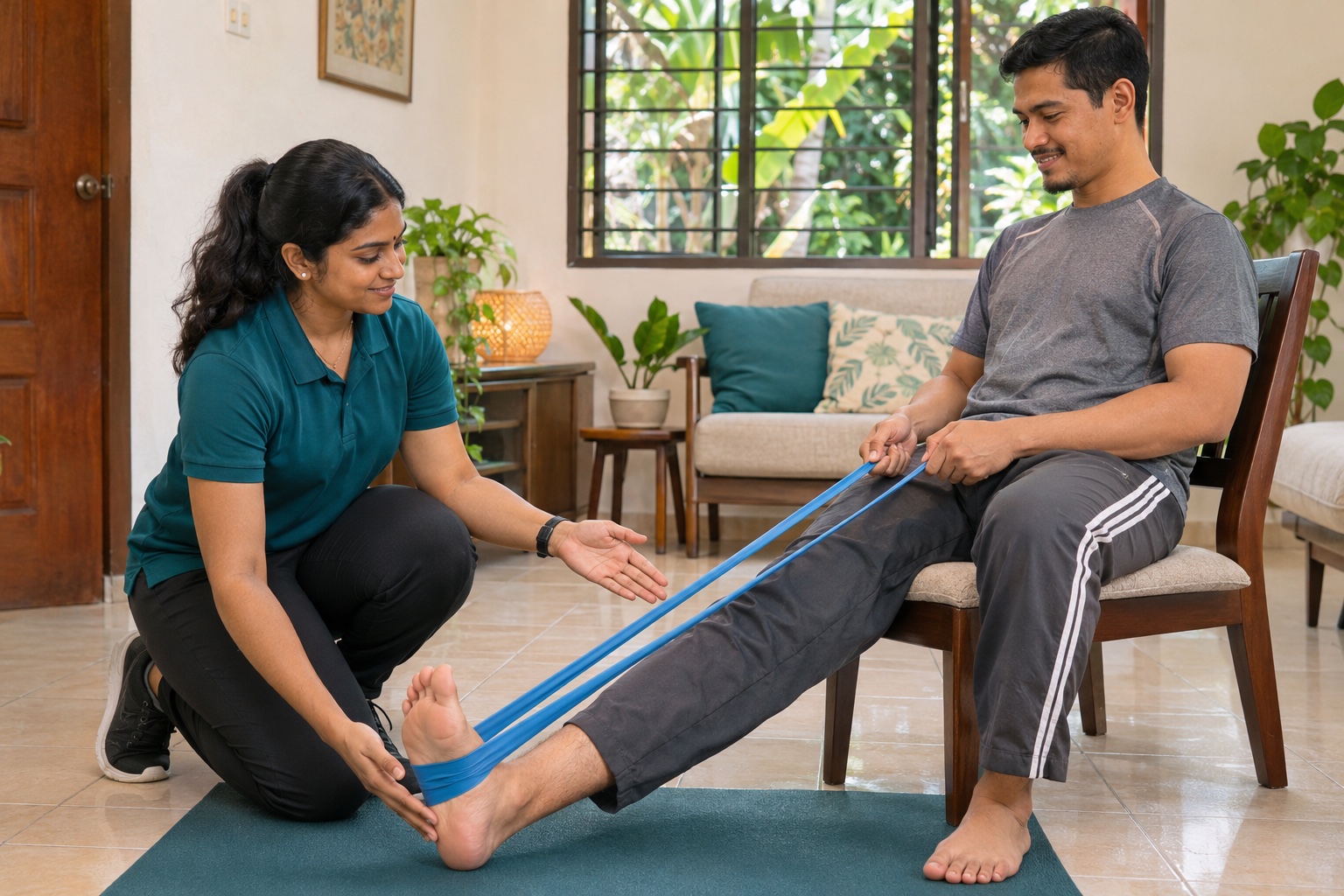
Understanding this condition
The hamstring muscles run along the back of the thigh and help bend the knee and extend the hip. A strain may occur during fast running or a large stretch, with injury severity ranging from mild fibre damage to a more substantial tear.
High pain near the sitting bone, major bruising or sudden marked weakness may suggest a different injury extent, including tendon avulsion. Back-related leg pain can also resemble a hamstring problem and needs a different assessment.
Symptoms and everyday difficulties
- Posterior-thigh pain during a long step or bending.
- Tenderness or bruising after the injury.
- Difficulty sitting, climbing stairs or returning to faster walking.
Who may benefit from a home assessment
A suitable, assessed strain may benefit from home rehabilitation when travel is inconvenient. The injury location, mechanism, walking ability and medical findings determine what can safely be started at home.
A condition-specific assessment
- Review sprinting or stretching mechanism, the exact painful area, immediate weakness and bruising.
- Assess comfortable knee and hip movement and hamstring capacity at a level appropriate to the injury.
- Consider back or nerve-related symptoms and identify practical limitations such as sitting, stairs or household bending.
Treatment options and how they are chosen
Progressive hamstring loading
- What it involves
- Introduce selected contractions and gradually appropriate resistance through the assessed range.
- Why it may be chosen
- Muscle capacity needs to match the tasks the person wants to regain.
- The everyday goal
- Target control when bending, extending the hip and slowing the leg during walking.
- Adapting it at home
- Use safe supported positions and suitable household space; avoid imposing a demanding exercise because it is popular online.
- Reviewing progress
- Compare strength, movement quality and symptoms during and after loading before progression.
Graded movement and daily tasks
- What it involves
- Practise tolerable hip and knee movement and the mechanics of selected daily activities.
- Why it may be chosen
- Fear, guarding and stiffness can limit useful movement after injury.
- The everyday goal
- Address reaching towards the floor, sitting down and negotiating steps.
- Adapting it at home
- Adjust task height or support and avoid forceful end-range stretching in an irritable injury.
- Reviewing progress
- Review the ability to complete the task and symptom recovery rather than pursuing flexibility alone.
Walking and sports transition
- What it involves
- Build an appropriate walking pattern and later discuss graduated running requirements.
- Why it may be chosen
- Pain-free slow walking does not establish readiness for sprinting.
- The everyday goal
- Support ordinary outings while preparing for the higher forces of sport when relevant.
- Adapting it at home
- Begin with manageable walking routes; advanced acceleration or speed work needs a suitable setting.
- Reviewing progress
- Use strength and task-specific findings, not a fixed number of days, to decide when further sports assessment is appropriate.
Individual rehabilitation goals
- Walk and bend with more confidence.
- Sit or manage stairs with tolerable symptoms.
- Develop the capacity needed for an individually assessed return to higher-demand activity.
How a home visit is arranged
- Send a brief enquiry with the rehabilitation need, area and whether you are the patient or caregiver.
- The team checks relevant information, service scope, therapist availability and suitability. Share medical documents through the arrangement agreed with the team.
- If suitable, confirm the appointment, full session fee and separate travel charge before the home assessment.
- The physiotherapist assesses the person and discusses an individual plan, consent and practical goals.
- Appropriate treatment, home practice and caregiver guidance are provided, then progress and the need for further visits are reviewed.
Preparing for the visit
Provide the injury history and any scan or specialist advice. Explain sitting and work demands, and prepare a clear area for safe movement. A caregiver is useful only where assistance or safety requires it.
Home visits and clinic rehabilitation
Home treatment can address early strength and everyday function. High-speed running, repeated sprinting and sport-specific testing require appropriate facilities; suspected avulsion or major tear needs specialist evaluation.
When medical assessment is needed
Seek prompt medical review for a sudden severe injury with extensive bruising, marked weakness or inability to walk. New numbness, worsening neurological symptoms or bowel/bladder changes require appropriate urgent assessment rather than routine hamstring exercises.
For a genuine medical emergency in Malaysia, call 999. A routine physiotherapy enquiry is not an emergency response. Malaysia emergency service information
Patient and caregiver questions
Is stretching enough for a hamstring strain?
Usually the plan must consider strength and function as well as movement. Stretching alone does not establish readiness for demanding activity.
Why can sitting hurt?
The painful area may be close to the upper hamstring attachment, but the cause needs assessment. Persistent severe sitting pain should not be assumed to be a minor strain.
Can I return to football when walking is comfortable?
Comfortable walking is only one milestone. Football adds acceleration, kicking and sudden changes of direction that need separate assessment.
Do I need a scan?
Not every strain requires imaging. A clinician or doctor considers the injury severity, suspected tendon involvement and whether imaging would change management.
Will the same programme prevent all future injuries?
No programme guarantees prevention. Rehabilitation aims to address assessed deficits and activity demands, with an appropriate progression and review.
The treating physiotherapist
Penang HomePhysio confirms that a clinician is available for this service. Ask the team to confirm the treating physiotherapist's name, qualifications, registration, relevant experience and availability. Tell us your preferred spoken language so the team can check. Website language options do not establish any individual clinician's language abilities.
About the serviceHome visits around Penang
Home visits in Penang are arranged by area and therapist availability. Areas listed on this site include George Town, Bayan Lepas, Butterworth, Bukit Mertajam. Share your postcode and access needs so the team can confirm coverage and travel charges.
See coverage areasPricing and suitability enquiries
See this site's pricing guide. Tell the team your area and care needs to confirm the full fee, including any travel charge, before booking.
Clinical information sources
These sources support the general information. They are not endorsements of this provider or a claim that a clinician has reviewed this page.