Penang HomePhysio
Calf Muscle Strain Rehabilitation at Home in Penang
A calf strain may make pushing off, climbing steps or walking normally difficult. Home rehabilitation starts with confirming that the symptoms fit a muscle injury and that protected activity is appropriate.
Suitability, therapist availability and any medical clearance are checked before an appointment. Rehabilitation is selected after assessment.
Understanding this condition
A strain involves injury to calf muscle fibres, sometimes at the muscle-tendon junction. The calf helps raise the heel and control the lower leg during walking; pain and weakness can reduce this function.
Not every painful swollen calf is a strain. Achilles rupture, a blood clot and other causes need consideration, especially without a clear injury mechanism. Rehabilitation does not replace urgent assessment of those problems.
Symptoms and everyday difficulties
- Pain at the back of the lower leg after a specific movement or load.
- Bruising, tenderness or difficulty pushing off.
- A shorter step, limp or trouble using stairs.
Who may benefit from a home assessment
An assessed, suitable muscle injury may be managed partly at home when travel is difficult. The degree of injury, walking ability and medical risk factors guide the starting activity; unexplained swelling must be assessed first.
A condition-specific assessment
- Clarify the injury event, immediate loss of function, bruising and any clot risk factors.
- Assess comfortable ankle movement, calf activation and Achilles function where appropriate, without repeatedly provoking the injury.
- Observe walking and steps, and identify the household activity most affected by reduced push-off.
Treatment options and how they are chosen
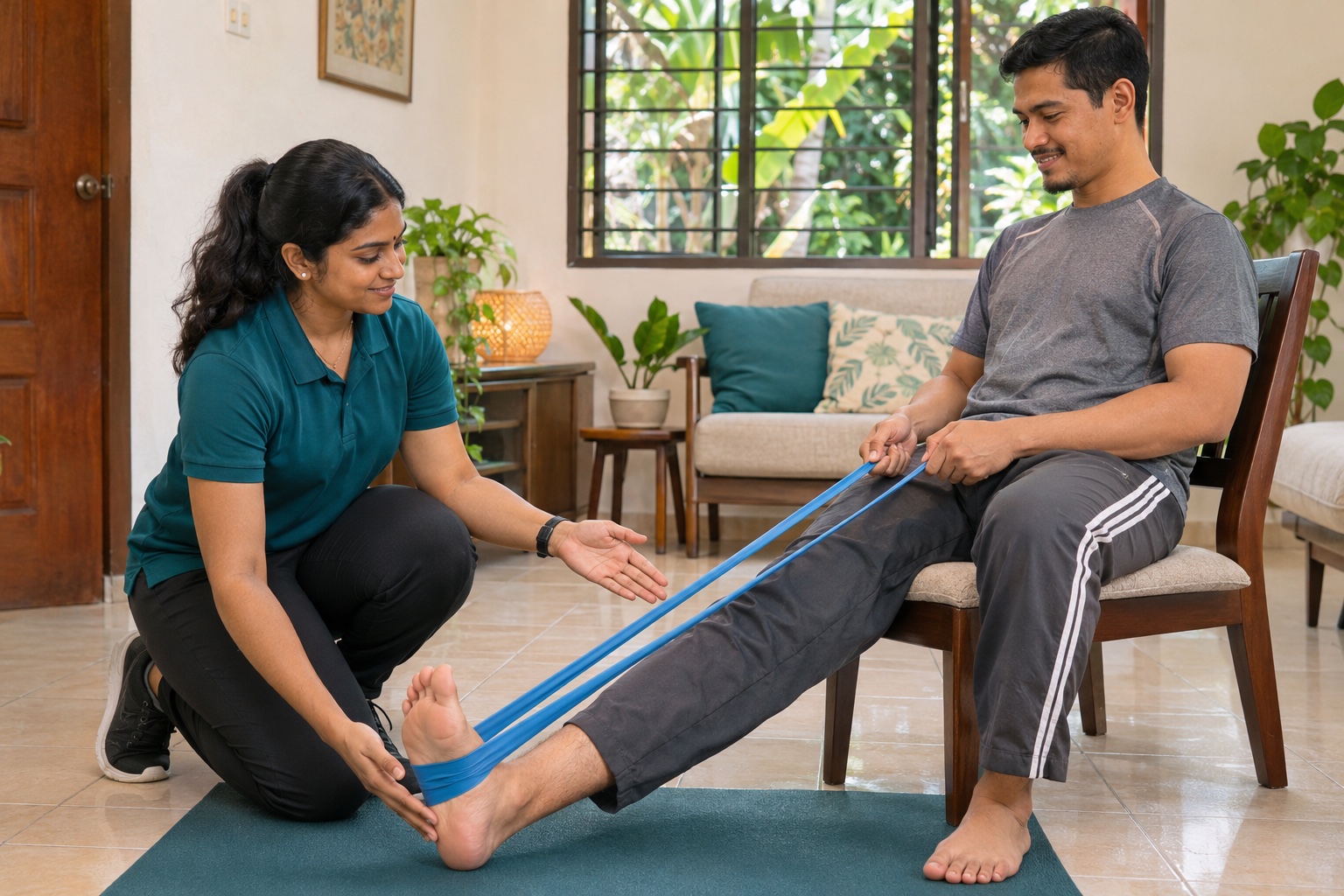
Graded calf strengthening
- What it involves
- Begin with a contraction or movement level that the assessed injury can tolerate.
- Why it may be chosen
- Appropriate muscle loading supports restoration of capacity after the protective phase.
- The everyday goal
- Target weak push-off and standing endurance.
- Adapting it at home
- Use seated or supported positions before more demanding heel-rise tasks when suitable.
- Reviewing progress
- Review pain, strength and later symptoms; sudden weakness or worsening swelling requires reassessment.
Comfortable movement recovery
- What it involves
- Practise permitted ankle movement and gradually appropriate calf lengthening.
- Why it may be chosen
- Guarding and reduced use can restrict the movement needed for an efficient step.
- The everyday goal
- Address difficulty moving over the foot when walking.
- Adapting it at home
- Use clear instruction and a safe supported position rather than forceful stretching.
- Reviewing progress
- Compare motion and walking comfort, progressing only when the injury response supports it.
Walking and return-to-activity planning
- What it involves
- Rehearse a suitable walking pattern and manage distance or pace.
- Why it may be chosen
- A limp and sudden increases in activity may overload healing muscle.
- The everyday goal
- Restore necessary household walking before more demanding running or jumping.
- Adapting it at home
- Use manageable routes and assess an aid when required; avoid testing sprinting in a confined space.
- Reviewing progress
- Review stride quality, calf endurance and task-specific ability before recommending later sports assessment.
Individual rehabilitation goals
- Walk household routes with a more comfortable step.
- Regain appropriate calf strength for daily activity.
- Build readiness for later higher-demand rehabilitation when needed.
How a home visit is arranged
- Send a brief enquiry with the rehabilitation need, area and whether you are the patient or caregiver.
- The team checks relevant information, service scope, therapist availability and suitability. Share medical documents through the arrangement agreed with the team.
- If suitable, confirm the appointment, full session fee and separate travel charge before the home assessment.
- The physiotherapist assesses the person and discusses an individual plan, consent and practical goals.
- Appropriate treatment, home practice and caregiver guidance are provided, then progress and the need for further visits are reviewed.
Preparing for the visit
Describe the injury and any swelling changes, and have discharge or assessment information available. Prepare a clear walking route and stable chair. Do not massage an unexplained painful swollen calf while awaiting assessment.
Home visits and clinic rehabilitation
Home care can support early movement, strength and ordinary walking. High-speed running, repeated jumping or sport-specific return testing needs suitable facilities and a separate readiness assessment.
When medical assessment is needed
A newly painful swollen calf without a clear explanation needs urgent medical assessment, particularly with redness or warmth. Chest pain or breathlessness requires emergency care. A sudden pop with major loss of push-off needs prompt review for Achilles or other significant injury.
For a genuine medical emergency in Malaysia, call 999. A routine physiotherapy enquiry is not an emergency response. Malaysia emergency service information
Patient and caregiver questions
How is a calf strain different from Achilles rupture?
They affect different tissues and can overlap in symptoms. A sudden pop or inability to push off should be assessed rather than self-diagnosed from pain location.
Should I stretch hard immediately?
No. The early movement and loading level depends on the injury. Aggressive stretching is not a shortcut to healing.
Can I walk if I limp?
Walking amount and support should be reviewed. A marked limp may mean the current task is too demanding or an aid is needed temporarily.
When can I run again?
There is no universal date. Strength, walking and higher-load task tolerance, along with the injury assessment, determine readiness for a staged return.
What if swelling increases despite resting?
Seek reassessment, especially if the cause is unclear or the calf is warm or red. Do not assume every change is part of a muscle strain.
The treating physiotherapist
Penang HomePhysio confirms that a clinician is available for this service. Ask the team to confirm the treating physiotherapist's name, qualifications, registration, relevant experience and availability. Tell us your preferred spoken language so the team can check. Website language options do not establish any individual clinician's language abilities.
About the serviceHome visits around Penang
Home visits in Penang are arranged by area and therapist availability. Areas listed on this site include George Town, Bayan Lepas, Butterworth, Bukit Mertajam. Share your postcode and access needs so the team can confirm coverage and travel charges.
See coverage areasPricing and suitability enquiries
See this site's pricing guide. Tell the team your area and care needs to confirm the full fee, including any travel charge, before booking.
Clinical information sources
These sources support the general information. They are not endorsements of this provider or a claim that a clinician has reviewed this page.