Penang HomePhysio
Achilles Tendinopathy Physiotherapy at Home in Penang
Home physiotherapy can help with Achilles tendinopathy through insertional versus midportion assessment, graded loading and activity guidance, after the pattern and suitability are confirmed.
Suitability, therapist availability and any medical clearance are checked before an appointment. Rehabilitation is selected after assessment.
Understanding this condition
Achilles tendinopathy is load-related pain in the tendon at the back of the heel. There are two common patterns: insertional, where the tendon attaches to the heel bone, and midportion, higher up the tendon. Because the loading and rehab differ, assessment comes first.
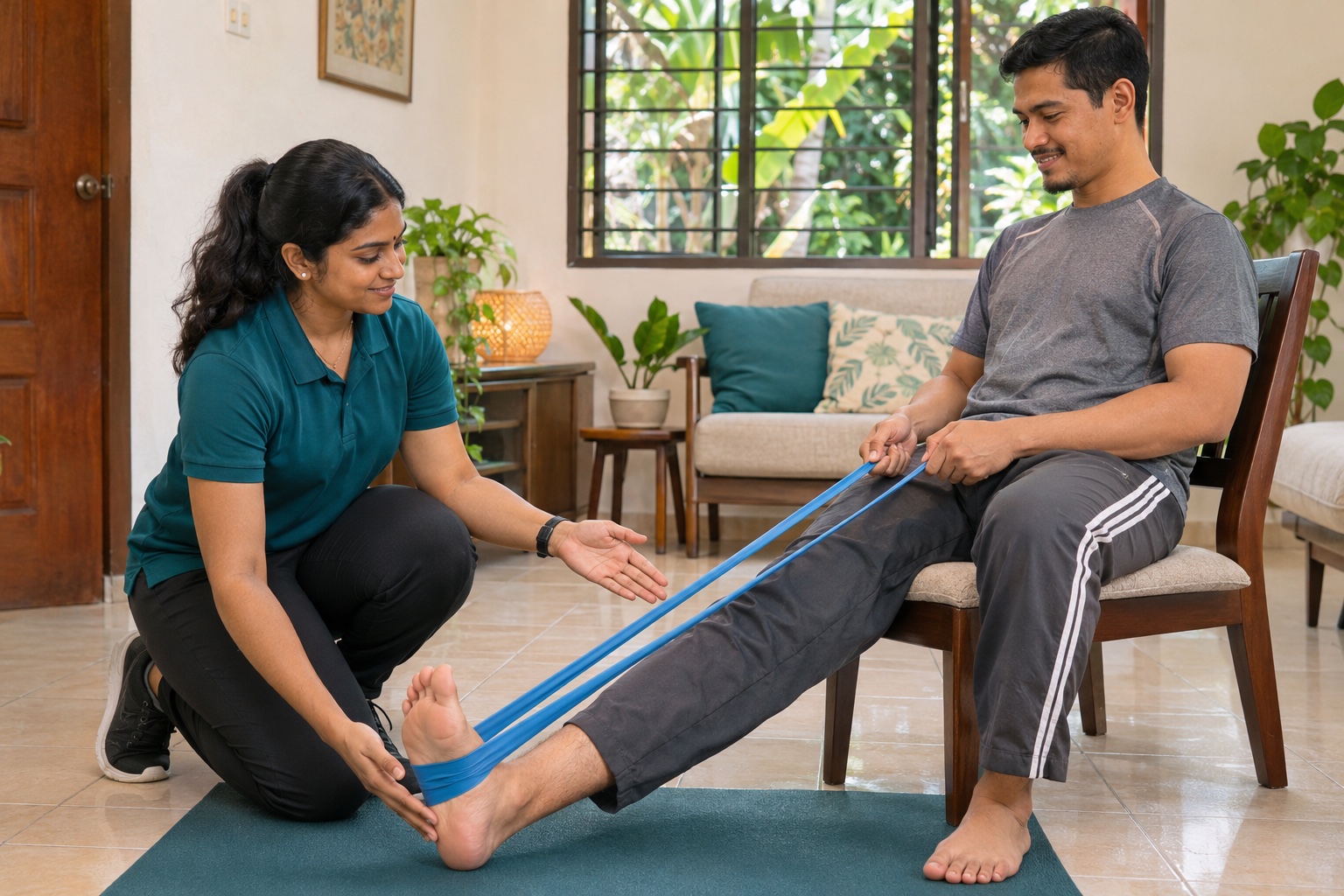
A physiotherapist can assess your heel at home and guide a graded plan that rebuilds tendon capacity and controls the loads that aggravate it. Whether this approach suits you is confirmed after assessment, with referral arranged if another cause is suspected.
Symptoms and everyday difficulties
- Pain at the back of the heel, worse with stairs, walking or running
- Morning stiffness in the tendon
- Tenderness over the tendon or where it attaches to the heel bone
Who may benefit from a home assessment
Physiotherapy suits many people with Achilles tendinopathy once the pattern, insertional or midportion, is confirmed and other causes ruled out. Whether this approach suits you is confirmed after assessment, with referral arranged if needed.
A condition-specific assessment
- Review of your activity, footwear and how the pain behaves with load
- Movement and tendon checks to locate the pain and distinguish insertional from midportion
- Strength and function tests to set a safe starting load
Treatment options and how they are chosen
Graded loading for the tendon
- What it involves
- A carefully progressed loading plan suited to insertional or midportion tendinopathy.
- Why it may be chosen
- Tendons respond best to gradual, controlled load rather than rest alone.
- The everyday goal
- Helps you return to walking, stairs and activity with less pain.
- Adapting it at home
- Exercises use body weight and simple positions suited to your home setup.
- Reviewing progress
- Load increases as pain and strength allow, reviewed each session.
Calf and ankle strengthening
- What it involves
- Strengthening for the calf and ankle muscles that support the tendon.
- Why it may be chosen
- Stronger muscles share load and help reduce stress on the tendon.
- The everyday goal
- Builds steadier, more confident movement for walking and stairs.
- Adapting it at home
- Exercises are tailored to your surfaces and available equipment.
- Reviewing progress
- Strength and control advance as the tendon tolerates it.
Activity and footwear guidance
- What it involves
- Guidance on pacing walking, stairs and running, and on supportive footwear.
- Why it may be chosen
- Matching activity to tendon capacity helps it settle while you stay active.
- The everyday goal
- Helps you keep moving without flaring the pain.
- Adapting it at home
- Advice reflects your home setup and the activity you do.
- Reviewing progress
- Activity is reintroduced step by step as tolerance improves.
Individual rehabilitation goals
- Reduce heel and tendon pain during walking and stairs
- Rebuild tendon capacity for daily activity and sport
- Return to activity through a graded, reviewed plan
How a home visit is arranged
- Send a brief enquiry with the rehabilitation need, area and whether you are the patient or caregiver.
- The team checks relevant information, service scope, therapist availability and suitability. Share medical documents through the arrangement agreed with the team.
- If suitable, confirm the appointment, full session fee and separate travel charge before the home assessment.
- The physiotherapist assesses the person and discusses an individual plan, consent and practical goals.
- Appropriate treatment, home practice and caregiver guidance are provided, then progress and the need for further visits are reviewed.
Preparing for the visit
Wear loose clothing that allows the ankle to move. Have your usual footwear ready to discuss. Note when the pain is worst, such as in the morning or after activity, so you can share it with the physiotherapist.
Home visits and clinic rehabilitation
Home sessions let the physiotherapist see how you manage your own floors and stairs. Later-stage return to running or high-load sport may suit a clinic or gym setting, and that is discussed when it becomes relevant to your goals.
When medical assessment is needed
Pain at the back of the heel can come from other sources, including a tendon rupture or a heel bone issue. A physiotherapist screens for these and refers if another cause is suspected. Sudden pain, a snap, weakness when pushing off or inability to walk needs urgent medical assessment.
For a genuine medical emergency in Malaysia, call 999. A routine physiotherapy enquiry is not an emergency response. Malaysia emergency service information
Patient and caregiver questions
What is the difference between insertional and midportion Achilles tendinopathy?
Insertional tendinopathy affects the tendon where it attaches to the heel bone, while midportion tendinopathy is higher up the tendon. The loading and rehab differ, so the physiotherapist locates the pain first.
Should I rest my Achilles completely?
Rest alone rarely helps tendinopathy. A graded loading plan, where load is increased gradually, usually works better. The physiotherapist sets the right starting load for you.
How long does Achilles tendinopathy take to settle?
Recovery is often gradual because tendons build capacity slowly. The physiotherapist reviews your progress each visit and adjusts the pace accordingly.
Should I lower my heel deeply off a step?
Not automatically. For pain where the tendon meets the heel, deep lowering may increase compression. The clinician selects the range.
When should I seek urgent medical review for heel pain?
If you feel a sudden snap, have weakness when pushing off or cannot walk, seek urgent medical assessment. The physiotherapist screens for these concerns and advises on the right next step.
The treating physiotherapist
Penang HomePhysio confirms that a clinician is available for this service. Ask the team to confirm the treating physiotherapist's name, qualifications, registration, relevant experience and availability. Tell us your preferred spoken language so the team can check. Website language options do not establish any individual clinician's language abilities.
About the serviceHome visits around Penang
Home visits in Penang are arranged by area and therapist availability. Areas listed on this site include George Town, Bayan Lepas, Butterworth, Bukit Mertajam. Share your postcode and access needs so the team can confirm coverage and travel charges.
See coverage areasPricing and suitability enquiries
See this site's pricing guide. Tell the team your area and care needs to confirm the full fee, including any travel charge, before booking.
Clinical information sources
These sources support the general information. They are not endorsements of this provider or a claim that a clinician has reviewed this page.