Penang HomePhysio
Plantar Heel Pain Physiotherapy at Home in Penang
Pain beneath the heel can make the first steps of the day and ordinary household walking uncomfortable. Assessment helps identify suitable rehabilitation rather than assuming every painful heel has the same cause.
Suitability, therapist availability and any medical clearance are checked before an appointment. Rehabilitation is selected after assessment.
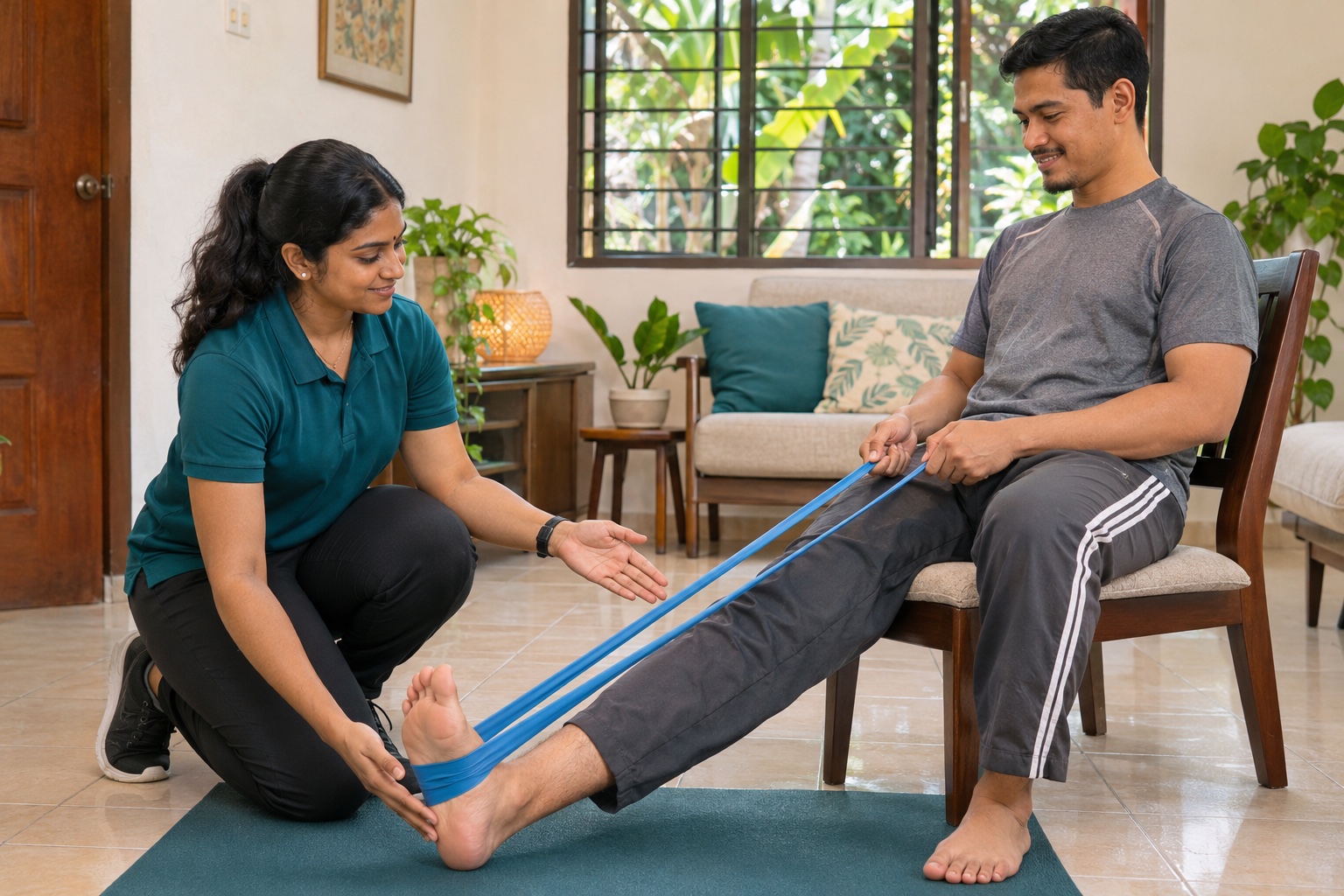
Understanding this condition
Plantar fasciitis is a common name for pain associated with the plantar fascia, the supportive tissue beneath the foot. Symptoms often relate to how much standing or walking the foot can currently tolerate.
Heel pain can also arise from other tissues, a stress injury or nerve problems. A heel spur on an image does not by itself explain the pain. Physiotherapy addresses assessed movement and loading problems alongside medical or podiatry care when needed.
Symptoms and everyday difficulties
- Pain on the first steps after rest.
- Difficulty standing to cook or walking on hard flooring.
- Reduced confidence returning to longer walks because symptoms flare afterwards.
Who may benefit from a home assessment
Home assessment may suit an adult whose heel pain makes clinic travel difficult. Persistent, atypical or severe symptoms need an appropriate diagnosis before the problem is treated as routine plantar heel pain.
A condition-specific assessment
- Discuss when pain appears, recent changes in walking and work, footwear, diabetes and sensory symptoms.
- Review ankle movement, calf and foot strength, and tolerance of standing and walking rather than relying on one painful test.
- Observe the routes and surfaces used at home and agree a useful starting activity that can be monitored.
Treatment options and how they are chosen
Graded foot and calf loading
- What it involves
- Choose tolerable strengthening tasks after assessing current capacity.
- Why it may be chosen
- Loading may help build the capacity needed for everyday weight bearing.
- The everyday goal
- Target repeated standing and the push-off part of walking.
- Adapting it at home
- Use a stable support and an individually selected seated or standing starting position.
- Reviewing progress
- Review task quality, walking tolerance and the symptom response later that day and the next morning.
Selected mobility work
- What it involves
- Use appropriate calf or plantar-foot mobility exercises within a comfortable range.
- Why it may be chosen
- Limited movement may affect how pressure is distributed during walking.
- The everyday goal
- Address difficulty moving forward over the foot during a step.
- Adapting it at home
- Practise a small number of suitable movements using clear instructions and safe support.
- Reviewing progress
- Reassess movement and function; stronger stretching is not automatically better.
Activity and footwear planning
- What it involves
- Review the pattern of standing, walking, rest and footwear use.
- Why it may be chosen
- Sudden increases in loading or poorly tolerated footwear can maintain irritation.
- The everyday goal
- Make cooking, shopping and short outings more manageable.
- Adapting it at home
- Break demanding tasks into smaller amounts and discuss supportive footwear or a podiatry opinion when appropriate.
- Reviewing progress
- Compare ability to complete valued tasks and the frequency of symptom flares before increasing demands.
Individual rehabilitation goals
- Take first steps with greater confidence.
- Stand for an agreed household task more comfortably.
- Build a sustainable walking routine without repeated flare-ups.
How a home visit is arranged
- Send a brief enquiry with the rehabilitation need, area and whether you are the patient or caregiver.
- The team checks relevant information, service scope, therapist availability and suitability. Share medical documents through the arrangement agreed with the team.
- If suitable, confirm the appointment, full session fee and separate travel charge before the home assessment.
- The physiotherapist assesses the person and discusses an individual plan, consent and practical goals.
- Appropriate treatment, home practice and caregiver guidance are provided, then progress and the need for further visits are reviewed.
Preparing for the visit
Have frequently worn shoes available and describe work, exercise and household walking demands. A safe chair and clear walking area help assessment; do not buy specialist insoles before discussing the need.
Home visits and clinic rehabilitation
Home visits allow actual flooring and daily tasks to be assessed. Persistent symptoms, uncertain diagnosis or a need for specialist footwear assessment may be better addressed with a clinic, medical or podiatry review.
When medical assessment is needed
Seek medical review for severe or worsening pain, inability to bear weight after injury, numbness or unexplained swelling. A hot, red, swollen foot or a wound, especially with diabetes, needs prompt assessment rather than routine exercise advice.
For a genuine medical emergency in Malaysia, call 999. A routine physiotherapy enquiry is not an emergency response. Malaysia emergency service information
Patient and caregiver questions
Does first-step pain prove plantar fasciitis?
No. It is a useful symptom pattern, but the history and examination must consider other causes of heel pain.
Should I stop all walking?
A tolerable amount of activity is usually discussed individually. The aim is to adjust excessive loading while preserving useful movement, not prescribe blanket bed rest.
Will a heel spur need to be removed?
A spur can be present without causing symptoms. Medical findings and function guide treatment; its presence does not automatically mean surgery is required.
Are exercises the same for everyone?
No. Foot and calf capacity, symptoms, health and daily demands determine the starting position and progression.
How are further visits decided?
Review first-step symptoms, standing and walking goals, and the response to home practice. Persistent deterioration prompts reassessment rather than simply adding sessions.
The treating physiotherapist
Penang HomePhysio confirms that a clinician is available for this service. Ask the team to confirm the treating physiotherapist's name, qualifications, registration, relevant experience and availability. Tell us your preferred spoken language so the team can check. Website language options do not establish any individual clinician's language abilities.
About the serviceHome visits around Penang
Home visits in Penang are arranged by area and therapist availability. Areas listed on this site include George Town, Bayan Lepas, Butterworth, Bukit Mertajam. Share your postcode and access needs so the team can confirm coverage and travel charges.
See coverage areasPricing and suitability enquiries
See this site's pricing guide. Tell the team your area and care needs to confirm the full fee, including any travel charge, before booking.
Clinical information sources
These sources support the general information. They are not endorsements of this provider or a claim that a clinician has reviewed this page.