Penang HomePhysio
Metatarsalgia Physiotherapy at Home in Penang
Forefoot pain can make pushing off, standing to cook or walking barefoot difficult. Metatarsalgia names the painful area, so a useful rehabilitation plan starts by understanding the cause.
Suitability, therapist availability and any medical clearance are checked before an appointment. Rehabilitation is selected after assessment.
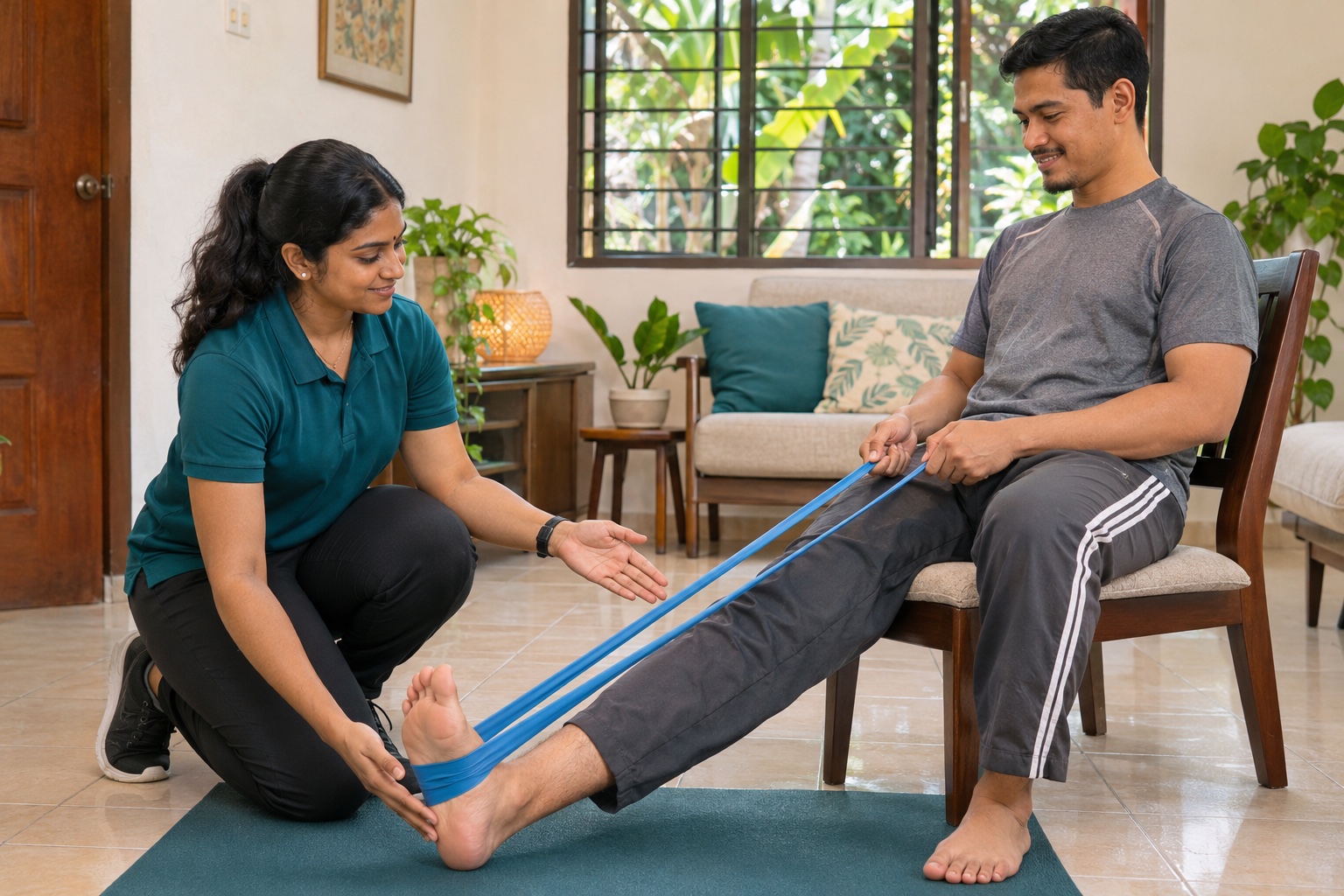
Understanding this condition
Metatarsalgia refers to pain beneath the ball of the foot around the metatarsal heads. It can relate to pressure distribution, joint or soft-tissue problems, footwear and activity demands.
It is a symptom description rather than one specific diagnosis. Nerve irritation, stress fracture, inflammatory disease or a skin lesion may need different care. Physiotherapy cannot replace the relevant medical or podiatry assessment.
Symptoms and everyday difficulties
- Pain beneath the forefoot when standing or pushing off.
- A sensation of walking on a small stone or a tender area under the toes.
- Difficulty tolerating shoes or completing longer walks.
Who may benefit from a home assessment
Home assessment may suit someone with a medically suitable musculoskeletal cause who struggles to travel. Diabetes, altered sensation, wounds or suspected bony injury need appropriate screening before routine foot-loading exercises.
A condition-specific assessment
- Map the exact pain location and discuss footwear, activity change, previous injury and any burning or numbness.
- Review toe and ankle movement, foot strength, skin pressure areas and the pattern of walking.
- Consider whether joint, tendon, nerve or bone findings require referral, and identify the standing tasks the person most wants to regain.
Treatment options and how they are chosen
Pressure and footwear planning
- What it involves
- Discuss footwear fit and ways to reduce poorly tolerated forefoot pressure.
- Why it may be chosen
- Symptoms may be affected by a narrow toe box, repeated push-off or long standing.
- The everyday goal
- Help the person stand for household tasks and walk necessary distances.
- Adapting it at home
- Compare commonly worn shoes and divide lengthy tasks; seek podiatry advice for padding or orthoses rather than prescribing one device for everyone.
- Reviewing progress
- Review comfort, skin response and function in the chosen footwear.
Selected foot and ankle exercises
- What it involves
- Practise movement or strength exercises directed at identified limitations.
- Why it may be chosen
- A specific mobility or capacity problem may affect how load is shared across the foot.
- The everyday goal
- Address difficulty controlling the foot during a step rather than exercising every painful structure indiscriminately.
- Adapting it at home
- Choose seated or supported tasks that do not repeatedly provoke the painful area.
- Reviewing progress
- Recheck movement and walking response, and change the plan if pain consistently increases.
Walking and activity adaptation
- What it involves
- Review stride demands, route length and periods of rest.
- Why it may be chosen
- Repeated overload can make a pressure-sensitive forefoot harder to settle.
- The everyday goal
- Support essential errands and household walking while the cause is managed.
- Adapting it at home
- Use shorter bouts and suitable surfaces; an aid may be assessed if unloading is needed.
- Reviewing progress
- Progress according to function and symptom recovery, not a fixed walking target.
Individual rehabilitation goals
- Complete a chosen standing task with less forefoot discomfort.
- Find a manageable footwear and walking strategy.
- Recognize when specialist assessment is needed.
How a home visit is arranged
- Send a brief enquiry with the rehabilitation need, area and whether you are the patient or caregiver.
- The team checks relevant information, service scope, therapist availability and suitability. Share medical documents through the arrangement agreed with the team.
- If suitable, confirm the appointment, full session fee and separate travel charge before the home assessment.
- The physiotherapist assesses the person and discusses an individual plan, consent and practical goals.
- Appropriate treatment, home practice and caregiver guidance are provided, then progress and the need for further visits are reviewed.
Preparing for the visit
Have several pairs of everyday footwear available and explain which tasks or surfaces provoke pain. Note any skin changes and bring medical information about diabetes or neuropathy when relevant.
Home visits and clinic rehabilitation
Home visits show real footwear and activity demands. A suspected fracture, nerve lesion, structural toe deformity or need for custom pressure relief may require medical or podiatry facilities instead of exercise alone.
When medical assessment is needed
Seek medical assessment for a hot red swollen foot, a wound, new numbness, sudden severe pain or inability to bear weight. Persistent focal pain after increased loading may need assessment for a stress injury. Diabetes lowers the threshold for prompt foot review.
For a genuine medical emergency in Malaysia, call 999. A routine physiotherapy enquiry is not an emergency response. Malaysia emergency service information
Patient and caregiver questions
Is metatarsalgia a diagnosis?
It describes pain in the ball of the foot. Treatment depends on the underlying cause, which may involve joints, nerves, bones, skin or loading.
Is it the same as plantar fasciitis?
No. Plantar heel pain is usually felt nearer the heel, whereas metatarsalgia affects the forefoot. Both require assessment rather than a label based only on location.
Will all insoles help?
No. Padding and supports need to match the pressure problem and footwear. Poorly positioned support can be uncomfortable, so specialist advice may be appropriate.
Should I stretch the painful toes forcefully?
No. The exercise choice depends on the cause and examination. Forceful movement is not a universal solution for forefoot pain.
What if the pain burns or tingles?
Mention this before treatment. Nerve-related symptoms require consideration of causes other than simple mechanical pressure and may need referral.
The treating physiotherapist
Penang HomePhysio confirms that a clinician is available for this service. Ask the team to confirm the treating physiotherapist's name, qualifications, registration, relevant experience and availability. Tell us your preferred spoken language so the team can check. Website language options do not establish any individual clinician's language abilities.
About the serviceHome visits around Penang
Home visits in Penang are arranged by area and therapist availability. Areas listed on this site include George Town, Bayan Lepas, Butterworth, Bukit Mertajam. Share your postcode and access needs so the team can confirm coverage and travel charges.
See coverage areasPricing and suitability enquiries
See this site's pricing guide. Tell the team your area and care needs to confirm the full fee, including any travel charge, before booking.
Clinical information sources
These sources support the general information. They are not endorsements of this provider or a claim that a clinician has reviewed this page.