Penang HomePhysio
Posterior Tibial Tendon Rehabilitation at Home in Penang
Pain around the inner ankle and a changing arch may affect standing and walking. Home rehabilitation can be considered after the tendon, foot alignment and suitability for conservative care are assessed.
Suitability, therapist availability and any medical clearance are checked before an appointment. Rehabilitation is selected after assessment.
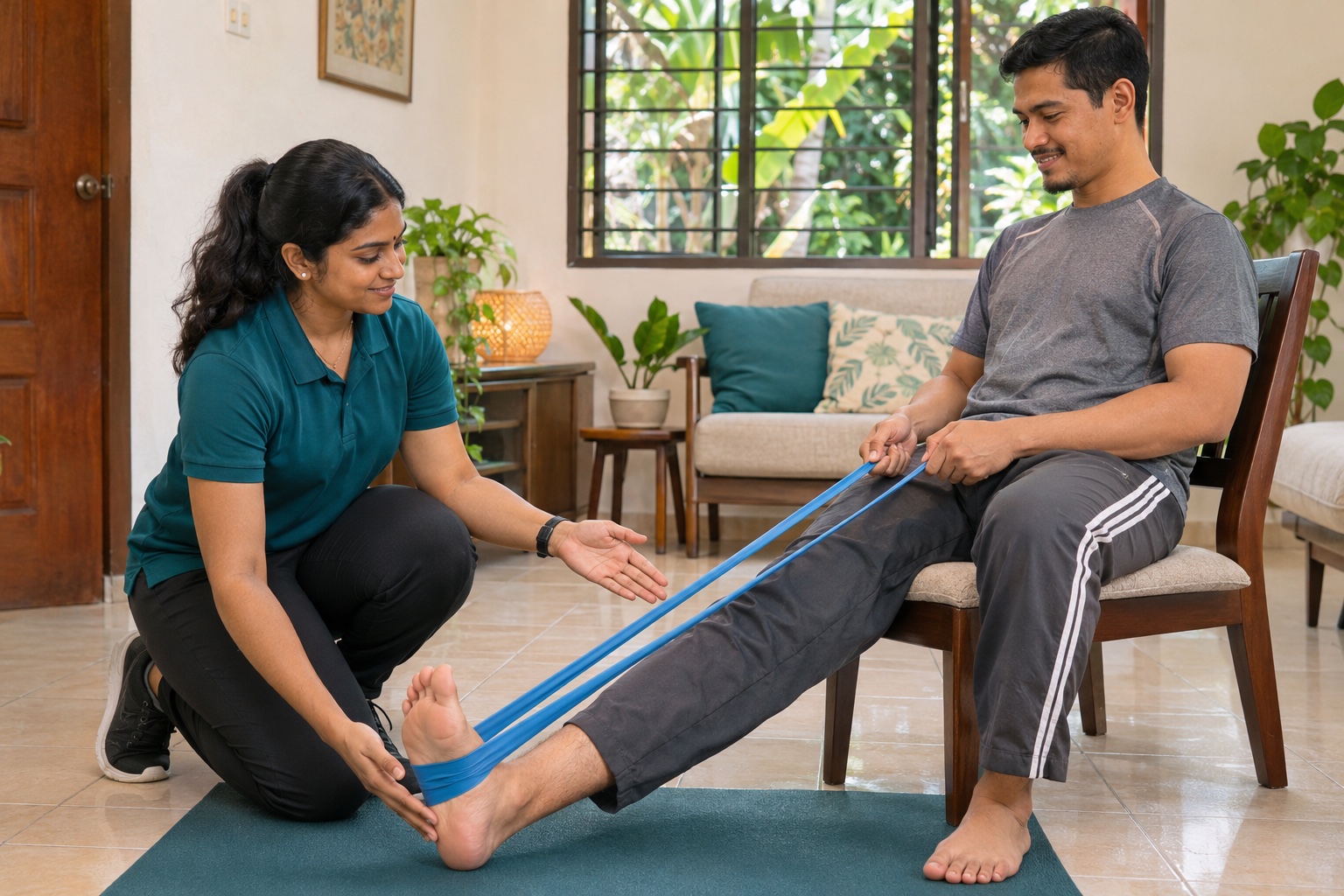
Understanding this condition
The posterior tibial tendon helps support the arch and control the foot during movement. Dysfunction can involve pain, reduced capacity or tearing. Some people develop a progressively flatter foot and altered alignment.
Progressive collapsing foot deformity is broader than tendon pain alone: supporting ligaments and joints can also be involved. Exercises cannot be assumed to reverse a fixed deformity, and appropriate bracing, podiatry or surgical assessment may be needed.
Symptoms and everyday difficulties
- Pain or swelling behind the inner ankle during walking.
- Difficulty rising onto the toes or pushing off the foot.
- A changing arch, tired foot or increasing difficulty finding comfortable shoes.
Who may benefit from a home assessment
A person with a medically assessed, suitable nonsurgical presentation may benefit from home-based movement and walking support. Rapid change in foot shape, marked weakness or a suspected tear should be assessed by an appropriate foot specialist.
A condition-specific assessment
- Review symptom onset, previous injury, footwear and changes in standing or walking capacity.
- Examine alignment while standing, available joint movement and tendon-related strength without repeatedly provoking pain.
- Assess whether the foot remains flexible, the need for external support and the demands of household routes.
Treatment options and how they are chosen
Individual tendon loading
- What it involves
- Select a tolerable level of foot and calf strengthening that respects the assessed stage.
- Why it may be chosen
- Appropriate loading may support remaining muscle-tendon capacity.
- The everyday goal
- Address weak push-off and difficulty maintaining control during standing.
- Adapting it at home
- Begin with supported or seated tasks where required rather than forcing repeated single-leg heel rises.
- Reviewing progress
- Review strength, task quality and pain or swelling after activity before changing resistance.
Supported walking practice
- What it involves
- Adjust step demands and assess whether a walking aid could reduce difficulty.
- Why it may be chosen
- Painful loading or altered alignment may change walking efficiency and confidence.
- The everyday goal
- Target safer movement between rooms and short necessary outings.
- Adapting it at home
- Practise on clear routes using prescribed footwear or braces; do not remove a support against advice.
- Reviewing progress
- Monitor walking quality, distance tolerated and skin comfort when using support.
Footwear and activity coordination
- What it involves
- Review shoes, standing duration and specialist support recommendations.
- Why it may be chosen
- An appropriate support strategy can reduce excessive strain while rehabilitation is considered.
- The everyday goal
- Make routine standing and household work more manageable.
- Adapting it at home
- Alternate demanding tasks with suitable rest and refer for orthotic assessment when indicated.
- Reviewing progress
- Reassess function and shape changes; worsening deformity calls for specialist review rather than unlimited exercise progression.
Individual rehabilitation goals
- Walk necessary household distances with appropriate support.
- Improve tolerable foot and calf capacity.
- Recognize changes that require specialist reassessment.
How a home visit is arranged
- Send a brief enquiry with the rehabilitation need, area and whether you are the patient or caregiver.
- The team checks relevant information, service scope, therapist availability and suitability. Share medical documents through the arrangement agreed with the team.
- If suitable, confirm the appointment, full session fee and separate travel charge before the home assessment.
- The physiotherapist assesses the person and discusses an individual plan, consent and practical goals.
- Appropriate treatment, home practice and caregiver guidance are provided, then progress and the need for further visits are reviewed.
Preparing for the visit
Prepare commonly worn footwear, any prescribed brace and specialist letters. Explain where long periods of standing occur. Equipment or custom orthoses must be assessed and arranged separately when needed.
Home visits and clinic rehabilitation
Home visits reveal daily loading and footwear difficulties. Detailed deformity staging, imaging, custom orthoses or decisions about surgery require suitable specialist facilities and cannot be replaced by home exercise.
When medical assessment is needed
Seek prompt medical assessment for a sudden loss of push-off, rapidly changing foot shape or major swelling after injury. A hot swollen foot, wound, fever or new loss of sensation requires medical review, particularly with diabetes.
For a genuine medical emergency in Malaysia, call 999. A routine physiotherapy enquiry is not an emergency response. Malaysia emergency service information
Patient and caregiver questions
Is this simply a flat foot?
No. A longstanding comfortable flat foot differs from a newly painful or progressively changing foot. Tendons, ligaments and joints may need assessment.
Will exercise rebuild the arch?
Exercise may improve assessed capacity, but it does not reliably reverse a fixed structural deformity. Support or specialist treatment may be necessary.
Should I practise heel raises through pain?
Not automatically. The clinician chooses an appropriate starting task and loading level after considering the tendon and deformity stage.
Do I need custom insoles?
Some people benefit from prescribed support, but its type depends on the assessment. Do not assume a particular insole or brace suits every case.
What would make home rehabilitation unsuitable alone?
Progressive deformity, a suspected major tear, uncertain diagnosis or failure of an appropriate support plan may require specialist evaluation alongside rehabilitation.
The treating physiotherapist
Penang HomePhysio confirms that a clinician is available for this service. Ask the team to confirm the treating physiotherapist's name, qualifications, registration, relevant experience and availability. Tell us your preferred spoken language so the team can check. Website language options do not establish any individual clinician's language abilities.
About the serviceHome visits around Penang
Home visits in Penang are arranged by area and therapist availability. Areas listed on this site include George Town, Bayan Lepas, Butterworth, Bukit Mertajam. Share your postcode and access needs so the team can confirm coverage and travel charges.
See coverage areasPricing and suitability enquiries
See this site's pricing guide. Tell the team your area and care needs to confirm the full fee, including any travel charge, before booking.
Clinical information sources
These sources support the general information. They are not endorsements of this provider or a claim that a clinician has reviewed this page.