Penang HomePhysio
Patellofemoral Pain Physiotherapy at Home in Penang
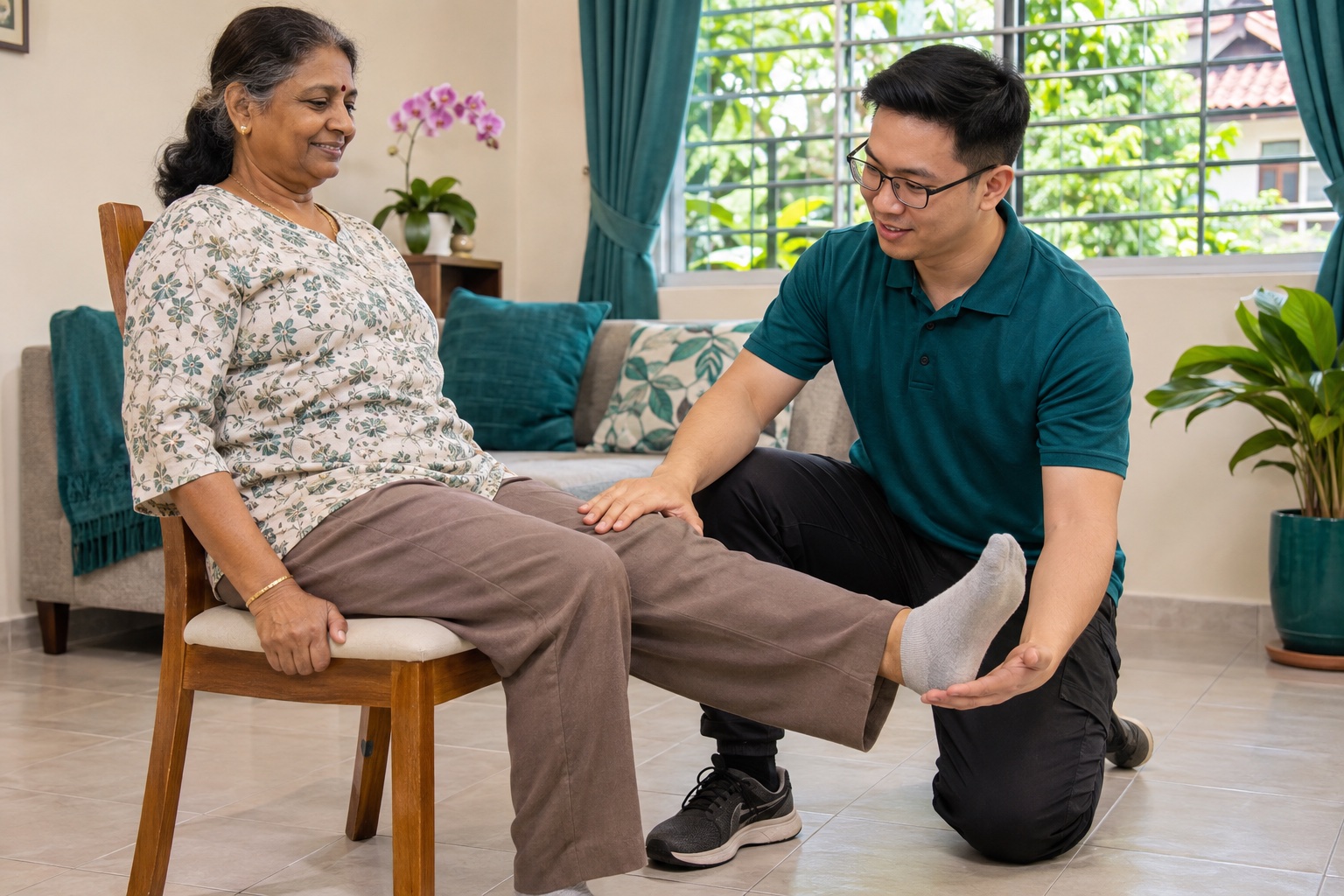
When the front of the knee hurts on stairs or after sitting, a home assessment can compare everyday loads and find a manageable starting point.
Suitability, therapist availability and any medical clearance are checked before an appointment. Rehabilitation is selected after assessment.
Understanding this condition
Patellofemoral pain is felt around or behind the kneecap, particularly when the bent knee takes weight. It can affect someone who has never run.
Pain concentrated in the tendon just below the kneecap may need a different assessment. Neither a clicking sound nor one painful squat establishes the cause.
Symptoms and everyday difficulties
- Discomfort descending steps
- An ache after a long car journey
- Difficulty rising from a low seat
Who may benefit from a home assessment
Home assessment may suit someone whose main difficulty is a staircase or toilet seat and who can safely move with their usual support.
A condition-specific assessment
- Map the pain relative to the kneecap and tendon.
- Compare comfortable knee and hip strength during a supported rise.
- Review recent changes in hills, stair use, sitting time and running.
Treatment options and how they are chosen
Hip and knee strengthening
- What it involves
- Choose a tolerable sit-to-stand or supported bend.
- Why it may be chosen
- Muscles around both joints help control knee loading.
- The everyday goal
- Target rising without dropping back into the chair.
- Adapting it at home
- Adjust seat height and the depth of the movement.
- Reviewing progress
- Compare ease of rising and symptoms later that day.
Stair practice
- What it involves
- Practise a controlled step on an assessed step with a rail.
- Why it may be chosen
- A change in step height or pace may make loading easier.
- The everyday goal
- Work towards reaching the bedroom or entrance comfortably.
- Adapting it at home
- Use the actual rail; avoid an unstable stool.
- Reviewing progress
- Record the steps managed and whether control is maintained.
Activity planning
- What it involves
- Identify the most provocative part of the daily routine.
- Why it may be chosen
- Several demanding tasks together can exceed present tolerance.
- The everyday goal
- Keep useful activity such as walking to the shops feasible.
- Adapting it at home
- Separate longer walks from repeated stair trips when practical.
- Reviewing progress
- Use the next day's comfort and the chosen task to review the plan.
Individual rehabilitation goals
- Descend the entrance steps with control.
- Sit through a meal more comfortably.
- Return gradually to a personally important walk.
How a home visit is arranged
- Send a brief enquiry with the rehabilitation need, area and whether you are the patient or caregiver.
- The team checks relevant information, service scope, therapist availability and suitability. Share medical documents through the arrangement agreed with the team.
- If suitable, confirm the appointment, full session fee and separate travel charge before the home assessment.
- The physiotherapist assesses the person and discusses an individual plan, consent and practical goals.
- Appropriate treatment, home practice and caregiver guidance are provided, then progress and the need for further visits are reviewed.
Preparing for the visit
Show the chair or step that reliably brings on the familiar ache. Mention recent changes in shoes or activity.
Home visits and clinic rehabilitation
Home allows practice on real stairs. A running assessment or testing for return to competitive sport may need a clinic with appropriate space.
When medical assessment is needed
A hot swollen knee with fever, major trauma, or a newly locked knee needs prompt medical assessment. Do not practise through a mechanical block.
For a genuine medical emergency in Malaysia, call 999. A routine physiotherapy enquiry is not an emergency response. Malaysia emergency service information
Patient and caregiver questions
Do I need to be a runner?
No. Stairs, squatting and repeated rising can load the same part of the knee.
Should I avoid stairs altogether?
It depends on your symptoms and safety. The number of trips, handrail and pace can all be adjusted.
Is this jumper's knee?
Jumper's knee usually refers to the patellar tendon; the location and activity pattern help distinguish the two.
Can my sofa be used for exercise?
Its height and softness matter. A firm, stable seat is often easier to assess and adjust.
How do we judge progress without running?
Choose a normal task such as going downstairs or getting out of a car and compare comfort and control.
The treating physiotherapist
Penang HomePhysio confirms that a clinician is available for this service. Ask the team to confirm the treating physiotherapist's name, qualifications, registration, relevant experience and availability. Tell us your preferred spoken language so the team can check. Website language options do not establish any individual clinician's language abilities.
About the serviceHome visits around Penang
Home visits in Penang are arranged by area and therapist availability. Areas listed on this site include George Town, Bayan Lepas, Butterworth, Bukit Mertajam. Share your postcode and access needs so the team can confirm coverage and travel charges.
See coverage areasPricing and suitability enquiries
See this site's pricing guide. Tell the team your area and care needs to confirm the full fee, including any travel charge, before booking.
Clinical information sources
These sources support the general information. They are not endorsements of this provider or a claim that a clinician has reviewed this page.