Penang HomePhysio
Knee Osteoarthritis Physiotherapy at Home in Penang
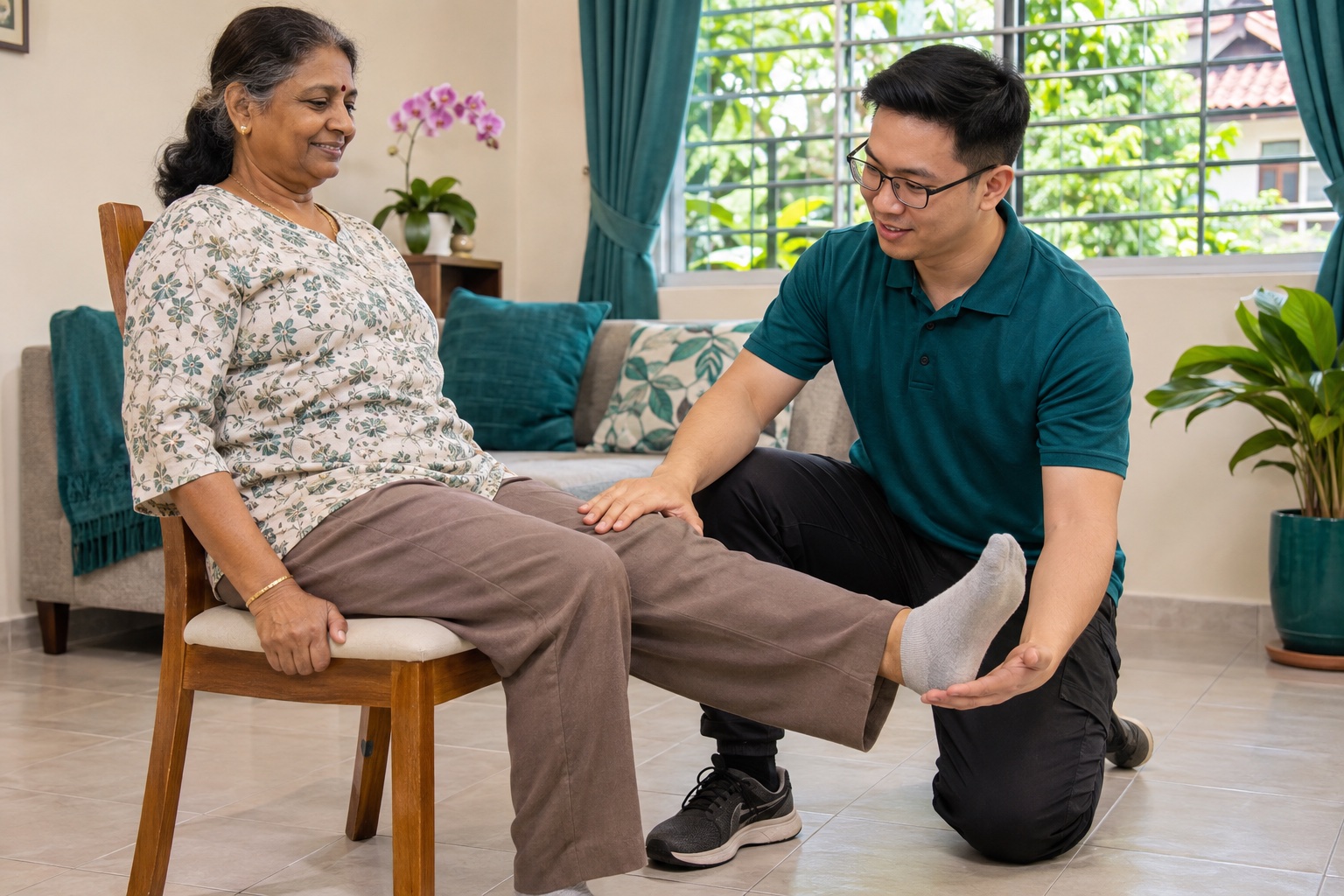
When knee osteoarthritis makes stairs or standing from a chair difficult, home rehabilitation can build leg strength and walking tolerance around the tasks you value.
Suitability, therapist availability and any medical clearance are checked before an appointment. Rehabilitation is selected after assessment.
Understanding this condition
Knee osteoarthritis involves changes in cartilage, bone and other joint tissues. It often causes activity-related pain, stiffness after rest and reduced confidence with weight-bearing tasks. Symptoms can fluctuate; an uncomfortable day does not by itself show that the joint has suddenly deteriorated.
This is a specific diagnosis, not a label for every painful knee. A hot swollen knee with fever, a locked knee after twisting or a new inability to bear weight requires a different medical assessment. Physiotherapy supports function but does not replace cartilage or promise to avoid surgery.
Symptoms and everyday difficulties
- Stiff first steps after sitting for a meal.
- Difficulty lowering down stairs or rising from a low toilet.
- Shorter shopping walks because of ache, fatigue or swelling.
Who may benefit from a home assessment
Home rehabilitation can suit established osteoarthritis when travel is difficult, exercise needs supervision or real household steps are the main obstacle. If new symptoms do not fit the usual pattern, medical reassessment takes priority.
A condition-specific assessment
- Review the activity-pain pattern, stiffness, swelling, current treatment and what the person has stopped doing.
- Assess knee bend and extension, thigh and hip strength, chair rise, gait and balance as appropriate.
- Check footwear, stair rail and walking aid use, and agree a measure such as a comfortable shopping distance.
Treatment options and how they are chosen
Progressive leg strength
- What it involves
- Tailor thigh and hip strengthening to the person’s capacity and priorities.
- Why it may be chosen
- Stronger muscles help manage load during standing, lowering and climbing.
- The everyday goal
- Work towards getting off a toilet or controlling a step down.
- Adapting it at home
- Adjust seat height, hand support and resistance to the home setting.
- Reviewing progress
- Compare quality, effort and symptom recovery rather than increasing resistance automatically.
Aerobic activity and walking
- What it involves
- Choose an enjoyable, tolerable form of activity and build participation gradually.
- Why it may be chosen
- Consistent activity can support function and general fitness with osteoarthritis.
- The everyday goal
- Aim to manage a needed outing without a prolonged flare.
- Adapting it at home
- Use short flat routes, planned rests or an assessed aid where appropriate.
- Reviewing progress
- Track weekly participation, comfortable distance and the following day’s response.
Adapting to symptom fluctuations
- What it involves
- Plan how to adjust difficult tasks on more painful days and return to usual activity as able.
- Why it may be chosen
- A flexible plan avoids the cycle of overdoing chores then stopping completely.
- The everyday goal
- Preserve meal preparation, outings and stairs needed for daily life.
- Adapting it at home
- Divide a large job, use a rail or select a higher chair temporarily.
- Reviewing progress
- Review activity achieved, swelling and whether adaptations still serve the goal.
Individual rehabilitation goals
- Stand from a chosen seat with less assistance.
- Manage a home step with safe control.
- Walk a personally useful distance more consistently.
How a home visit is arranged
- Send a brief enquiry with the rehabilitation need, area and whether you are the patient or caregiver.
- The team checks relevant information, service scope, therapist availability and suitability. Share medical documents through the arrangement agreed with the team.
- If suitable, confirm the appointment, full session fee and separate travel charge before the home assessment.
- The physiotherapist assesses the person and discusses an individual plan, consent and practical goals.
- Appropriate treatment, home practice and caregiver guidance are provided, then progress and the need for further visits are reviewed.
Preparing for the visit
Prepare usual footwear, walking aids and any medical letters. Note what happens after stairs or walking, and choose one activity you want to regain rather than judging progress from an X-ray alone.
Home visits and clinic rehabilitation
Home visits support practical strength and stair work. Persistent pain or functional limitation affecting quality of life despite appropriate nonsurgical care warrants medical discussion, including whether joint replacement assessment is suitable.
When medical assessment is needed
A newly hot red swollen knee with fever, marked swelling after injury, a locked joint or inability to bear weight needs urgent medical assessment. Do not assume these are routine osteoarthritis flares.
For a genuine medical emergency in Malaysia, call 999. A routine physiotherapy enquiry is not an emergency response. Malaysia emergency service information
Patient and caregiver questions
Should I avoid stairs to save the joint?
Not universally. A rail, a different pace or temporary task adjustment can help. Strength and control work should reflect your own stair needs.
Do I need repeated X-rays to track exercise progress?
Usually function, symptoms and participation are more useful for rehabilitation review. Imaging decisions depend on whether they would change medical management.
What if exercise causes some discomfort?
Some initial discomfort can occur. Adjust the load if symptoms remain aggravated, function falls or swelling increases; urgent signs require medical care.
Can a knee brace replace strengthening?
No. A brace is not routinely needed for everyone. If instability or abnormal loading is a concern, assess support alongside exercise and daily goals.
If replacement is planned, should I use this page afterwards?
No. Total and partial replacements have separate postoperative plans. Follow the surgeon’s instructions and bring the discharge information to the first rehabilitation assessment.
The treating physiotherapist
Penang HomePhysio confirms that a clinician is available for this service. Ask the team to confirm the treating physiotherapist's name, qualifications, registration, relevant experience and availability. Tell us your preferred spoken language so the team can check. Website language options do not establish any individual clinician's language abilities.
About the serviceHome visits around Penang
Home visits in Penang are arranged by area and therapist availability. Areas listed on this site include George Town, Bayan Lepas, Butterworth, Bukit Mertajam. Share your postcode and access needs so the team can confirm coverage and travel charges.
See coverage areasPricing and suitability enquiries
See this site's pricing guide. Tell the team your area and care needs to confirm the full fee, including any travel charge, before booking.
Clinical information sources
These sources support the general information. They are not endorsements of this provider or a claim that a clinician has reviewed this page.