Penang HomePhysio
Hip Osteoarthritis Physiotherapy at Home in Penang
A stiff, aching hip can make socks, stairs and getting out of a car difficult. A home assessment can identify which movements, strength and walking support would help most.
Suitability, therapist availability and any medical clearance are checked before an appointment. Rehabilitation is selected after assessment.
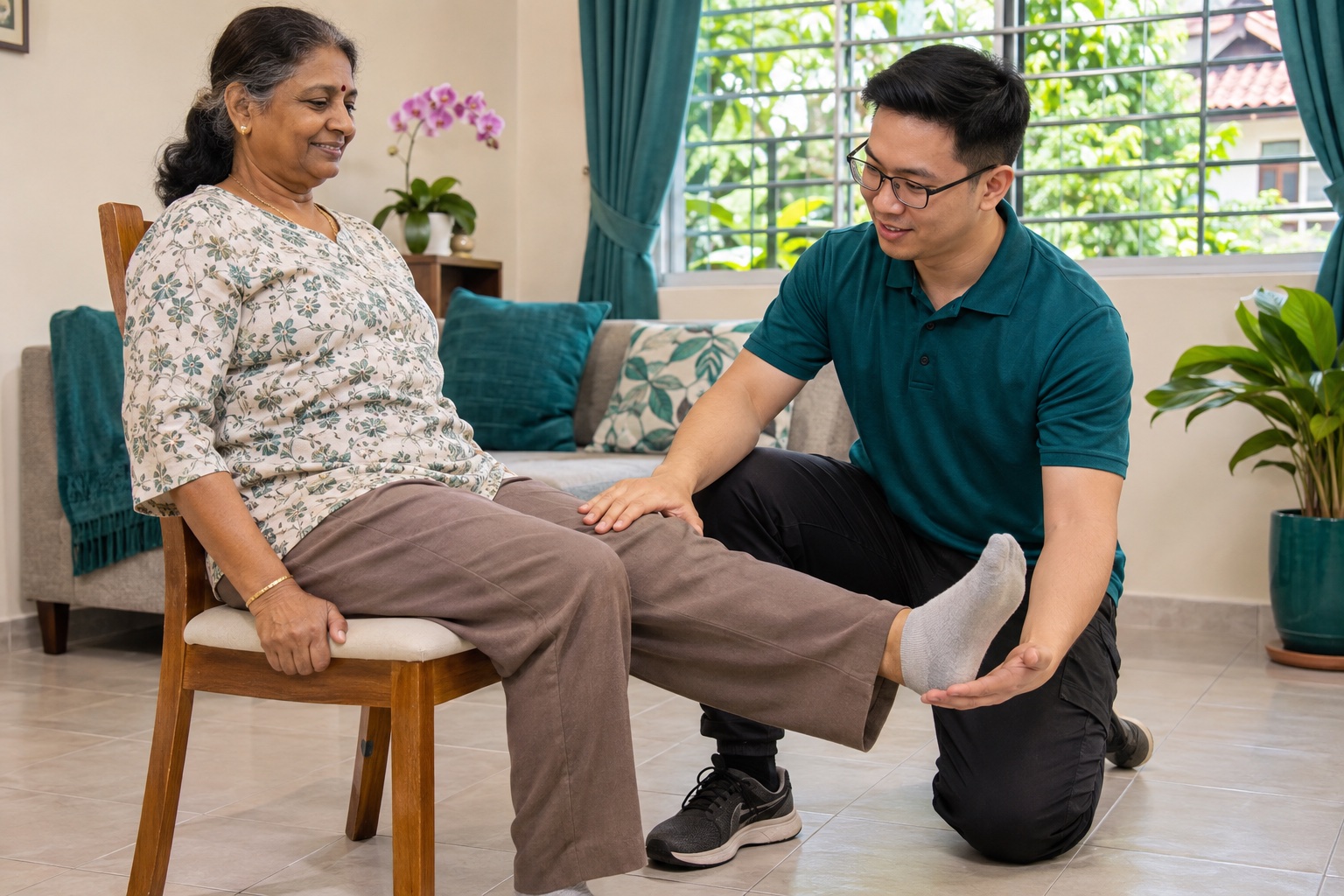
Understanding this condition
Hip osteoarthritis affects the cartilage, bone and other tissues of the ball-and-socket hip joint. It commonly causes groin or thigh pain, sometimes felt at the knee, with stiffness after rest and reduced hip rotation. Severity varies between individuals.
Unlike pain over the outer hip tendons, the joint may limit turning the leg to put on shoes or stepping into a car. Physiotherapy aims to maintain movement and improve function. It does not regrow cartilage; medical options remain relevant when symptoms substantially affect quality of life.
Symptoms and everyday difficulties
- First steps after sitting feel stiff or painful.
- Bending to shoes or rotating into a car feels restricted.
- Walking distance falls or a limp develops on longer outings.
Who may benefit from a home assessment
Home care can suit a person with established hip osteoarthritis who finds travel difficult or needs a realistic plan for household mobility. A sudden major change, particularly after a fall, needs fresh medical assessment rather than an assumption that arthritis has worsened.
A condition-specific assessment
- Review stiffness, pain distribution, medical treatment, falls and current walking distance.
- Assess comfortable hip rotation and bending, leg strength, chair rise and gait.
- Check footwear, stairs, chair height and any walking aid; choose one useful baseline such as the front-gate route.
Treatment options and how they are chosen
Leg and hip strengthening
- What it involves
- Train hip and thigh muscles using a tolerable load and functional movements.
- Why it may be chosen
- These muscles support standing, walking and rising even if joint changes remain.
- The everyday goal
- Work towards getting up from the usual dining chair.
- Adapting it at home
- Adjust seat height, arm support and resistance to the person.
- Reviewing progress
- Compare effort, control and later pain before changing the load.
Usable mobility for dressing
- What it involves
- Explore comfortable bending and rotation needed for dressing and transfers.
- Why it may be chosen
- Reduced range can make socks and footwear difficult even with adequate strength.
- The everyday goal
- Find a safe way to dress or enter a vehicle.
- Adapting it at home
- Trial sitting height, supported leg position or a dressing aid if appropriate.
- Reviewing progress
- Review independence and comfort rather than forcing a textbook joint angle.
Walking capacity and aid assessment
- What it involves
- Choose a manageable walking dose and assess support if gait is painful or unsteady.
- Why it may be chosen
- Maintaining activity supports independence without requiring one long uncomfortable outing.
- The everyday goal
- Target a route to a shop, gate or bathroom.
- Adapting it at home
- Use rest points and check the fit and technique of any aid.
- Reviewing progress
- Compare distance, steadiness and symptom recovery before extending the route.
Individual rehabilitation goals
- Manage socks or shoes with a workable method.
- Rise from the usual chair more confidently.
- Maintain a meaningful walking route.
How a home visit is arranged
- Send a brief enquiry with the rehabilitation need, area and whether you are the patient or caregiver.
- The team checks relevant information, service scope, therapist availability and suitability. Share medical documents through the arrangement agreed with the team.
- If suitable, confirm the appointment, full session fee and separate travel charge before the home assessment.
- The physiotherapist assesses the person and discusses an individual plan, consent and practical goals.
- Appropriate treatment, home practice and caregiver guidance are provided, then progress and the need for further visits are reviewed.
Preparing for the visit
Prepare any medical report, existing walking aid and shoes normally worn outside. Show the chair or step that limits independence and describe the next-day response to walking.
Home visits and clinic rehabilitation
Home visits support everyday mobility and adaptations. Medical review is appropriate if pain and disability remain substantial despite suitable conservative care, or if hip replacement is being considered.
When medical assessment is needed
Severe pain after a fall or inability to bear weight needs emergency assessment for fracture. A hot swollen hip, fever or sudden severe unexplained pain needs urgent care, even with known osteoarthritis.
For a genuine medical emergency in Malaysia, call 999. A routine physiotherapy enquiry is not an emergency response. Malaysia emergency service information
Patient and caregiver questions
Why does my knee hurt when the hip is stiff?
Hip joint pain can be felt in the thigh or knee. Examination checks both areas rather than assuming the knee is the only cause.
Will exercise wear the hip out faster?
Individually selected therapeutic exercise is part of recommended osteoarthritis care. The load should suit current capacity and be reviewed if symptoms persistently worsen.
Does a stick mean I am giving up walking?
A correctly assessed aid may help preserve walking distance or confidence. The choice depends on balance, comfort and the route.
Can physiotherapy guarantee I avoid replacement?
No. It can support strength and everyday function, while surgical decisions depend on symptoms, quality of life and medical assessment.
Is this the plan after replacement surgery?
No. A replaced hip has individual surgical precautions and weight-bearing advice. Bring those instructions for the postoperative plan.
The treating physiotherapist
Penang HomePhysio confirms that a clinician is available for this service. Ask the team to confirm the treating physiotherapist's name, qualifications, registration, relevant experience and availability. Tell us your preferred spoken language so the team can check. Website language options do not establish any individual clinician's language abilities.
About the serviceHome visits around Penang
Home visits in Penang are arranged by area and therapist availability. Areas listed on this site include George Town, Bayan Lepas, Butterworth, Bukit Mertajam. Share your postcode and access needs so the team can confirm coverage and travel charges.
See coverage areasPricing and suitability enquiries
See this site's pricing guide. Tell the team your area and care needs to confirm the full fee, including any travel charge, before booking.
Clinical information sources
These sources support the general information. They are not endorsements of this provider or a claim that a clinician has reviewed this page.