Penang HomePhysio
Greater Trochanteric Pain Syndrome Rehabilitation at Home in Penang
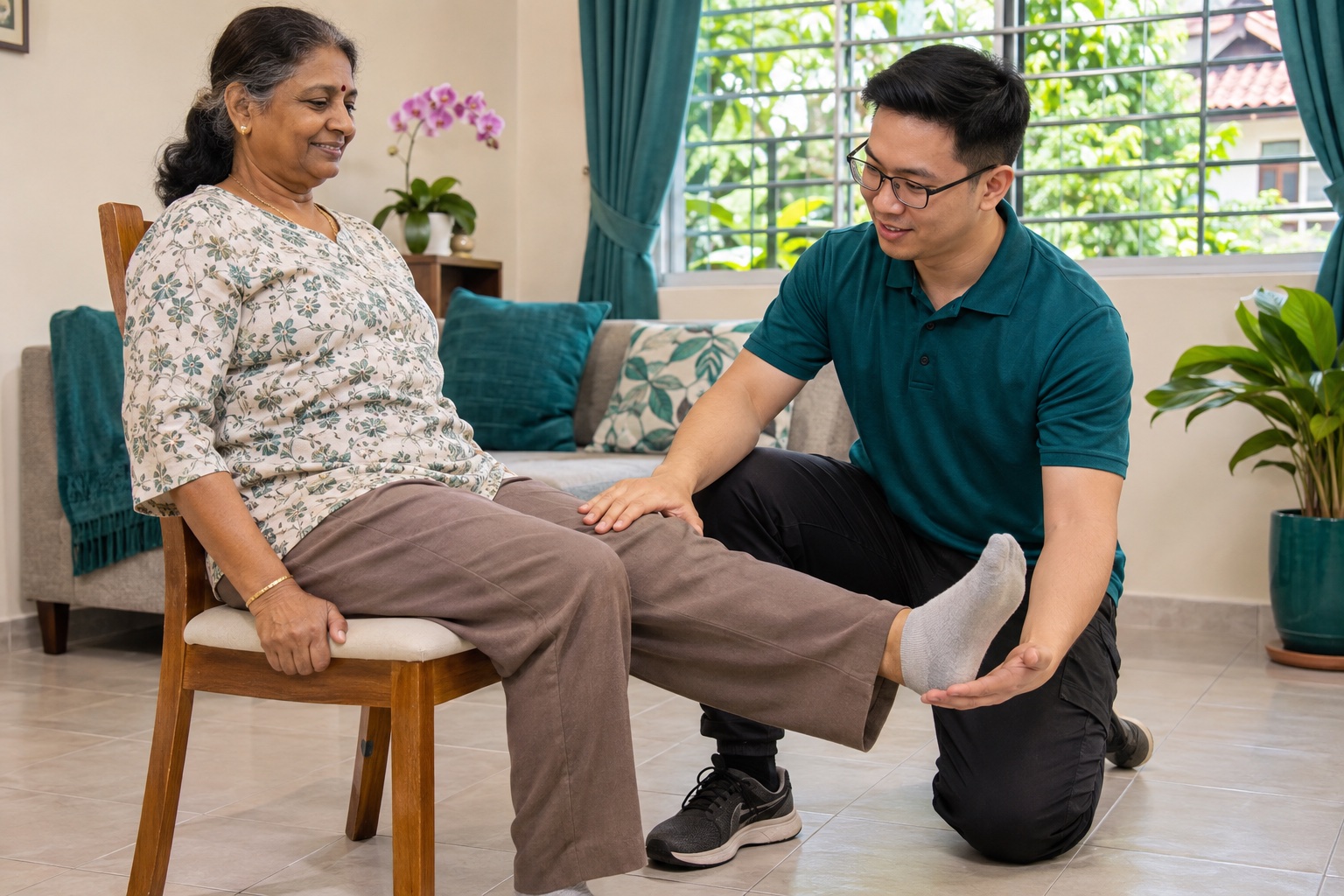
Outer hip pain can disturb side-sleeping and make stairs or standing on one leg uncomfortable. Assessment looks at gluteal tendon loading and positions that compress the area.
Suitability, therapist availability and any medical clearance are checked before an appointment. Rehabilitation is selected after assessment.
Understanding this condition
Greater trochanteric pain syndrome describes pain around the bony prominence on the outside of the hip. The gluteal tendons attaching there are often involved; nearby bursae can also be sensitive. It is not always simply inflammation of a bursa.
Gluteal tendinopathy differs from deep groin pain arising within the hip joint. Both tendon compression in sustained positions and the effort of supporting body weight during walking can affect symptoms. Rehabilitation considers both rather than prescribing more stretching by default.
Symptoms and everyday difficulties
- Tenderness lying on the affected side.
- Outer hip aching on stairs, hills or longer walks.
- Pain standing on one leg to dress or leaning on one hip.
Who may benefit from a home assessment
Home review can be useful when established lateral hip pain affects sleep, stairs or family routines. Sudden inability to stand after a fall or prominent groin pain should prompt assessment for other causes before treating the tendons.
A condition-specific assessment
- Review changes in walking hills, stairs, running or prolonged single-leg standing.
- Assess lateral tenderness, tolerated hip abductor strength, gait and pelvic control without repeatedly provoking pain.
- Observe side-lying, chair posture and dressing habits that increase pressure or single-leg demand.
Treatment options and how they are chosen
Reducing sustained compression
- What it involves
- Trial different sleeping, sitting and standing positions.
- Why it may be chosen
- Crossing the legs or allowing the top thigh to fall across the body may compress the sensitive tissues.
- The everyday goal
- Target undisturbed sleep and comfortable standing.
- Adapting it at home
- Try a pillow between the knees or sit to dress if this helps.
- Reviewing progress
- Review night waking and tolerance, retaining changes that make a practical difference.
Graded gluteal muscle loading
- What it involves
- Select tolerable hip abductor exercise and progressively build load.
- Why it may be chosen
- These muscles help steady the pelvis when weight moves onto one leg.
- The everyday goal
- Target steadier stepping and stair climbing.
- Adapting it at home
- Use a supported position that avoids painful direct side pressure.
- Reviewing progress
- Compare strength, stair response and next-day tenderness before progression.
Walking load progression
- What it involves
- Adjust distance, slope and stair volume separately.
- Why it may be chosen
- A sudden increase in hills can exceed capacity even if flat walking is comfortable.
- The everyday goal
- Prepare for a necessary outdoor route.
- Adapting it at home
- Start with a manageable level route and use a rail where needed.
- Reviewing progress
- Track distance and delayed lateral pain before adding hills or speed.
Individual rehabilitation goals
- Find a comfortable sleep position.
- Climb a necessary step with better control.
- Build walking tolerance without persistent next-day flare.
How a home visit is arranged
- Send a brief enquiry with the rehabilitation need, area and whether you are the patient or caregiver.
- The team checks relevant information, service scope, therapist availability and suitability. Share medical documents through the arrangement agreed with the team.
- If suitable, confirm the appointment, full session fee and separate travel charge before the home assessment.
- The physiotherapist assesses the person and discusses an individual plan, consent and practical goals.
- Appropriate treatment, home practice and caregiver guidance are provided, then progress and the need for further visits are reviewed.
Preparing for the visit
Describe which side you sleep on, your usual walking route and recent increases in stairs or hills. Show where you normally stand to dress.
Home visits and clinic rehabilitation
Home visits can address sleeping setup and ordinary stairs. Persistent weakness, diagnostic uncertainty or higher-level running goals may need further assessment, imaging or equipment outside the home.
When medical assessment is needed
Urgent assessment is needed for severe sudden pain, inability to bear weight after injury, or a hot swollen hip with fever. New unexplained weakness or persistent worsening despite sensible load changes needs medical review.
For a genuine medical emergency in Malaysia, call 999. A routine physiotherapy enquiry is not an emergency response. Malaysia emergency service information
Patient and caregiver questions
Is it always bursitis?
No. Gluteal tendon involvement is common and the bursa may or may not contribute. The functional assessment guides the plan.
Why does the top hip hurt when I lie on the other side?
Letting the top leg drop across the body can compress the outer hip. Try supported positioning and judge the response.
Should I stretch across the body?
A strong across-body stretch can increase compression in an irritable hip. Choose movement based on the assessed response.
Must I stop all walking?
Not usually. A manageable distance and flatter route may allow activity while limiting repeated flare-ups.
How do I know when to add hills?
Compare flat walking, stair tolerance and symptoms afterwards. Change one demand at a time rather than increasing distance, speed and slope together.
The treating physiotherapist
Penang HomePhysio confirms that a clinician is available for this service. Ask the team to confirm the treating physiotherapist's name, qualifications, registration, relevant experience and availability. Tell us your preferred spoken language so the team can check. Website language options do not establish any individual clinician's language abilities.
About the serviceHome visits around Penang
Home visits in Penang are arranged by area and therapist availability. Areas listed on this site include George Town, Bayan Lepas, Butterworth, Bukit Mertajam. Share your postcode and access needs so the team can confirm coverage and travel charges.
See coverage areasPricing and suitability enquiries
See this site's pricing guide. Tell the team your area and care needs to confirm the full fee, including any travel charge, before booking.
Clinical information sources
These sources support the general information. They are not endorsements of this provider or a claim that a clinician has reviewed this page.