Penang HomePhysio
Peroneal Tendinopathy Rehabilitation at Home in Penang
Pain around the outside of the ankle can make walking or standing on uneven ground difficult. Assessment distinguishes tendon loading problems from a sprain, tear or unstable tendon.
Suitability, therapist availability and any medical clearance are checked before an appointment. Rehabilitation is selected after assessment.
Understanding this condition
The peroneal tendons pass behind the outer ankle and help control the foot during weight bearing. Tendinopathy describes a painful tendon problem with reduced tolerance of activity, sometimes after repeated loading or an ankle injury.
Outer-ankle pain is not automatically peroneal tendinopathy. A snapping tendon, significant tear, fracture or ligament injury may require a different pathway. Rehabilitation is chosen from the findings rather than the pain location alone.
Symptoms and everyday difficulties
- Outer-ankle discomfort when walking or changing direction.
- Painful push-off or fatigue during longer standing.
- Reduced confidence on slopes, steps or uneven ground.
Who may benefit from a home assessment
Home rehabilitation may suit a medically stable person with a suitable tendon diagnosis and difficulty travelling. New major injury, persistent snapping or an inability to bear weight requires appropriate assessment before a routine loading plan.
A condition-specific assessment
- Review onset, previous ankle sprains, recent walking or sport changes and any snapping sensation.
- Assess ankle movement and tendon-related strength, with foot alignment and ligament stability considered where appropriate.
- Observe walking, balance and household surfaces to identify the movements that currently exceed tolerance.
Treatment options and how they are chosen
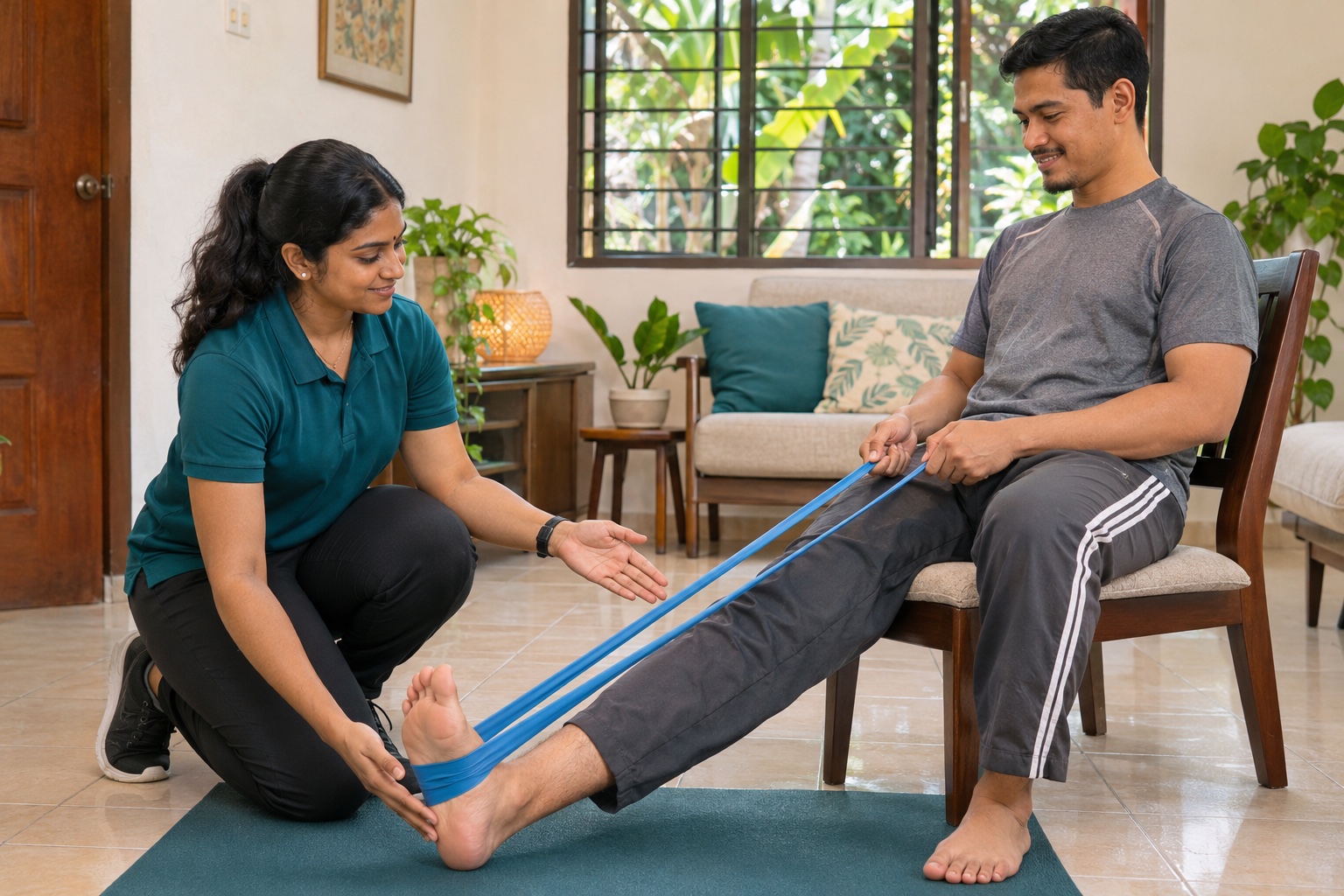
Graded tendon strengthening
- What it involves
- Select controlled resistance for the muscles supporting the outer ankle.
- Why it may be chosen
- The tendon may need a manageable load to rebuild functional capacity.
- The everyday goal
- Target control during push-off and side-to-side foot demands.
- Adapting it at home
- Begin seated or supported and adjust resistance to symptoms and technique.
- Reviewing progress
- Compare strength, task control and the delayed response to activity before increasing demand.
Balance and movement control
- What it involves
- Practise weight shifts and progressively suitable standing tasks.
- Why it may be chosen
- Previous sprains or pain can reduce confidence and control around the ankle.
- The everyday goal
- Address instability when turning or stepping over a threshold.
- Adapting it at home
- Use a stable counter and an uncluttered surface, with supervision when needed.
- Reviewing progress
- Review reliance on support and movement quality; unstable surfaces are not an automatic starting exercise.
Walking and load planning
- What it involves
- Adjust walking amounts, route difficulty and footwear after assessment.
- Why it may be chosen
- Repetitive or uneven loading may repeatedly irritate the symptomatic tendon.
- The everyday goal
- Help manage necessary household walking and return to ordinary outings.
- Adapting it at home
- Use shorter routes and appropriate rest, and seek footwear or orthotic advice when indicated.
- Reviewing progress
- Monitor symptom recovery and walking function rather than advancing solely by a calendar.
Individual rehabilitation goals
- Walk required home routes more comfortably.
- Improve ankle control during turns.
- Build activity tolerance without repeated outer-ankle flares.
How a home visit is arranged
- Send a brief enquiry with the rehabilitation need, area and whether you are the patient or caregiver.
- The team checks relevant information, service scope, therapist availability and suitability. Share medical documents through the arrangement agreed with the team.
- If suitable, confirm the appointment, full session fee and separate travel charge before the home assessment.
- The physiotherapist assesses the person and discusses an individual plan, consent and practical goals.
- Appropriate treatment, home practice and caregiver guidance are provided, then progress and the need for further visits are reviewed.
Preparing for the visit
Have everyday shoes and details of prior sprains available. Identify uneven access paths or steps. Any brace or walking aid should be reviewed for suitability rather than purchased from a generic recommendation.
Home visits and clinic rehabilitation
Home care allows practical walking and balance work. Imaging, suspected tendon displacement or complex instability requires specialist review; later running and cutting drills may need suitable outdoor or sports facilities.
When medical assessment is needed
Seek prompt assessment after a pop with sudden weakness, major swelling, inability to bear weight or recurrent tendon snapping. A hot red ankle with fever, a wound, or new numbness needs medical review.
For a genuine medical emergency in Malaysia, call 999. A routine physiotherapy enquiry is not an emergency response. Malaysia emergency service information
Patient and caregiver questions
Is outer-ankle pain always a sprain?
No. Tendons, ligaments, joints and bones can produce pain in the area. The injury history and examination guide the likely cause.
What if I feel something snapping?
Tell the clinician. Repeated snapping behind the outer ankle may need specialist assessment before progressing ordinary tendon exercises.
Should I train on a wobble board?
Not automatically. Stable supported tasks may be more suitable initially; balance difficulty, symptoms and safety determine progression.
Can I keep running?
That depends on the diagnosis and response to loading. Running may need adjustment while a tolerable strength and walking plan is established.
How will improvement be checked?
Useful measures include walking tolerance, ankle strength, turning control and symptoms after activity. Lack of progress prompts reassessment of the diagnosis and plan.
The treating physiotherapist
Penang HomePhysio confirms that a clinician is available for this service. Ask the team to confirm the treating physiotherapist's name, qualifications, registration, relevant experience and availability. Tell us your preferred spoken language so the team can check. Website language options do not establish any individual clinician's language abilities.
About the serviceHome visits around Penang
Home visits in Penang are arranged by area and therapist availability. Areas listed on this site include George Town, Bayan Lepas, Butterworth, Bukit Mertajam. Share your postcode and access needs so the team can confirm coverage and travel charges.
See coverage areasPricing and suitability enquiries
See this site's pricing guide. Tell the team your area and care needs to confirm the full fee, including any travel charge, before booking.
Clinical information sources
These sources support the general information. They are not endorsements of this provider or a claim that a clinician has reviewed this page.