Penang HomePhysio
Rotator Cuff Tear Rehabilitation at Home in Penang
A torn shoulder tendon can make lifting the arm difficult. The first decision is whether an acute injury needs specialist care or a nonsurgical plan is appropriate.
Suitability, therapist availability and any medical clearance are checked before an appointment. Rehabilitation is selected after assessment.
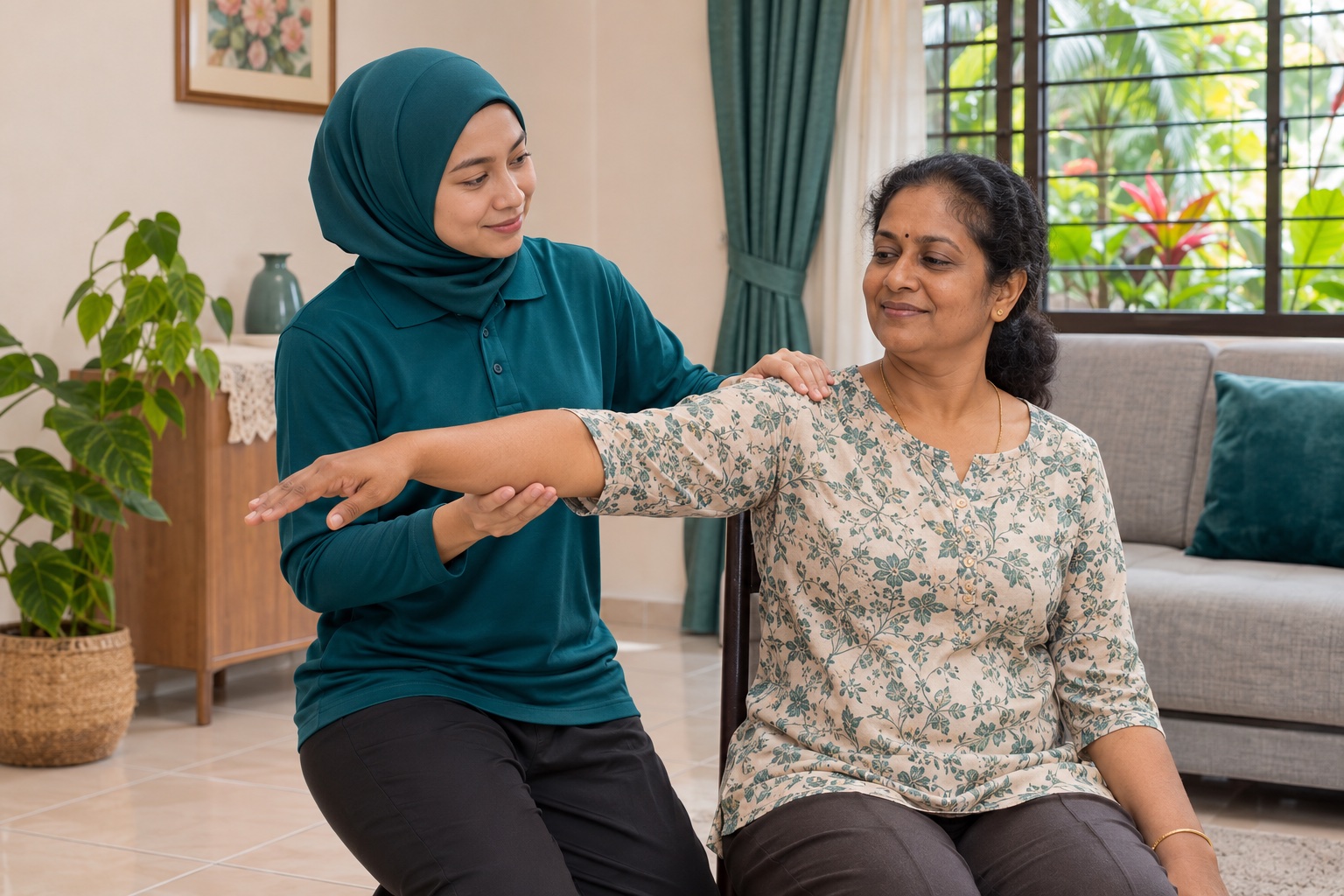
Understanding this condition
A rotator cuff tear is a partial- or full-thickness disruption of one or more tendons that help lift and rotate the upper arm. Tears may follow a fall or develop gradually. Some tears seen on a scan cause few symptoms.
Function, onset and the medical plan matter more than the word tear alone. Nonsurgical rehabilitation can aim to improve how the shoulder works without promising tendon reattachment. After surgical repair, protection of the repair takes priority and a different programme applies.
Symptoms and everyday difficulties
- Weakness lifting the arm away from the body.
- Difficulty lowering a cup onto a shelf with control.
- Night discomfort or reliance on the other hand for grooming.
Who may benefit from a home assessment
Home work may suit an assessed tear being managed without surgery or a stable person awaiting an agreed plan. Sudden inability to lift after an injury needs urgent medical review before exercise is started.
A condition-specific assessment
- Review timing, injury mechanism, scan findings and whether the surgeon has recommended repair or restrictions.
- Compare active and supported elevation, rotation strength and the ability to lower the arm safely.
- Establish which tasks are unsafe with one arm and which can be adapted temporarily.
Treatment options and how they are chosen
Supported motion
- What it involves
- Move the arm with assistance within the assessed range.
- Why it may be chosen
- A weak shoulder may lack active lift despite some available joint movement.
- The everyday goal
- This supports dressing and washing without repeatedly struggling against gravity.
- Adapting it at home
- Use the other hand or a table support as taught.
- Reviewing progress
- Compare comfortable range and how much assistance is required.
Training remaining shoulder capacity
- What it involves
- Select tolerable exercises for functioning cuff, deltoid and shoulder-blade muscles.
- Why it may be chosen
- Other muscles may help the person make better use of remaining capacity.
- The everyday goal
- Practise controlling light objects near the body before harder reaches.
- Adapting it at home
- Choose safe starting positions and resistance matched to weakness.
- Reviewing progress
- Measure functional lift, control and symptoms rather than assuming the tear has healed.
Safe household strategies
- What it involves
- Adapt carrying, food preparation and grooming around current strength.
- Why it may be chosen
- Unexpected weakness can make holding a hot or heavy item unsafe.
- The everyday goal
- Maintain independence without risking a dropped pan or kettle.
- Adapting it at home
- Use both hands when appropriate, lighter containers and lower shelves.
- Reviewing progress
- Revisit adaptations once strength and reliable control improve.
Individual rehabilitation goals
- Dress without forcing an unsupported lift.
- Handle a chosen light item safely.
- Understand what the medical plan permits.
How a home visit is arranged
- Send a brief enquiry with the rehabilitation need, area and whether you are the patient or caregiver.
- The team checks relevant information, service scope, therapist availability and suitability. Share medical documents through the arrangement agreed with the team.
- If suitable, confirm the appointment, full session fee and separate travel charge before the home assessment.
- The physiotherapist assesses the person and discusses an individual plan, consent and practical goals.
- Appropriate treatment, home practice and caregiver guidance are provided, then progress and the need for further visits are reviewed.
Preparing for the visit
Provide the imaging or orthopaedic report if available and mention any surgical discussion. Show a task affected by weakness using a cool, light object for demonstration.
Home visits and clinic rehabilitation
Home assessment can examine practical compensation and safe loading. Acute traumatic tears, persistent substantial weakness or decisions about repair need orthopaedic review; heavy overhead demands may later need facility-based testing.
When medical assessment is needed
A fall or sudden pull followed by marked weakness or inability to raise the arm needs prompt medical assessment. Deformity, a cold or numb hand, or a hot swollen shoulder with fever requires urgent care.
For a genuine medical emergency in Malaysia, call 999. A routine physiotherapy enquiry is not an emergency response. Malaysia emergency service information
Patient and caregiver questions
Does a full-thickness tear always mean surgery?
No. Symptoms, onset, function, tear characteristics and personal goals inform the medical discussion. An acute traumatic tear deserves timely specialist review.
Can I improve without the tendon reattaching?
Some people gain comfort and useful function through improved movement, muscle capacity and task strategies. This does not establish structural healing.
Why can someone else lift my arm more easily?
Assisted movement reduces the muscular effort required. The difference helps guide assessment but does not diagnose the size of a tear.
Should I train the weaker side using heavy weights?
Not before assessment. Start with a load the shoulder can control safely and review the response before increasing it.
What if my tendon was stitched recently?
That is postoperative repair rehabilitation. Follow the surgeon’s movement, sling and lifting instructions rather than this nonsurgical approach.
The treating physiotherapist
Penang HomePhysio confirms that a clinician is available for this service. Ask the team to confirm the treating physiotherapist's name, qualifications, registration, relevant experience and availability. Tell us your preferred spoken language so the team can check. Website language options do not establish any individual clinician's language abilities.
About the serviceHome visits around Penang
Home visits in Penang are arranged by area and therapist availability. Areas listed on this site include George Town, Bayan Lepas, Butterworth, Bukit Mertajam. Share your postcode and access needs so the team can confirm coverage and travel charges.
See coverage areasPricing and suitability enquiries
See this site's pricing guide. Tell the team your area and care needs to confirm the full fee, including any travel charge, before booking.
Clinical information sources
These sources support the general information. They are not endorsements of this provider or a claim that a clinician has reviewed this page.