Penang HomePhysio
Rotator Cuff Tendinopathy Rehabilitation at Home in Penang
Pain when lifting laundry or reaching to a shelf can reflect a shoulder tendon’s response to load. Rehabilitation matches resistance to what the arm can tolerate.
Suitability, therapist availability and any medical clearance are checked before an appointment. Rehabilitation is selected after assessment.
Understanding this condition
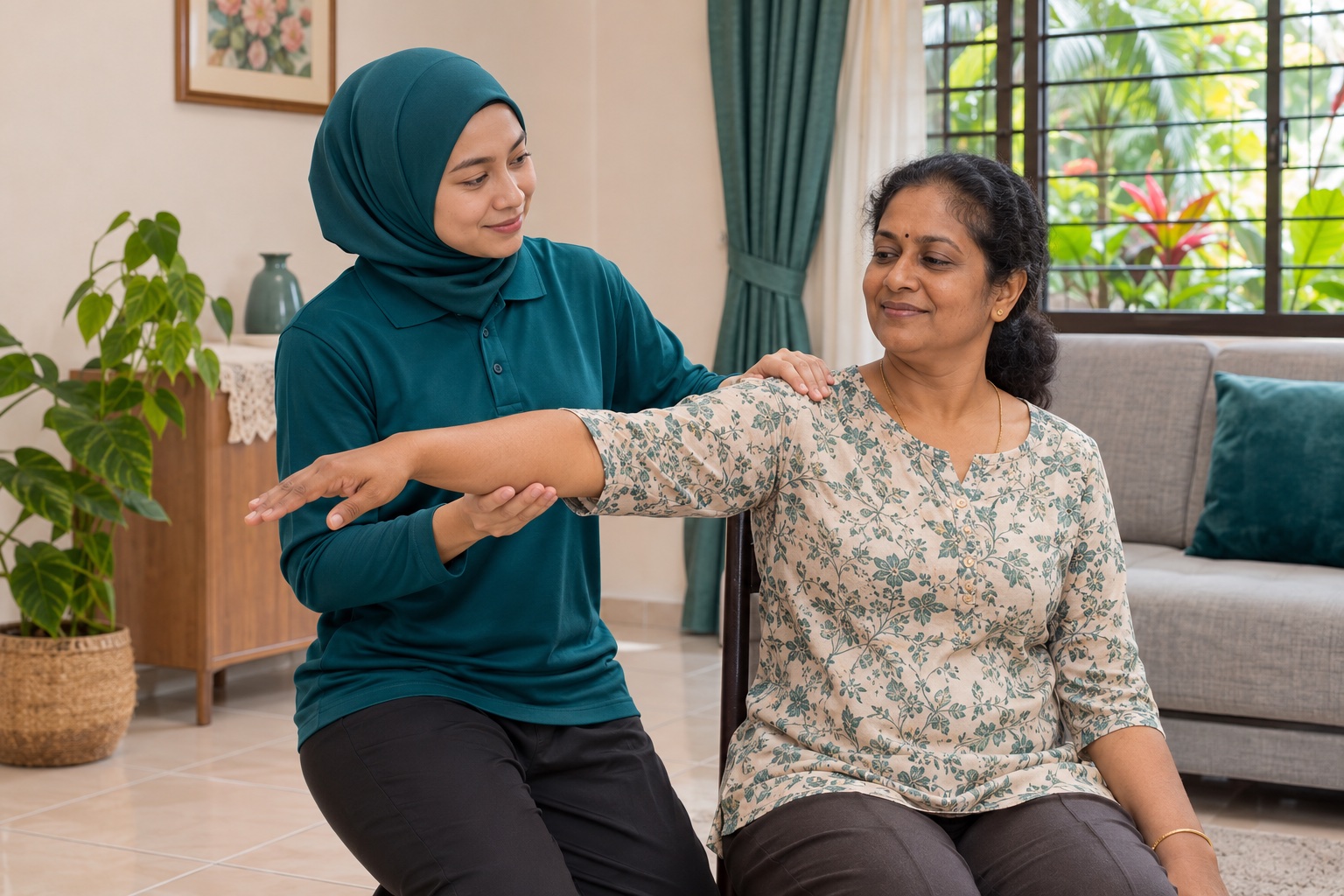
The rotator cuff is a group of muscles and tendons that helps lift and rotate the arm and control the shoulder joint. Tendinopathy describes tendon-related pain and reduced capacity, often noticed when working with the arm away from the body.
A painful movement does not establish that a tendon is torn or being trapped by a bone. A sudden traumatic loss of strength calls for a different assessment. If tendon loading is appropriate, the starting point depends on the individual task and how the shoulder responds afterwards.
Symptoms and everyday difficulties
- Pain at the outer shoulder during lifting.
- Difficulty repeating overhead tasks such as hanging clothes.
- Ache lying on the shoulder after a demanding day.
Who may benefit from a home assessment
Home practice suits stable symptoms when daily reaching or repeated lifting is the main limitation. New marked weakness after trauma needs prompt medical assessment rather than an assumed tendinopathy programme.
A condition-specific assessment
- Map recent changes in lifting volume, work height or recreational activity.
- Compare active and assisted elevation, rotation and tolerable resistance; screen the neck if symptoms suggest referral.
- Choose a reproducible task such as lifting a jug and record its weight, reach height and delayed response.
Treatment options and how they are chosen
Graded cuff resistance
- What it involves
- Select a tolerable direction and gradually change the resistance to shoulder rotation or lifting.
- Why it may be chosen
- The tendon and surrounding muscles need capacity for the loads the person actually uses.
- The everyday goal
- The target might be lifting a saucepan with control.
- Adapting it at home
- Use a light object or band only after technique and resistance are assessed.
- Reviewing progress
- Review load handled, movement quality and soreness later or the next morning.
Reach-height progression
- What it involves
- Practise an agreed reach in a comfortable arc, gradually changing height or distance.
- Why it may be chosen
- Reaching farther increases the demand even when the object is light.
- The everyday goal
- This prepares for shelves and laundry lines.
- Adapting it at home
- Use the actual cupboard with an empty container before adding an appropriate load.
- Reviewing progress
- Compare the height reached without compensating or developing a lasting flare.
Workload adjustment
- What it involves
- Space out repeated lifts and temporarily change the hardest tasks.
- Why it may be chosen
- Reducing a sudden load spike can make strengthening tolerable without stopping all activity.
- The everyday goal
- This helps manage chores or work that must continue.
- Adapting it at home
- Split laundry into batches and alternate overhead with lower-level tasks.
- Reviewing progress
- Record workload and next-day response to decide what can be restored.
Individual rehabilitation goals
- Lift an agreed kitchen item.
- Reach a useful shelf repeatedly within tolerance.
- Recognise an increase in workload and adjust it early.
How a home visit is arranged
- Send a brief enquiry with the rehabilitation need, area and whether you are the patient or caregiver.
- The team checks relevant information, service scope, therapist availability and suitability. Share medical documents through the arrangement agreed with the team.
- If suitable, confirm the appointment, full session fee and separate travel charge before the home assessment.
- The physiotherapist assesses the person and discusses an individual plan, consent and practical goals.
- Appropriate treatment, home practice and caregiver guidance are provided, then progress and the need for further visits are reviewed.
Preparing for the visit
Show a typical lifting task and describe any recent change in work or recreation. Note whether discomfort settles quickly or affects sleep and function the following day.
Home visits and clinic rehabilitation
Home rehabilitation can reproduce domestic loads. Heavy occupational lifting or return to overhead sport may need supervised equipment and task testing elsewhere.
When medical assessment is needed
After injury, inability to raise the arm or sudden major weakness warrants prompt medical review. A hot swollen joint with fever or shoulder pain with chest symptoms needs urgent care.
For a genuine medical emergency in Malaysia, call 999. A routine physiotherapy enquiry is not an emergency response. Malaysia emergency service information
Patient and caregiver questions
Is this always caused by a bone spur?
No. Symptoms depend on multiple factors including load tolerance. A scan finding alone cannot identify the source of pain.
Do I have to stop using the shoulder?
Complete rest is not usually the long-term aim. Identify a manageable amount of activity and adjust the tasks that repeatedly aggravate symptoms.
Why is a half-full jug easier?
Weight, distance from the body and lifting height change shoulder demand. These provide practical ways to adjust a task.
Can I start resistance bands immediately?
Band tension varies. First assess strength, pain and technique, then choose a resistance that fits the task and response.
What if I have already had a cuff repair?
Follow the surgeon’s specific protection and progression instructions. A repaired tendon has different requirements from nonsurgical tendinopathy.
The treating physiotherapist
Penang HomePhysio confirms that a clinician is available for this service. Ask the team to confirm the treating physiotherapist's name, qualifications, registration, relevant experience and availability. Tell us your preferred spoken language so the team can check. Website language options do not establish any individual clinician's language abilities.
About the serviceHome visits around Penang
Home visits in Penang are arranged by area and therapist availability. Areas listed on this site include George Town, Bayan Lepas, Butterworth, Bukit Mertajam. Share your postcode and access needs so the team can confirm coverage and travel charges.
See coverage areasPricing and suitability enquiries
See this site's pricing guide. Tell the team your area and care needs to confirm the full fee, including any travel charge, before booking.
Clinical information sources
These sources support the general information. They are not endorsements of this provider or a claim that a clinician has reviewed this page.