Penang HomePhysio
Acquired Brain Injury Rehabilitation at Home in Penang
A person may be physically able to stand but lose track of what to do next. After an acquired brain injury, a useful movement plan links strength and balance with attention, memory and the person's daily routine.
Suitability, therapist availability and any medical clearance are checked before an appointment. Rehabilitation is selected after assessment.
Understanding this condition
Acquired brain injury means brain damage occurring after birth. Causes include trauma, stroke, lack of oxygen or brain infection. It is an umbrella term, not one diagnosis with one exercise programme.
This page focuses on shared functional needs after different acquired injuries, including non-traumatic causes. The dedicated stroke and traumatic brain injury pages address those specific histories and precautions.
Symptoms and everyday difficulties
- A familiar movement sequence may need repeated prompts.
- Fatigue or slowed thinking can make a busy household task unsafe.
- Balance, coordination or weakness may affect transfers even when the person looks well at rest.
Who may benefit from a home assessment
Home practice may help a medically stable person after hospital care when the cause and precautions are known and a routine can be supported. Recent infection, oxygen-related cardiac problems or uncontrolled seizures require medical coordination.
A condition-specific assessment
- Clarify cause, medical stability, previous abilities, seizures and any cardiopulmonary limits after oxygen deprivation.
- Assess how the person initiates and completes a transfer or walking task, including attention, processing time, balance and fatigue.
- Ask the person and family which routines have broken down, what cues help and when supervision is available.
Treatment options and how they are chosen
Relearning an everyday sequence
- What it involves
- Choose one useful routine and practise the same manageable steps with clear feedback.
- Why it may be chosen
- Planning and memory can limit performance as much as weakness.
- The everyday goal
- An example is standing, turning and sitting for breakfast.
- Adapting it at home
- Use the usual furniture and a short agreed cue sequence.
- Reviewing progress
- Compare independence, errors and prompts across attempts.
Matching activity to attention and endurance
- What it involves
- Schedule short meaningful tasks and planned pauses according to observed tolerance.
- Why it may be chosen
- Physical and thinking effort may compete, particularly after diffuse injury.
- The everyday goal
- This supports a safe meal or bathroom routine.
- Adapting it at home
- Reduce noise and avoid combining several new tasks.
- Reviewing progress
- Record fatigue and recovery as well as task completion.
Caregiver cueing and safe assistance
- What it involves
- Demonstrate where to stand, when to prompt and when physical support is needed.
- Why it may be chosen
- Too many instructions or unplanned pulling may disrupt performance.
- The everyday goal
- This helps family support the same transfer consistently.
- Adapting it at home
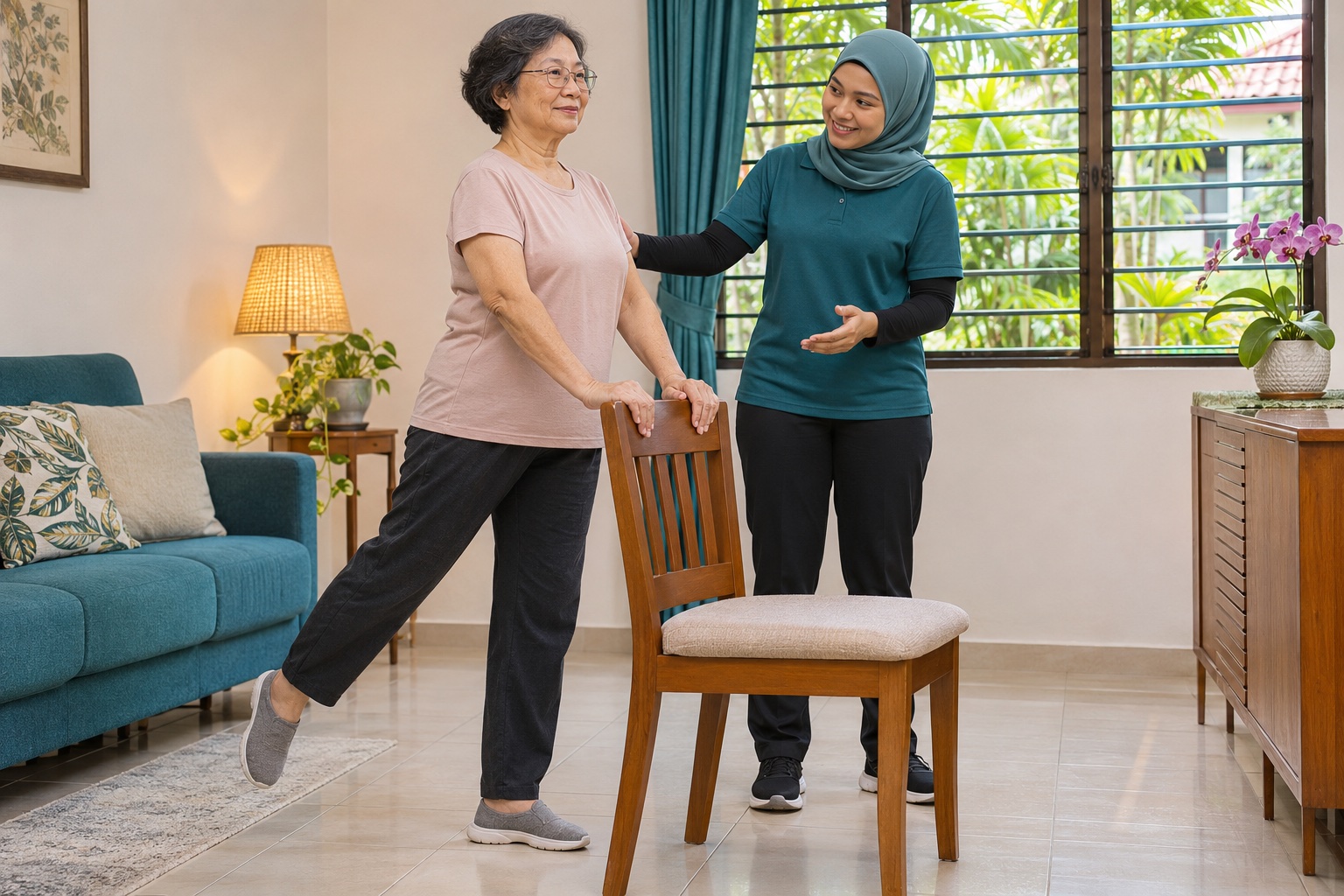
- Practise at the actual chair with consent and repeat back the agreed steps.
- Reviewing progress
- Review caregiver confidence and assistance required by the patient.
Individual rehabilitation goals
- Complete one daily sequence with an agreed level of prompting.
- Maintain attention and balance for a personally meaningful activity.
- Identify situations requiring supervision rather than independent practice.
How a home visit is arranged
- Send a brief enquiry with the rehabilitation need, area and whether you are the patient or caregiver.
- The team checks relevant information, service scope, therapist availability and suitability. Share medical documents through the arrangement agreed with the team.
- If suitable, confirm the appointment, full session fee and separate travel charge before the home assessment.
- The physiotherapist assesses the person and discusses an individual plan, consent and practical goals.
- Appropriate treatment, home practice and caregiver guidance are provided, then progress and the need for further visits are reviewed.
Preparing for the visit
Prepare the hospital summary explaining the cause, relevant medical restrictions and any seizure or fatigue plan. Ask the person which routine matters most and bring their own communication aid if used.
Home visits and clinic rehabilitation
Home allows practice in a familiar sequence and environment. Complex cognition, behaviour, swallowing, communication, cardiac tolerance or equipment needs may require neurorehabilitation, medical or allied health input beyond a single visit.
When medical assessment is needed
Sudden new weakness, speech change, severe unexplained headache, a first seizure or declining consciousness needs emergency care. Fever with worsening confusion or neck stiffness after a recent brain infection also needs urgent hospital assessment.
For a genuine medical emergency in Malaysia, call 999. A routine physiotherapy enquiry is not an emergency response. Malaysia emergency service information
Patient and caregiver questions
Is all acquired brain injury caused by an accident?
No. Stroke, lack of oxygen and infection are other causes. The cause and accompanying medical problems guide rehabilitation.
Which page should I read after a road collision?
Use the traumatic brain injury page for trauma-specific issues. This page covers broader functional planning across causes.
Can a person with memory difficulties take part?
Often, with adapted communication, repetition and appropriate support. Assess consent, safety and the person's preferences individually.
Why ask about the heart after oxygen-related brain injury?
The event that reduced oxygen may also affect safe exertion. Follow medical restrictions and cardiac follow-up where relevant.
Is more practice always better?
No. Compare task quality, fatigue and recovery. Short, consistent practice may be safer than pushing through loss of attention.
The treating physiotherapist
Penang HomePhysio confirms that a clinician is available for this service. Ask the team to confirm the treating physiotherapist's name, qualifications, registration, relevant experience and availability. Tell us your preferred spoken language so the team can check. Website language options do not establish any individual clinician's language abilities.
About the serviceHome visits around Penang
Home visits in Penang are arranged by area and therapist availability. Areas listed on this site include George Town, Bayan Lepas, Butterworth, Bukit Mertajam. Share your postcode and access needs so the team can confirm coverage and travel charges.
See coverage areasPricing and suitability enquiries
See this site's pricing guide. Tell the team your area and care needs to confirm the full fee, including any travel charge, before booking.
Clinical information sources
These sources support the general information. They are not endorsements of this provider or a claim that a clinician has reviewed this page.