Penang HomePhysio
Traumatic Brain Injury Rehabilitation at Home in Penang
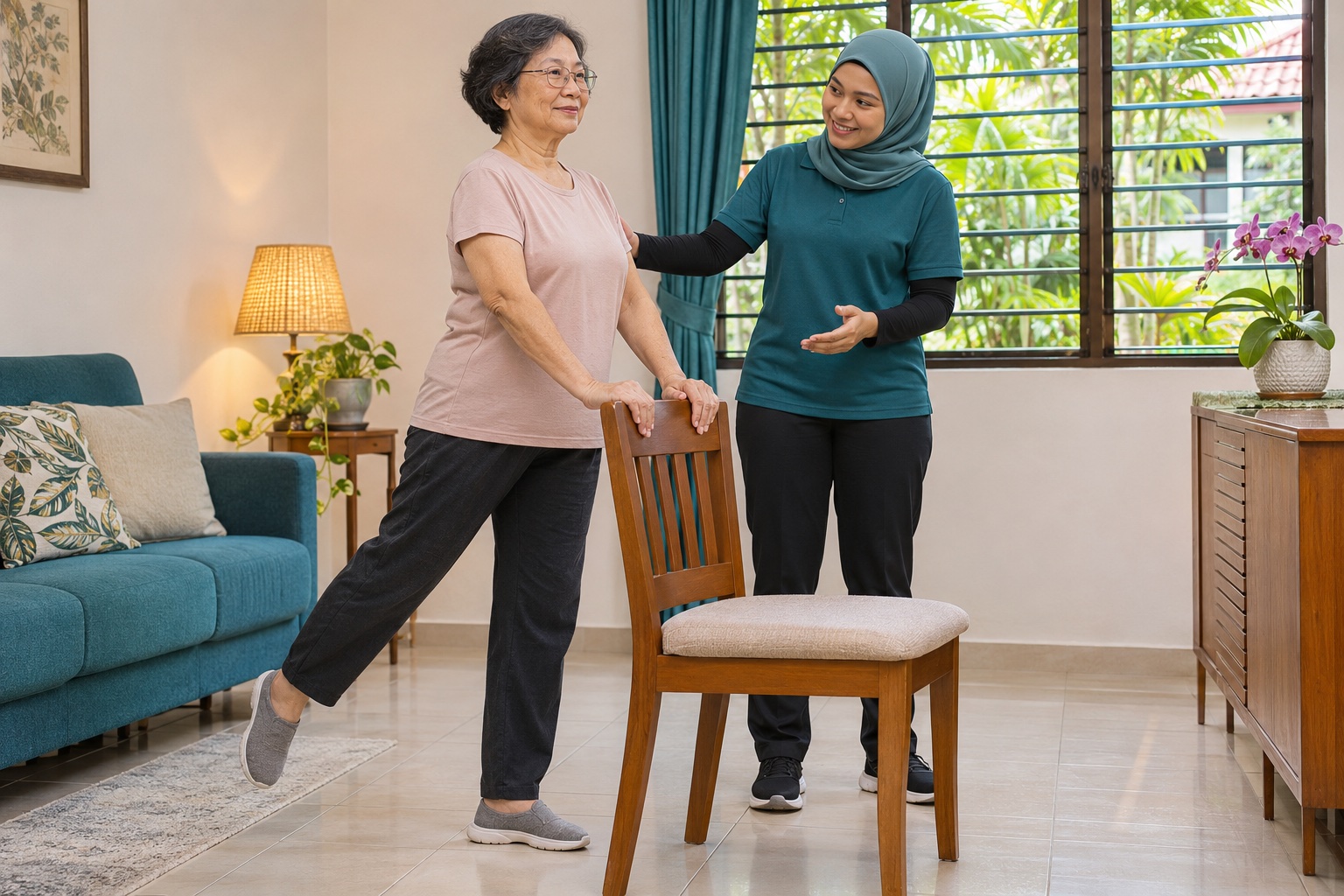
After a fall or collision, a person may walk steadily in a quiet room but lose balance when a phone rings or someone gives instructions. The home assessment examines attention and movement together.
Suitability, therapist availability and any medical clearance are checked before an appointment. Rehabilitation is selected after assessment.
Understanding this condition
Traumatic brain injury results from an external force to the head or body that disrupts brain function. A concussion and a severe injury needing neurosurgery are not the same clinical situation.
Trauma can also injure the neck, limbs, eyes or inner ear. Rehabilitation must respect these injuries, any craniectomy precautions and the medical team's plan; stroke is a different cause of brain injury.
Symptoms and everyday difficulties
- Turning the head or changing direction may feel unsteady.
- Concentration can fade before the legs feel tired.
- Poor awareness of a limitation can increase falls risk even when strength appears good.
Who may benefit from a home assessment
Consider home rehabilitation after medical assessment and stable discharge if a familiar environment can reduce distraction or help practise needed tasks. A recent unevaluated head injury or deteriorating neurological state needs medical care first.
A condition-specific assessment
- Review the injury, scans or operations already explained by the team, seizure plan, fractures and clearance for movement.
- Assess balance, coordination, vision-related symptoms, attention and fatigue; avoid assuming all dizziness has an inner-ear cause.
- Observe one everyday route and how reminders, background noise or a family member's help affect safety.
Treatment options and how they are chosen
Balance in a manageable setting
- What it involves
- Select a supported standing or walking task after identifying what triggers imbalance.
- Why it may be chosen
- Visual, sensory, motor or attention changes can contribute.
- The everyday goal
- This targets turning safely on the way to the toilet.
- Adapting it at home
- Begin in a quiet clear area with adequate guarding.
- Reviewing progress
- Review steadiness, dizziness and recovery before adding distractions.
Sequencing a familiar task
- What it involves
- Break a transfer or dressing-related movement into short consistent steps.
- Why it may be chosen
- Memory or planning difficulty can interrupt an otherwise possible movement.
- The everyday goal
- This supports completing the task with less confusion.
- Adapting it at home
- Use one agreed cue or picture in the usual location.
- Reviewing progress
- Review errors, reminders and physical assistance needed.
Managing cognitive and physical fatigue
- What it involves
- Plan activity and rest around concentration as well as muscle effort.
- Why it may be chosen
- Excessive stimulation can reduce safe movement quality.
- The everyday goal
- This supports participation in a family meal or short outing.
- Adapting it at home
- Identify a quieter time and stop before safety deteriorates.
- Reviewing progress
- Track fatigue during and after activity and adjust the next task.
Individual rehabilitation goals
- Turn safely in one familiar room.
- Complete a transfer with fewer or more consistent prompts.
- Recognise when fatigue or distraction calls for rest or supervision.
How a home visit is arranged
- Send a brief enquiry with the rehabilitation need, area and whether you are the patient or caregiver.
- The team checks relevant information, service scope, therapist availability and suitability. Share medical documents through the arrangement agreed with the team.
- If suitable, confirm the appointment, full session fee and separate travel charge before the home assessment.
- The physiotherapist assesses the person and discusses an individual plan, consent and practical goals.
- Appropriate treatment, home practice and caregiver guidance are provided, then progress and the need for further visits are reviewed.
Preparing for the visit
Bring discharge instructions for the brain injury and any fractures, helmet advice if prescribed, and a list of situations that cause imbalance. Invite a helper who knows the person's usual behaviour, with consent.
Home visits and clinic rehabilitation
Home offers a familiar place to practise attention and mobility together. Persistent visual or vestibular symptoms, complex cognition, behaviour or seizures may need a brain injury team, neuropsychology, occupational therapy or medical review.
When medical assessment is needed
After a head injury, worsening headache, repeated vomiting, increasing drowsiness, a new seizure, unusual confusion or new weakness needs emergency assessment. Do not leave a deteriorating person waiting for physiotherapy.
For a genuine medical emergency in Malaysia, call 999. A routine physiotherapy enquiry is not an emergency response. Malaysia emergency service information
Patient and caregiver questions
Is this the same as stroke rehabilitation?
Both may affect movement, but trauma can involve concussion symptoms, fractures or neurosurgical precautions. The injury history changes the plan.
Why is a quiet room easier?
Walking and balance use attention. Noise or several instructions can increase the challenge after brain injury.
Can a family member supervise alone?
Only if the assessed risks and tasks are manageable. Agree on cues, when to guard and when another helper is needed.
Can I return to driving or contact sport after walking improves?
Walking improvement does not clear either activity. Seek medical and appropriate specialist assessment and follow injury-specific restrictions.
What if dizziness started after the accident?
Tell the clinician about its triggers and other symptoms. Causes differ; targeted vestibular or medical assessment may be needed.
The treating physiotherapist
Penang HomePhysio confirms that a clinician is available for this service. Ask the team to confirm the treating physiotherapist's name, qualifications, registration, relevant experience and availability. Tell us your preferred spoken language so the team can check. Website language options do not establish any individual clinician's language abilities.
About the serviceHome visits around Penang
Home visits in Penang are arranged by area and therapist availability. Areas listed on this site include George Town, Bayan Lepas, Butterworth, Bukit Mertajam. Share your postcode and access needs so the team can confirm coverage and travel charges.
See coverage areasPricing and suitability enquiries
See this site's pricing guide. Tell the team your area and care needs to confirm the full fee, including any travel charge, before booking.
Clinical information sources
These sources support the general information. They are not endorsements of this provider or a claim that a clinician has reviewed this page.