Penang HomePhysio
Hereditary Spastic Paraplegia Rehabilitation in Penang
When leg stiffness makes thresholds, turning or getting into a car difficult, rehabilitation can focus on the specific movement that matters to you.
Suitability, therapist availability and any medical clearance are checked before an appointment. Rehabilitation is selected after assessment.
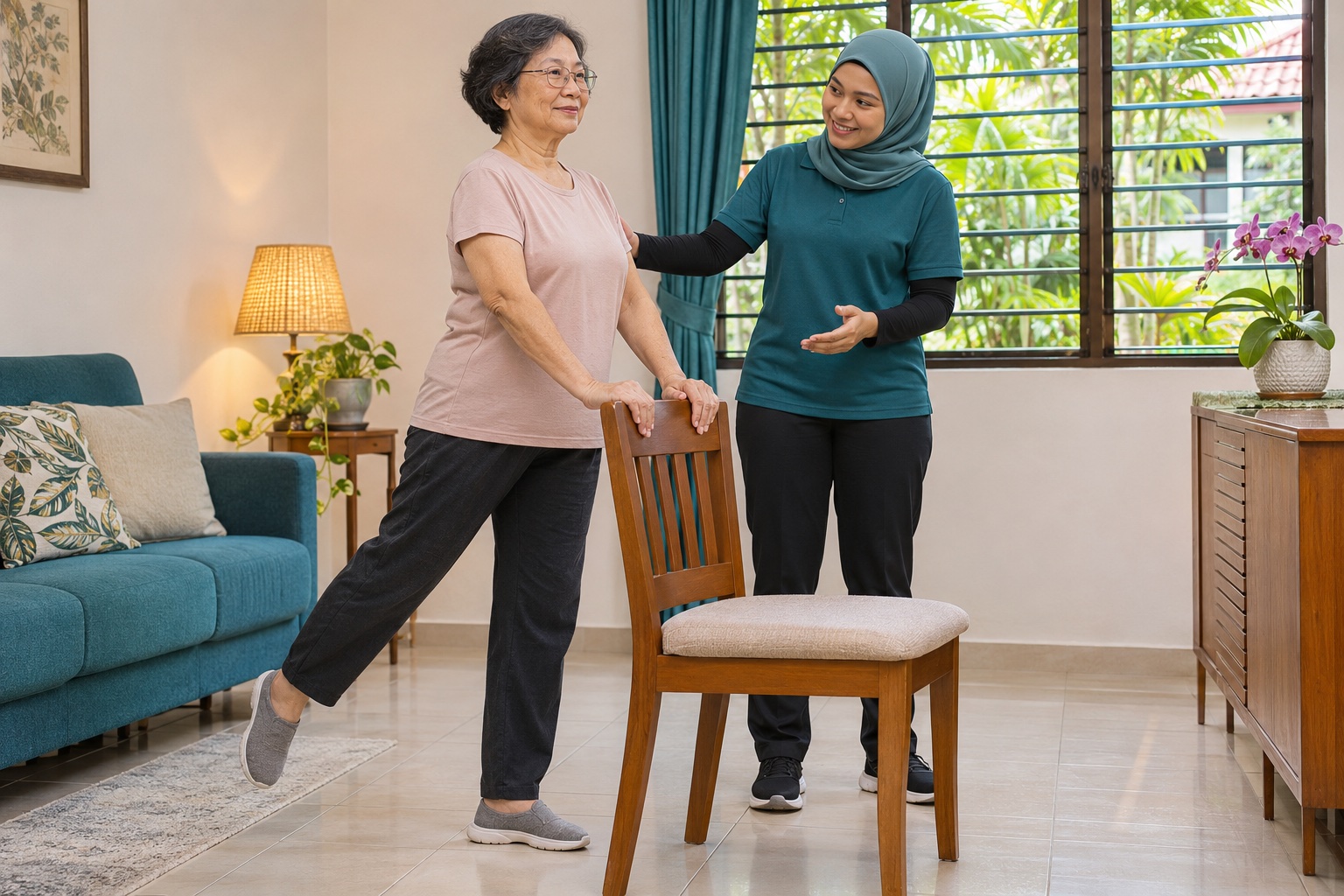
Understanding this condition
Hereditary spastic paraplegia is a group of inherited conditions typically causing stiffness and weakness in the legs. Onset, progression and other neurological features vary.
Despite the name, it does not mean everyone is unable to walk. Rehabilitation aims to use available movement and anticipate access or equipment needs; it does not stop the genetic disorder.
Symptoms and everyday difficulties
- Legs feel stiff when starting to walk
- Feet may scuff or catch on turns
- Longer routes become tiring despite remaining able to stand
Who may benefit from a home assessment
A person with an established neurological diagnosis may benefit if everyday routes now require more effort or near-falls are increasing.
A condition-specific assessment
- Ask about changes over months and any abrupt new deterioration.
- Compare stiffness during movement with fixed joint restriction and weakness.
- Observe a turn and threshold with usual footwear or aid.
Treatment options and how they are chosen
Gait and turning practice
- What it involves
- Practise a small number of purposeful turns with assessed support.
- Why it may be chosen
- Stiff stepping may reduce clearance when changing direction.
- The everyday goal
- Move around the dining table without crossing into an obstacle.
- Adapting it at home
- Leave room for the person's natural step pattern and support.
- Reviewing progress
- Compare toe catches and assistance on the same turn.
Comfortable range and positioning
- What it involves
- Select gentle movements or positions for the joints that limit a task.
- Why it may be chosen
- Fixed loss of range and spasticity are not identical.
- The everyday goal
- Help legs rest comfortably or make dressing easier.
- Adapting it at home
- Use a supported position without forcing stiff knees or ankles.
- Reviewing progress
- Review comfort and useful range during the task.
Mobility aid planning
- What it involves
- Compare safe options for short indoor and longer outside journeys.
- Why it may be chosen
- One aid may not suit every distance or level of fatigue.
- The everyday goal
- Keep access to family or community activities.
- Adapting it at home
- Check doorway width, storage and a safe resting place.
- Reviewing progress
- Review energy used, near-falls and whether the activity remains accessible.
Individual rehabilitation goals
- Turn in the kitchen with less grabbing.
- Use an appropriate aid before fatigue makes walking unsafe.
- Maintain comfortable movement for dressing.
How a home visit is arranged
- Send a brief enquiry with the rehabilitation need, area and whether you are the patient or caregiver.
- The team checks relevant information, service scope, therapist availability and suitability. Share medical documents through the arrangement agreed with the team.
- If suitable, confirm the appointment, full session fee and separate travel charge before the home assessment.
- The physiotherapist assesses the person and discusses an individual plan, consent and practical goals.
- Appropriate treatment, home practice and caregiver guidance are provided, then progress and the need for further visits are reviewed.
Preparing for the visit
Show the places where the feet catch. Have recent neurology and orthotic instructions ready.
Home visits and clinic rehabilitation
Home allows assessment in narrow spaces. Genetic counselling, specialist spasticity treatment or orthotic prescription requires the relevant team.
When medical assessment is needed
Abrupt weakness, new severe back pain with bladder or bowel change, or sudden speech or facial changes must not be attributed to slow progression; seek emergency assessment.
For a genuine medical emergency in Malaysia, call 999. A routine physiotherapy enquiry is not an emergency response. Malaysia emergency service information
Patient and caregiver questions
Does paraplegia here always mean complete paralysis?
No. The term covers a group with variable walking abilities.
Will stretching alone improve walking?
Not necessarily. Weakness, balance and aids may matter as much as range.
Should I wait until I fall to try an aid?
No. An earlier assessment can compare safe options.
Can relatives inherit it?
Inheritance varies by type; genetic counselling is the right place for individual risk advice.
Why review routes repeatedly?
A change in fatigue or stiffness may mean a previously easy doorway or staircase needs different support.
The treating physiotherapist
Penang HomePhysio confirms that a clinician is available for this service. Ask the team to confirm the treating physiotherapist's name, qualifications, registration, relevant experience and availability. Tell us your preferred spoken language so the team can check. Website language options do not establish any individual clinician's language abilities.
About the serviceHome visits around Penang
Home visits in Penang are arranged by area and therapist availability. Areas listed on this site include George Town, Bayan Lepas, Butterworth, Bukit Mertajam. Share your postcode and access needs so the team can confirm coverage and travel charges.
See coverage areasPricing and suitability enquiries
See this site's pricing guide. Tell the team your area and care needs to confirm the full fee, including any travel charge, before booking.
Clinical information sources
These sources support the general information. They are not endorsements of this provider or a claim that a clinician has reviewed this page.