Penang HomePhysio
Shoulder Dislocation Rehabilitation at Home in Penang
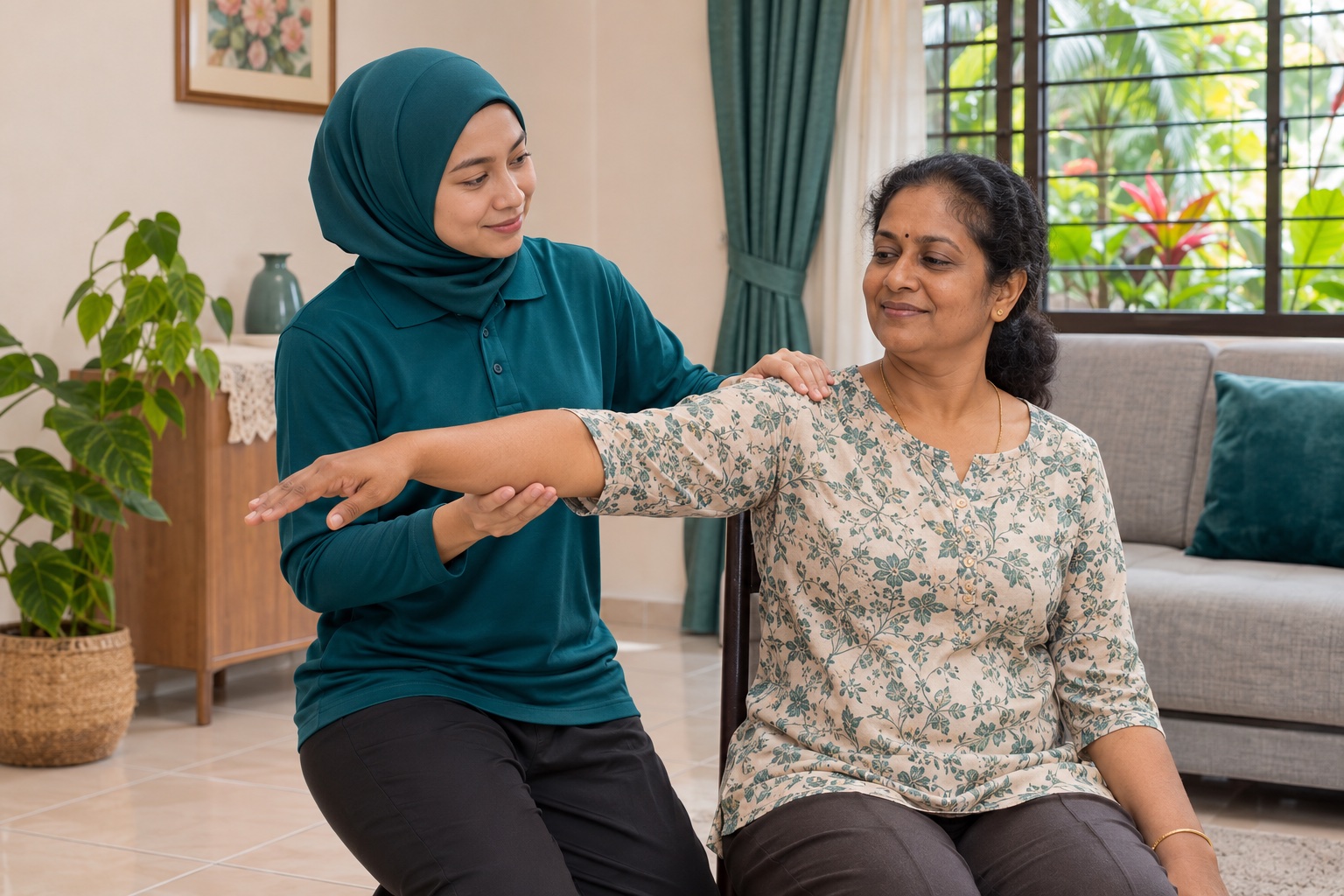
After a shoulder has been put back in place in hospital, washing, dressing and safe use of the arm may need some planning. The discharge instructions guide each step.
Suitability, therapist availability and any medical clearance are checked before an appointment. Rehabilitation is selected after assessment.
Understanding this condition
A dislocation means the head of the upper arm bone has left its socket. It may injure the surrounding capsule, ligaments, nerves, tendons or bone. The direction of dislocation and any associated injury affect the protection needed after reduction.
This is rehabilitation after medical reduction, not a service to put a shoulder back in place. A first dislocation after a fall is different from longstanding atraumatic instability. Surgery to stabilise or repair associated damage requires its own postoperative plan.
Symptoms and everyday difficulties
- Pain and apprehension when changing clothes.
- Difficulty managing the prescribed sling and hygiene.
- Weakness or stiffness as permitted movement resumes.
Who may benefit from a home assessment
A stable patient discharged after reduction may benefit from home guidance if the joint is in place and restrictions are clear. A suspected repeat dislocation or new circulation or nerve problem requires urgent hospital assessment.
A condition-specific assessment
- Review hospital findings, reduction, imaging, sling instructions and follow-up arrangements.
- Check hand sensation, colour and function, pain, bruising and other symptoms needing reassessment.
- Observe dressing and supported movement only within the prescribed limits; clarify uncertain instructions with the treating team.
Treatment options and how they are chosen
Protection and self-care
- What it involves
- Practise the instructed sling and dressing sequence while supporting the arm.
- Why it may be chosen
- Protection must account for the injured tissues and dislocation direction.
- The everyday goal
- The goal is safer washing and changing clothes.
- Adapting it at home
- Use loose garments and arrange toiletries within reach of the unaffected hand.
- Reviewing progress
- Check comfort, skin, sling fit and the help still needed.
Permitted movement recovery
- What it involves
- When cleared, practise selected arm movements without testing vulnerable positions.
- Why it may be chosen
- Gradual motion addresses stiffness while respecting healing and associated injuries.
- The everyday goal
- This supports basic reaching and grooming.
- Adapting it at home
- Choose a supported position and follow the hospital’s limits on range and assistance.
- Reviewing progress
- Recheck control, pain and apprehension before adding range.
Later strength and confidence
- What it involves
- Introduce muscle control and resistance when permitted.
- Why it may be chosen
- Dynamic support is important after an episode of joint displacement.
- The everyday goal
- Work towards carrying light objects and reaching without apprehension.
- Adapting it at home
- Start with secure positions and appropriate light resistance.
- Reviewing progress
- Compare control and confidence and reassess any further slipping.
Individual rehabilitation goals
- Manage the prescribed support safely.
- Resume a permitted self-care task.
- Understand the plan for follow-up and further loading.
How a home visit is arranged
- Send a brief enquiry with the rehabilitation need, area and whether you are the patient or caregiver.
- The team checks relevant information, service scope, therapist availability and suitability. Share medical documents through the arrangement agreed with the team.
- If suitable, confirm the appointment, full session fee and separate travel charge before the home assessment.
- The physiotherapist assesses the person and discusses an individual plan, consent and practical goals.
- Appropriate treatment, home practice and caregiver guidance are provided, then progress and the need for further visits are reviewed.
Preparing for the visit
Have the emergency or orthopaedic discharge sheet, sling and any imaging report ready. Mention numbness since the injury and whether this is the first dislocation.
Home visits and clinic rehabilitation
Home visits suit protected self-care and early functional practice. Suspected redislocation, associated fractures or persistent weakness require medical review; return to collision sport may need specialist testing.
When medical assessment is needed
A shoulder that appears out of place again, severe new pain, or a cold, pale, numb or weak hand needs urgent hospital care. Do not force movement or attempt self-reduction.
For a genuine medical emergency in Malaysia, call 999. A routine physiotherapy enquiry is not an emergency response. Malaysia emergency service information
Patient and caregiver questions
How long should my sling stay on?
Follow your own discharge instructions; duration depends on the injury and any fracture or repair. Clarify missing instructions before changing use.
Can I test whether the shoulder is stable?
Do not deliberately recreate the movement that caused dislocation. Stability and confidence are assessed gradually within safe limits.
What if the shoulder went back by itself?
A suspected dislocation still needs medical assessment for fracture, nerve injury and an appropriate follow-up plan.
Can I use the same exercises as a friend?
Not necessarily. Direction of injury, associated damage, surgery and individual restrictions can all differ.
When can I drive again?
Resume only when medically appropriate and able to control the vehicle and respond safely. Pain relief medication and sling restrictions also matter.
The treating physiotherapist
Penang HomePhysio confirms that a clinician is available for this service. Ask the team to confirm the treating physiotherapist's name, qualifications, registration, relevant experience and availability. Tell us your preferred spoken language so the team can check. Website language options do not establish any individual clinician's language abilities.
About the serviceHome visits around Penang
Home visits in Penang are arranged by area and therapist availability. Areas listed on this site include George Town, Bayan Lepas, Butterworth, Bukit Mertajam. Share your postcode and access needs so the team can confirm coverage and travel charges.
See coverage areasPricing and suitability enquiries
See this site's pricing guide. Tell the team your area and care needs to confirm the full fee, including any travel charge, before booking.
Clinical information sources
These sources support the general information. They are not endorsements of this provider or a claim that a clinician has reviewed this page.