Penang HomePhysio
Shoulder Instability Rehabilitation at Home in Penang
A shoulder that feels as if it may slip can make ordinary reaching frightening. Assessment looks at the episodes, muscle control and tasks the person avoids.
Suitability, therapist availability and any medical clearance are checked before an appointment. Rehabilitation is selected after assessment.
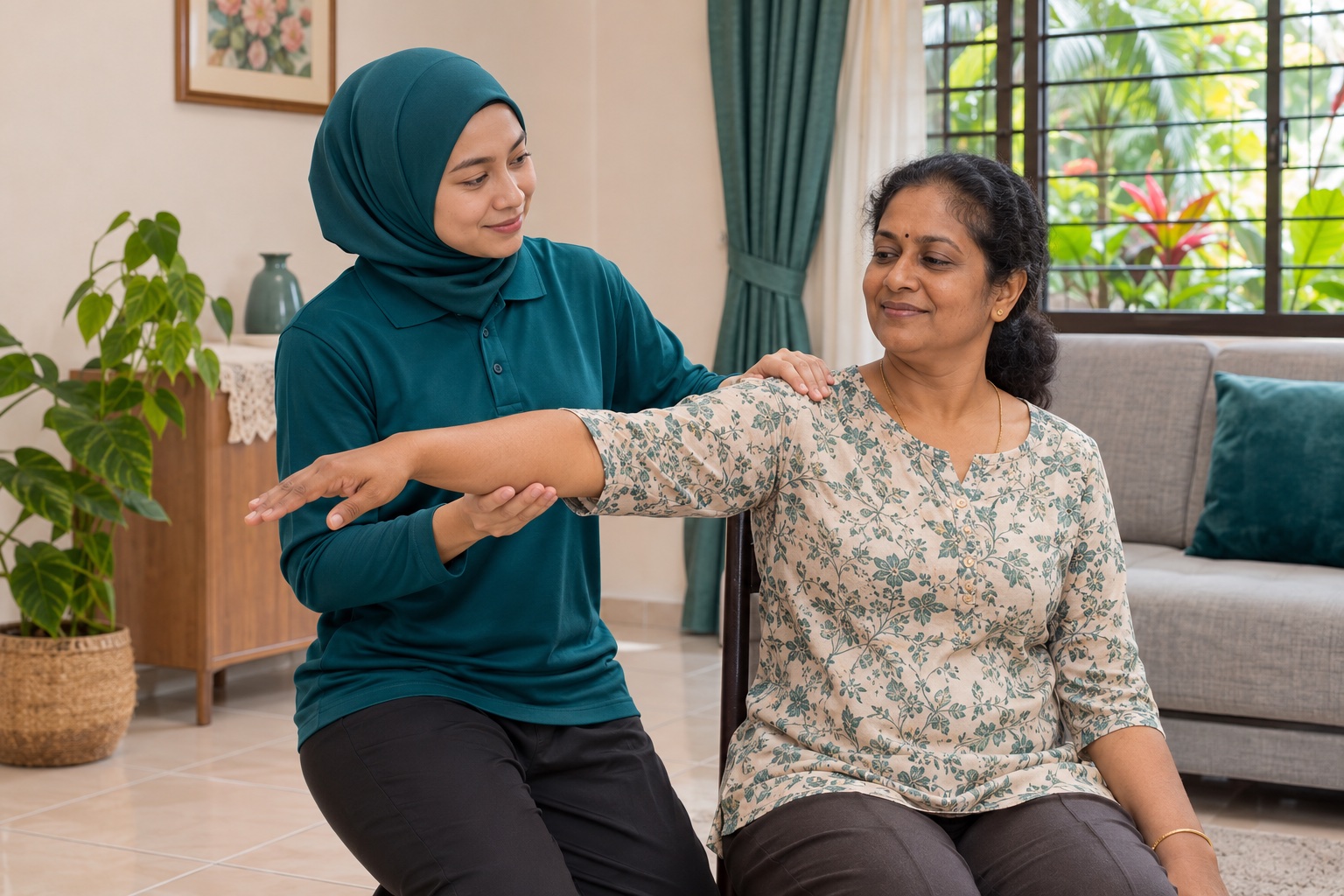
Understanding this condition
Shoulder instability describes troublesome slipping, partial displacement or repeated dislocation of the ball-and-socket joint. It can follow injury or develop without a single traumatic event. A naturally flexible shoulder is not necessarily unstable if it causes no symptoms.
This page concerns an assessed shoulder currently in place. An acute dislocation needs emergency medical care. For ongoing instability, a clinician considers joint support, muscle coordination and confidence; some people also require imaging or surgical advice.
Symptoms and everyday difficulties
- Apprehension in particular arm positions.
- Slipping sensations while reaching away from the body.
- Avoiding work, sleep positions or recreation for fear of another episode.
Who may benefit from a home assessment
Stable, previously assessed instability may be suitable for home practice in controlled positions. Recurrent traumatic episodes, symptoms in several directions or unexplained loss of control may require specialist assessment before deciding what to practise.
A condition-specific assessment
- Describe the first event, later slips, any hospital reduction and which movements feel unsafe.
- Observe shoulder-blade and arm control in tolerable positions; do not deliberately provoke another slip.
- Identify job, sleep or sport demands and whether general joint flexibility influences the plan.
Treatment options and how they are chosen
Movement-control retraining
- What it involves
- Practise a selected arm movement with guidance for smoother joint and shoulder-blade control.
- Why it may be chosen
- Coordination can affect stability even when individual muscles test strongly.
- The everyday goal
- Focus on a once-uncomfortable reach such as putting a cup down.
- Adapting it at home
- Use a supported starting position and mirror feedback if helpful.
- Reviewing progress
- Review confidence, control and absence of slipping during the task.
Dynamic support strength
- What it involves
- Train cuff and shoulder-blade muscles in positions where the joint feels secure.
- Why it may be chosen
- Muscular support helps control the ball in the socket during load.
- The everyday goal
- Work towards carrying or placing an object without apprehension.
- Adapting it at home
- Choose a manageable band or light load and avoid positions that cause slipping.
- Reviewing progress
- Gradually change resistance only while movement remains controlled.
Graded return to feared tasks
- What it involves
- Break an avoided activity into manageable steps agreed with the clinician.
- Why it may be chosen
- Confidence may lag behind physical ability after repeated instability.
- The everyday goal
- Target one domestic or work-related reach without testing extreme positions.
- Adapting it at home
- Practise in a clear space with objects that are safe to drop.
- Reviewing progress
- Compare confidence and episode frequency, and refer if slipping persists.
Individual rehabilitation goals
- Reach in a trusted range.
- Carry a light load with steady control.
- Understand when repeated episodes need specialist review.
How a home visit is arranged
- Send a brief enquiry with the rehabilitation need, area and whether you are the patient or caregiver.
- The team checks relevant information, service scope, therapist availability and suitability. Share medical documents through the arrangement agreed with the team.
- If suitable, confirm the appointment, full session fee and separate travel charge before the home assessment.
- The physiotherapist assesses the person and discusses an individual plan, consent and practical goals.
- Appropriate treatment, home practice and caregiver guidance are provided, then progress and the need for further visits are reviewed.
Preparing for the visit
List slipping episodes, their triggers and any previous reduction or surgery. Describe the movement without deliberately demonstrating a dislocation.
Home visits and clinic rehabilitation
Home work is useful for controlled daily tasks. Recurrent instability despite rehabilitation, major trauma or return to contact and overhead sport may require a specialist team and testing facilities.
When medical assessment is needed
If the shoulder appears out of place or cannot be moved after injury, seek emergency care and never try to relocate it yourself. New numbness, weakness or a pale or cold hand also requires urgent assessment.
For a genuine medical emergency in Malaysia, call 999. A routine physiotherapy enquiry is not an emergency response. Malaysia emergency service information
Patient and caregiver questions
Is flexibility the same as instability?
No. Laxity can be painless. Instability means the movement causes troublesome slipping, apprehension or loss of function.
Should I show the therapist how it pops out?
Describe the event rather than deliberately reproducing it. Assessment can start in secure positions.
Can strengthening guarantee no further slipping?
No. Muscle control may improve, but structural injury and other factors can contribute. Persistent episodes need reassessment.
Is stretching tightness always useful?
End-range stretching may be inappropriate for an unstable joint. First establish whether there is a genuine movement restriction.
When can I return to contact sport?
The decision requires task-specific strength, control, confidence and medical considerations. Normal household use alone does not establish sports readiness.
The treating physiotherapist
Penang HomePhysio confirms that a clinician is available for this service. Ask the team to confirm the treating physiotherapist's name, qualifications, registration, relevant experience and availability. Tell us your preferred spoken language so the team can check. Website language options do not establish any individual clinician's language abilities.
About the serviceHome visits around Penang
Home visits in Penang are arranged by area and therapist availability. Areas listed on this site include George Town, Bayan Lepas, Butterworth, Bukit Mertajam. Share your postcode and access needs so the team can confirm coverage and travel charges.
See coverage areasPricing and suitability enquiries
See this site's pricing guide. Tell the team your area and care needs to confirm the full fee, including any travel charge, before booking.
Clinical information sources
These sources support the general information. They are not endorsements of this provider or a claim that a clinician has reviewed this page.