Penang HomePhysio
Neck Pain Physiotherapy at Home in Penang
Explore home assessment for neck pain in Penang, with individual movement, strength and daily-task advice for turning, screen use and comfortable activity.
Suitability, therapist availability and any medical clearance are checked before an appointment. Rehabilitation is selected after assessment.
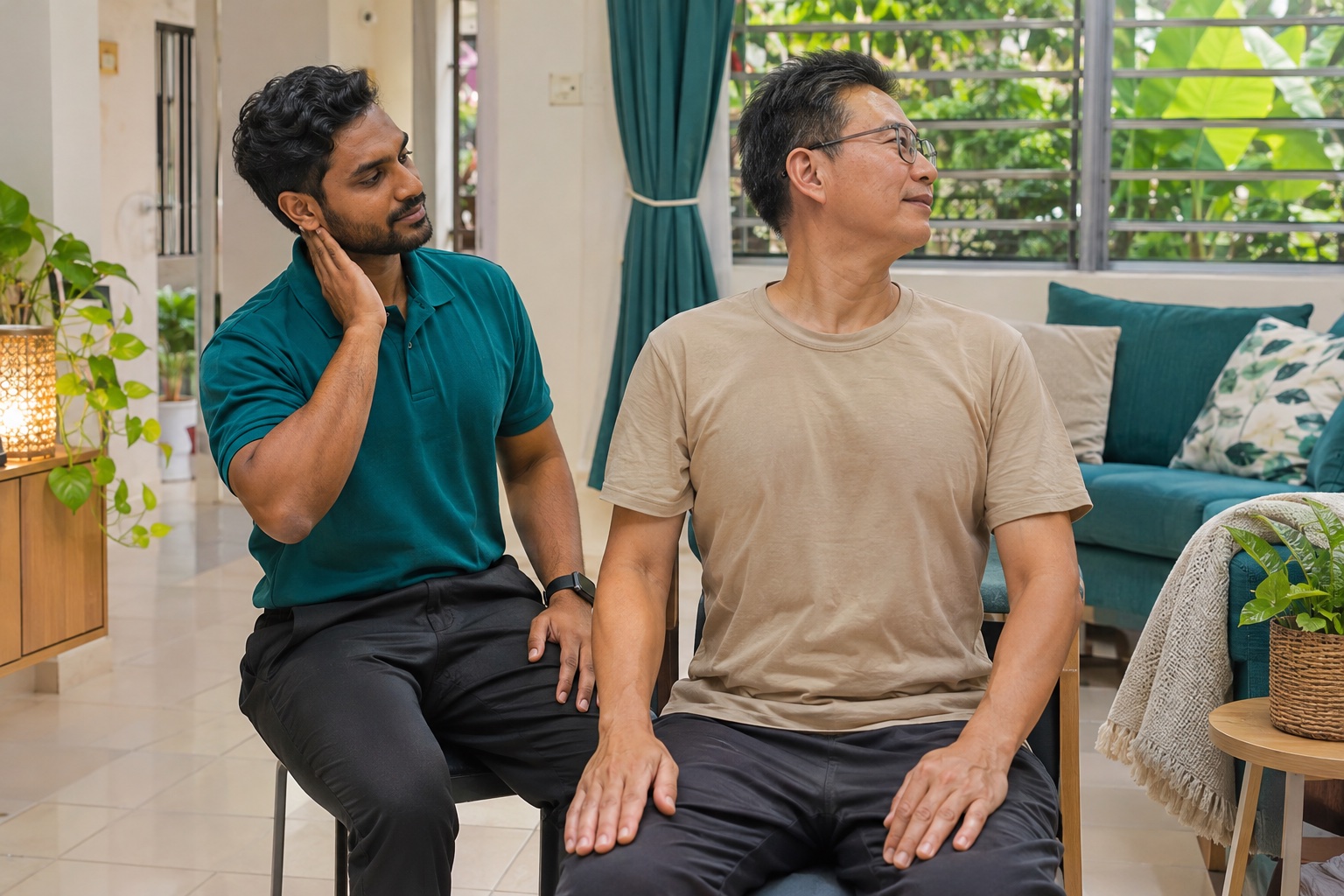
Understanding this condition
Neck pain may involve aching, stiffness or restricted movement around the cervical spine. It can affect looking around, reading and finding a comfortable position. Several tissues and broader factors may contribute; a painful neck does not automatically mean a trapped nerve.
This page covers general neck pain. Arm weakness or altered sensation, a diagnosed disc problem or symptoms suggesting spinal cord involvement need additional assessment. Rehabilitation aims to improve useful movement and confidence, rather than enforce one perfect posture all day.
Symptoms and everyday difficulties
- Turning to speak to someone or check surroundings may be difficult.
- Reading or using a phone can aggravate discomfort.
- Stiffness may interfere with sleep positions, dressing or everyday tasks.
Who may benefit from a home assessment
Home assessment can be useful when travel is uncomfortable or symptoms relate to the home workstation and daily activities. Serious injury, new neurological symptoms or unexplained severe pain requires medical review first.
A condition-specific assessment
- Ask about onset, injury, headaches, arm symptoms, dizziness and health history, as well as sleep and activity demands.
- Assess comfortable neck and shoulder movement and relevant strength. Neurological examination is added where indicated.
- Observe screen use, reading and turning tasks to establish practical goals and identify manageable changes.
Treatment options and how they are chosen
Comfortable neck mobility
- What it involves
- Practise selected turning and bending movements within a suitable range.
- Why it may be chosen
- Movement practice may help reduce unnecessary guarding and restore confidence.
- The everyday goal
- Targets include looking around and changing position during daily tasks.
- Adapting it at home
- Begin in a supported chair or other comfortable home position.
- Reviewing progress
- Review range, ease of movement and symptoms rather than forcefully reaching an end position.
Neck and shoulder endurance
- What it involves
- Introduce appropriate resistance and control exercises for the neck and shoulder region.
- Why it may be chosen
- Building capacity may support sustained or repeated daily activities.
- The everyday goal
- The goal is tolerating reading, light lifting and household tasks.
- Adapting it at home
- Use simple exercises with clear technique and no equipment purchase unless needed.
- Reviewing progress
- Assess endurance, movement quality and next-day response before progression.
Activity and workstation changes
- What it involves
- Vary positions, adjust screen placement and plan breaks from sustained tasks.
- Why it may be chosen
- This addresses repeated exposure to activities that provoke symptoms.
- The everyday goal
- It supports phone use, desk work and comfortable daily participation.
- Adapting it at home
- Test changes in the actual chair, desk and reading setup.
- Reviewing progress
- Keep changes that improve task tolerance; there is no universal perfect arrangement.
Individual rehabilitation goals
- Turn the head more comfortably for ordinary tasks.
- Build tolerance for necessary reading or screen work.
- Use a practical plan for symptom fluctuations.
How a home visit is arranged
- Send a brief enquiry with the rehabilitation need, area and whether you are the patient or caregiver.
- The team checks relevant information, service scope, therapist availability and suitability. Share medical documents through the arrangement agreed with the team.
- If suitable, confirm the appointment, full session fee and separate travel charge before the home assessment.
- The physiotherapist assesses the person and discusses an individual plan, consent and practical goals.
- Appropriate treatment, home practice and caregiver guidance are provided, then progress and the need for further visits are reviewed.
Preparing for the visit
Explain any injury, unusual headache or arm symptoms and have relevant reports ready. Show your usual screen and sleeping setup; pillow choice can be discussed without promising one product will solve the problem.
Home visits and clinic rehabilitation
Home visits help relate treatment to real tasks. Imaging, specialist neurological examination or management of significant trauma requires appropriate medical services. Driving should be avoided if restricted neck movement makes it unsafe.
When medical assessment is needed
Seek urgent care for new arm or leg weakness, poor coordination, walking change or bladder/bowel disturbance. Sudden severe unusual headache or neck pain with speech, vision or facial changes needs emergency assessment. Significant trauma or fever with marked neck stiffness also warrants urgent review.
For a genuine medical emergency in Malaysia, call 999. A routine physiotherapy enquiry is not an emergency response. Malaysia emergency service information
Patient and caregiver questions
Should I wear a collar?
Not routinely unless medically advised. Prolonged restriction can reduce useful movement; specific injuries may require different instructions.
Is a stiff neck always arthritis?
No. Several causes can produce stiffness, and age-related imaging findings may not explain the symptoms.
Can I drive with neck pain?
Only if you can safely control the vehicle and observe your surroundings. Restricted movement or medication effects may make driving unsafe.
Do I need a special pillow?
Comfort and support matter, but no single pillow suits everyone. Avoid buying expensive equipment before discussing your needs.
Does treatment require neck manipulation?
No. Exercise, activity changes and other suitable approaches can be used. Any proposed hands-on technique requires assessment, explanation and consent.
The treating physiotherapist
Penang HomePhysio confirms that a clinician is available for this service. Ask the team to confirm the treating physiotherapist's name, qualifications, registration, relevant experience and availability. Tell us your preferred spoken language so the team can check. Website language options do not establish any individual clinician's language abilities.
About the serviceHome visits around Penang
Home visits in Penang are arranged by area and therapist availability. Areas listed on this site include George Town, Bayan Lepas, Butterworth, Bukit Mertajam. Share your postcode and access needs so the team can confirm coverage and travel charges.
See coverage areasPricing and suitability enquiries
See this site's pricing guide. Tell the team your area and care needs to confirm the full fee, including any travel charge, before booking.
Clinical information sources
These sources support the general information. They are not endorsements of this provider or a claim that a clinician has reviewed this page.