Penang HomePhysio
Parkinson’s Physiotherapy at Home in Penang
The journey from the living room to the toilet can change at the doorway: the feet may briefly feel stuck, especially when turning or hurrying. Observing the actual trigger helps identify a strategy that suits the individual.
Suitability, therapist availability and any medical clearance are checked before an appointment. Rehabilitation is selected after assessment.
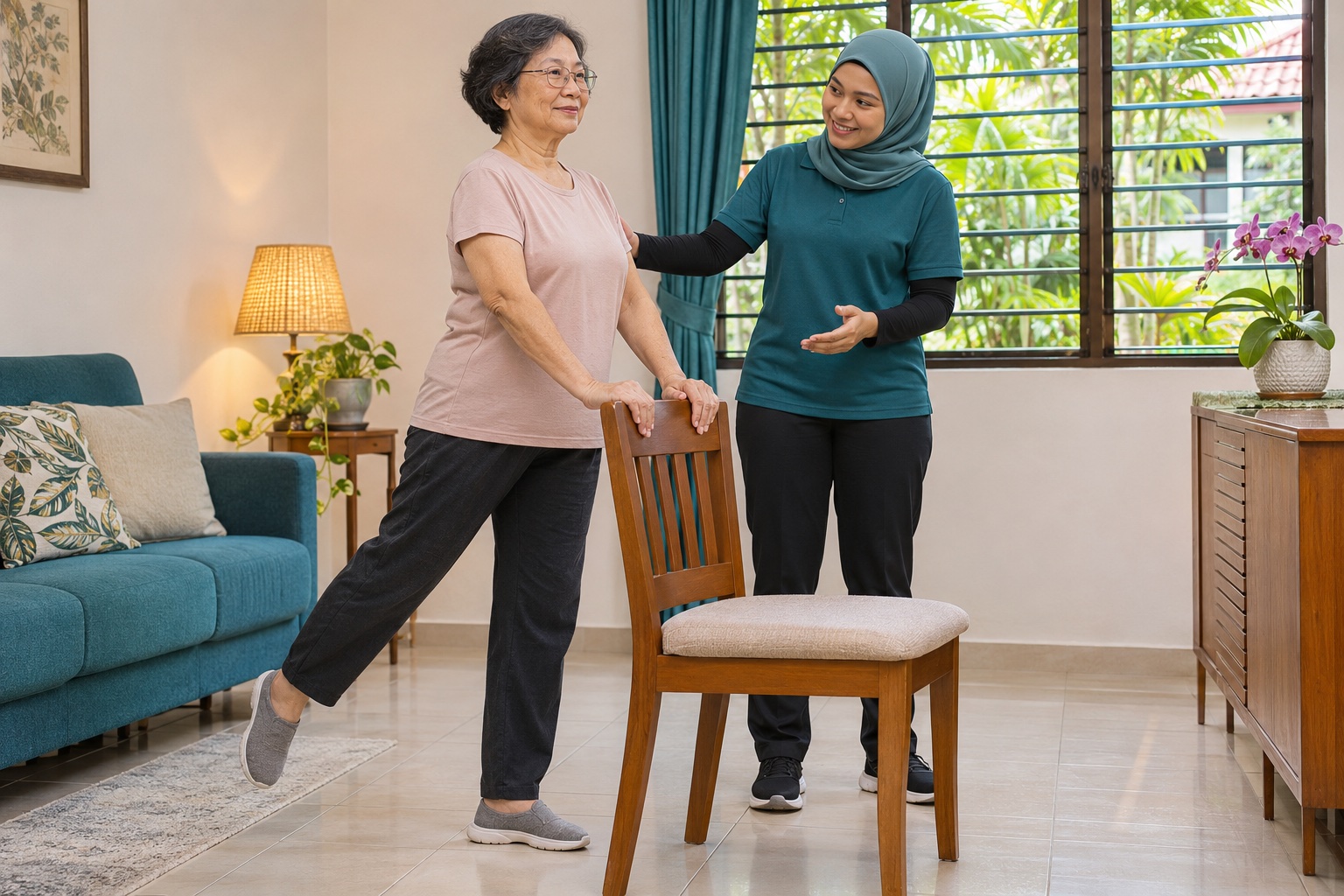
Understanding this condition
Parkinson’s is a progressive neurological condition that can cause slowness, stiffness, tremor and changes in balance. Symptoms vary between people and through the day.
Freezing of gait is a temporary difficulty starting or continuing a step, not simply weak legs or lack of effort. Physiotherapy works alongside medication and neurological care to maintain useful movement and participation.
Symptoms and everyday difficulties
- Steps may become shorter on a turn or in a narrow passage.
- Turning in bed or standing from a soft sofa can take several attempts.
- Walking while talking or carrying something may increase instability.
Who may benefit from a home assessment
Home visits can help when movement depends on specific surfaces, doorways, medication timing or caregiver cues. Report a sudden unexplained deterioration or new confusion to the medical team rather than assuming gradual disease progression.
A condition-specific assessment
- Ask when medication is taken, when mobility is easier or harder, and where falls or near falls occur.
- Observe initiation, step length, turns and transfers at the individual's usual pace without deliberately provoking unsafe freezing.
- Check attention, dizziness on standing and whether a simple visual or rhythmic cue improves a meaningful task.
Treatment options and how they are chosen
Cueing through a difficult doorway
- What it involves
- Trial one selected cue such as a visual target or rhythm with safe guarding.
- Why it may be chosen
- External cues can help some people restart movement.
- The everyday goal
- This targets freezing at a familiar threshold.
- Adapting it at home
- Choose a cue that is visible or audible without cluttering the floor.
- Reviewing progress
- Compare successful starts, hesitation and safety; discard unhelpful cues.
Turning and sitting
- What it involves
- Practise a planned approach to a stable chair and controlled turning before sitting.
- Why it may be chosen
- Rushed turns and backing up can provoke small unstable steps.
- The everyday goal
- This targets sitting for meals without dropping backwards.
- Adapting it at home
- Use the usual chair with enough turning space and help as assessed.
- Reviewing progress
- Review number and quality of steps, balance and assistance.
Bed mobility strategies
- What it involves
- Break turning and sitting up into a sequence the person can follow.
- Why it may be chosen
- Slowness and stiffness can make a previously automatic turn difficult.
- The everyday goal
- It addresses getting up for the toilet at night.
- Adapting it at home
- Practise on the actual bed with a safe light and one agreed caregiver cue.
- Reviewing progress
- Review effort, time and the amount of physical help required.
Individual rehabilitation goals
- Use a helpful cue at the most troublesome doorway.
- Turn and sit with better control during the person's usual medication period.
- Reduce unnecessary pulling or rushing by the caregiver.
How a home visit is arranged
- Send a brief enquiry with the rehabilitation need, area and whether you are the patient or caregiver.
- The team checks relevant information, service scope, therapist availability and suitability. Share medical documents through the arrangement agreed with the team.
- If suitable, confirm the appointment, full session fee and separate travel charge before the home assessment.
- The physiotherapist assesses the person and discusses an individual plan, consent and practical goals.
- Appropriate treatment, home practice and caregiver guidance are provided, then progress and the need for further visits are reviewed.
Preparing for the visit
Have the usual aid and medication timetable available without changing doses for the visit. Describe a real freezing episode, the time of day and what family members normally do.
Home visits and clinic rehabilitation
Home reveals individual triggers and useful furniture positions. Significant medication fluctuations, fainting or swallowing trouble need medical or specialist assessment. Higher-level exercise may need a safe supervised facility.
When medical assessment is needed
Sudden facial weakness, speech change or new one-sided weakness is a stroke emergency. Seek urgent medical advice for repeated fainting, a fall with head injury, new confusion or inability to take prescribed Parkinson’s medicines. Do not stop or change medication without the prescriber.
For a genuine medical emergency in Malaysia, call 999. A routine physiotherapy enquiry is not an emergency response. Malaysia emergency service information
Patient and caregiver questions
Should a caregiver pull me forward when I freeze?
Pulling may unbalance both people. Pause safely and use the cue and assistance agreed during assessment.
Will a metronome work for everyone?
No. Some benefit from rhythm, others prefer a visual or verbal cue. Assess one cue and its effect on safety.
When should we schedule practice?
Choose a safe period and tell the therapist about easier and harder times. Medication changes remain with the prescriber.
Is a walking frame always helpful for freezing?
No. Turning, brake use, attention and the home layout affect whether it improves safety. Try it under assessment.
Can physiotherapy stop Parkinson’s progressing?
No cure is promised. Goals include practical mobility, maintaining participation, safer assistance and adapting as needs change.
The treating physiotherapist
Penang HomePhysio confirms that a clinician is available for this service. Ask the team to confirm the treating physiotherapist's name, qualifications, registration, relevant experience and availability. Tell us your preferred spoken language so the team can check. Website language options do not establish any individual clinician's language abilities.
About the serviceHome visits around Penang
Home visits in Penang are arranged by area and therapist availability. Areas listed on this site include George Town, Bayan Lepas, Butterworth, Bukit Mertajam. Share your postcode and access needs so the team can confirm coverage and travel charges.
See coverage areasPricing and suitability enquiries
See this site's pricing guide. Tell the team your area and care needs to confirm the full fee, including any travel charge, before booking.
Clinical information sources
These sources support the general information. They are not endorsements of this provider or a claim that a clinician has reviewed this page.