Penang HomePhysio
Guillain–Barré Syndrome Rehabilitation in Penang
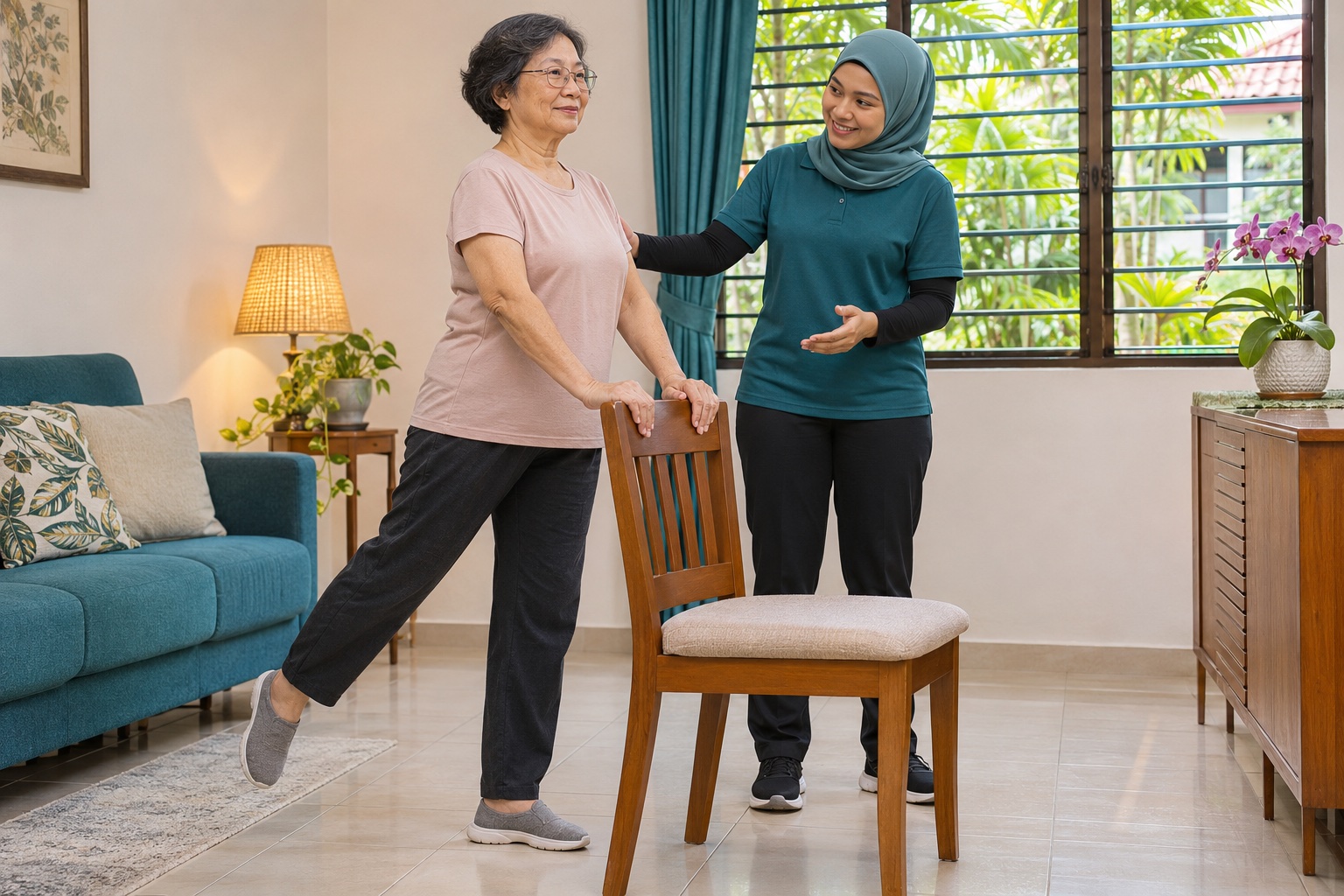
After hospital treatment for Guillain–Barré syndrome, standing from a chair can feel like a major effort. Rehabilitation should match the muscles that have recovered enough to work and the energy available that day.
Suitability, therapist availability and any medical clearance are checked before an appointment. Rehabilitation is selected after assessment.
Understanding this condition
Guillain–Barré syndrome is an acute immune-mediated disorder of the peripheral nerves. Weakness may spread quickly and can affect breathing, swallowing, heart rate and blood pressure. Suspected new illness requires hospital assessment.
This page concerns recovery after acute medical management and stabilisation. It is different from a gradually developing peripheral neuropathy or multiple sclerosis, which affects the central nervous system.
Symptoms and everyday difficulties
- Thigh and hip weakness can make getting off the toilet difficult.
- Foot or hand weakness and altered sensation may reduce grip or foot clearance.
- Fatigue can persist after apparent gains in strength and limit repeated efforts.
Who may benefit from a home assessment
Home assessment may suit a stable person discharged with a follow-up plan and enough assistance for safe transfers. Continuing respiratory, swallowing or autonomic instability requires specialist medical care, not routine home exercise.
A condition-specific assessment
- Review hospital course, recent changes, previous ventilation or intensive care, medical clearance and any autonomic or breathing guidance.
- Assess strength by muscle group, sensation, seated and standing tolerance and whether effort causes excessive fatigue or dizziness.
- Observe one transfer and the next recovery period; check aid suitability, caregiver capacity and whether a wheelchair is needed for longer distances.
Treatment options and how they are chosen
Supported transfers with rest
- What it involves
- Choose the chair height, assistance and transfer method the person can manage reliably.
- Why it may be chosen
- Weak hip and thigh muscles may fatigue after one successful effort.
- The everyday goal
- This supports regular toilet access, not just one demonstration.
- Adapting it at home
- Practise at the actual bed or chair with trained help and a rest opportunity.
- Reviewing progress
- Review assistance on repeat attempts and recovery afterwards.
Reactivating available strength
- What it involves
- Select assisted movement or gentle resistance according to the strength of each muscle group.
- Why it may be chosen
- A muscle unable to complete a movement is not ready for the same load as a stronger one.
- The everyday goal
- This addresses useful tasks such as lifting the foot or bringing a hand to the face.
- Adapting it at home
- Support the limb and keep practice tolerable without training to exhaustion.
- Reviewing progress
- Track movement quality, next-day fatigue and change in function.
Returning to walking in stages
- What it involves
- Assess standing, foot clearance and the support needed for a short walk.
- Why it may be chosen
- Leg weakness and altered sensation may make a longer route unsafe even if the first steps look good.
- The everyday goal
- This targets a useful room-to-room journey.
- Adapting it at home
- Use a suitable aid, helper or wheelchair alternative and a planned resting place.
- Reviewing progress
- Review distance together with fatigue, dizziness, buckling and recovery.
Individual rehabilitation goals
- Transfer repeatedly with a safe level of assistance.
- Use recovering muscles for one meaningful task without excessive fatigue.
- Identify the appropriate mobility option for a short and a longer journey.
How a home visit is arranged
- Send a brief enquiry with the rehabilitation need, area and whether you are the patient or caregiver.
- The team checks relevant information, service scope, therapist availability and suitability. Share medical documents through the arrangement agreed with the team.
- If suitable, confirm the appointment, full session fee and separate travel charge before the home assessment.
- The physiotherapist assesses the person and discusses an individual plan, consent and practical goals.
- Appropriate treatment, home practice and caregiver guidance are provided, then progress and the need for further visits are reviewed.
Preparing for the visit
Prepare the discharge and neurological follow-up plan, details of ICU or breathing support, prescribed aids and a note of fatigue after usual tasks. Arrange a caregiver if transfers require help.
Home visits and clinic rehabilitation
Home helps adapt a chair, toilet route and the amount of recovery between tasks. Significant medical instability, intensive multidisciplinary needs, respiratory weakness or need for specialised gait equipment may require inpatient or specialist rehabilitation.
When medical assessment is needed
New or spreading weakness, shortness of breath, a weak cough with breathing difficulty, choking, trouble swallowing or fainting requires urgent hospital assessment. Sudden breathing or swallowing difficulty is an emergency. Do not wait for a rehabilitation appointment if symptoms return or progress rapidly.
For a genuine medical emergency in Malaysia, call 999. A routine physiotherapy enquiry is not an emergency response. Malaysia emergency service information
Patient and caregiver questions
Can home physiotherapy treat newly spreading weakness?
No. Suspected acute Guillain–Barré syndrome or renewed rapid weakness needs hospital assessment because breathing and autonomic function can be affected.
Should a weak muscle be exercised until it gives out?
No. Choose support and effort appropriate to that muscle and allow recovery. Excessive fatigue is a reason to review the plan.
Why can I walk in the morning but need a chair later?
Recovery and fatigue vary through the day. A wheelchair for longer or later journeys can preserve safety and participation.
Is GBS the same as multiple sclerosis?
No. GBS usually affects peripheral nerves acutely; MS affects the brain and spinal cord and has a different medical and rehabilitation course.
Can anyone predict when I will walk independently?
Recovery varies. Compare the strength, assistance and endurance needed for one real task over time rather than promising a date.
The treating physiotherapist
Penang HomePhysio confirms that a clinician is available for this service. Ask the team to confirm the treating physiotherapist's name, qualifications, registration, relevant experience and availability. Tell us your preferred spoken language so the team can check. Website language options do not establish any individual clinician's language abilities.
About the serviceHome visits around Penang
Home visits in Penang are arranged by area and therapist availability. Areas listed on this site include George Town, Bayan Lepas, Butterworth, Bukit Mertajam. Share your postcode and access needs so the team can confirm coverage and travel charges.
See coverage areasPricing and suitability enquiries
See this site's pricing guide. Tell the team your area and care needs to confirm the full fee, including any travel charge, before booking.
Clinical information sources
These sources support the general information. They are not endorsements of this provider or a claim that a clinician has reviewed this page.